
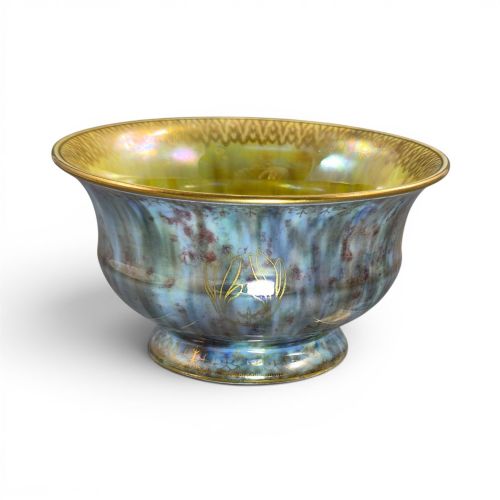
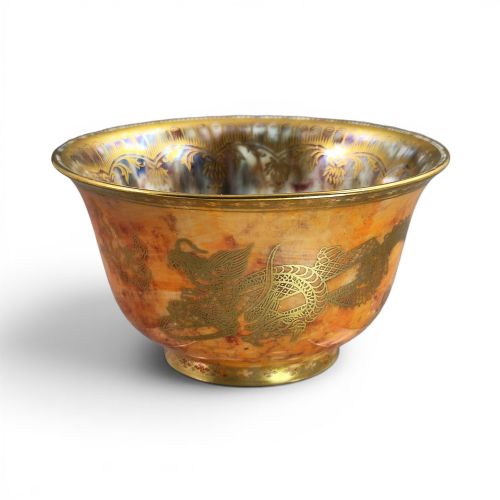


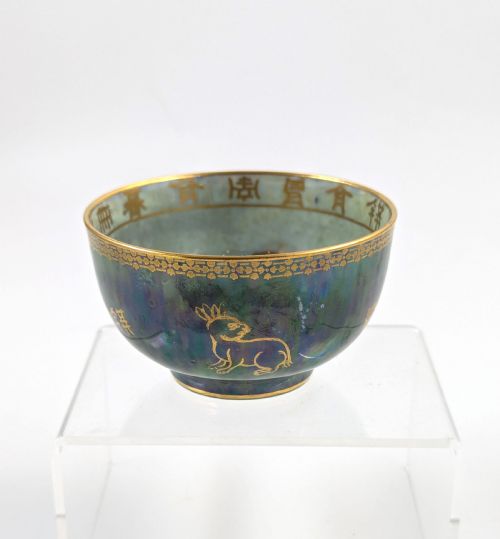


Gilded Porcelain Dragon Bowl
A gilded porcelain dragon bowl brings rich mythical imagery and metallic lustre to a room, offering both intricate fantasy scenes and striking Regency design.
Gilded Porcelain Dragon Bowl
A gilded porcelain dragon bowl draws together elaborate mythical beasts and lustrous finishes, appearing in forms ranging from decorative bowls to miniature cups and octagonal vessels. When searching for a gilded porcelain dragon bowl, you encounter pieces that span the early nineteenth century through to the Edwardian period and the 1920s.
The selection here divides cleanly between Regency Chinoiserie wares featuring compartmented dragon motifs and twentieth-century lustre creations. You find early nineteenth-century Worcester and Chamberlain Worcester examples alongside the distinctive fantastical designs associated with Edwardian and 1920s production.
How they were made
Potters shaped fine porcelain and bone china before applying intricate enamel work and lustrous glazes to create deep, shimmering colour surfaces. Artisans then integrated gold leaf, gilt, and gold gilding to highlight the dragon motifs and frame the decorative panels.
Techniques relied on precise kiln firing to set the complex lustre effects and metallic highlights permanently onto the ceramic body. The combination of colourful enamel glazes with applied gold creates the rich visual depth characteristic of these bowls.
Several bowls feature celestial and king dragons glaring out from beneath layers of shimmering lustre, guarding your mantelpiece with mythical intensity.
What varies in quality
Quality shows in the crispness of the painted dragon details and the complexity of the pattern layout, such as the division of compartments in Regency pieces or the imaginative depth of Edwardian fantasy scenes. The richness and preservation of the gold leaf or gilding across the rim and body also define the standard of the piece.
The sophistication of the glaze work marks the difference between standard production and exceptional examples, particularly in the shimmering play of lustre colours. Furthermore, the inclusion of original fitted supports, such as a mahogany stand, alters the completeness of an antique bowl.
Daisy Makeig-Jones·Wedgwood·Worcester·Chamberlain Worcester
The Gilded Porcelain Dragon Bowl Glossary
- Bone china
- A type of soft-paste porcelain incorporating animal bone ash for added strength and whiteness. It provides a smooth, refined base for detailed enamel painting.
- Lustre glaze
- A metallic ceramic glaze that produces an iridescent, light-catching surface. It gives these bowls their characteristic shimmering appearance.
- Regency Chinoiserie
- An English stylistic movement reinterpreting East Asian artistic motifs during the Regency period. This style appears on early nineteenth-century dragon bowls.
- Gold leaf
- Hammered sheets of gold applied to the ceramic surface for gilding. It provides brilliant metallic accents to the dragon designs.
Gilded Porcelain Dragon Bowl: Frequently Asked Questions
What periods do these dragon bowls come from?
The pieces span from the early nineteenth century through to the Edwardian era and the 1920s. You will encounter Regency Chinoiserie wares alongside twentieth-century lustre designs.
Each period brings distinct stylistic traits, from compartmented dragon patterns on early Worcester porcelain to fantastical subjects on later lustre vessels.
How do I distinguish Regency pieces from later ones?
Regency examples, such as those from Worcester, typically feature compartmented dragon designs on traditional bowl forms. They reflect the neoclassical and Chinoiserie tastes of the early nineteenth century.
Later pieces from the twentieth century lean into rich lustre glazes and imaginative fantasy themes, often associated with specific designers and named patterns.
What materials make up these bowls?
These items are formed from porcelain or bone china, providing a durable and refined white ceramic canvas. Artisans then decorated them using enamel paints and lustrous glazes.
Gold leaf, gilt, and gold gilding complete the decoration, highlighting the dragon motifs across the surface of the vessel.
How should I display a dragon bowl at home?
These bowls work well as standalone decorative centerpieces on tables or within cabinet displays where light can catch the lustre finish and gold gilding. Some pieces may be accompanied by fitted stands that elevate the vessel.
Keep them away from direct, harsh sunlight and handle them carefully during placement to preserve the delicate enamel and gilt surfaces.