


Vintage Ceramic Oriental Dragon
These vintage ceramic oriental dragon pieces bring fierce mythological presence into a room through centuries of Asian and British interpretation.
Vintage Ceramic Oriental Dragon
When you search for vintage ceramic oriental dragon items, you encounter a varied selection of vessels, lamps, figures, and architectural ornaments spanning the nineteenth and early twentieth centuries. These objects combine mythical beast motifs with traditional ceramic forms originating from China and Japan, alongside British interpretations of Eastern aesthetics.
The most common examples on this page are porcelain and red clay vases, decorative bowls, and table lamps from periods such as the Meiji era, the Qing dynasty, and the early twentieth century. Many items reflect distinct stylistic movements, including Art Nouveau curves and Regency Chinoiserie symmetry.
Beyond standard vases, you will also discover specialist forms like roof ornaments and lustre bowls decorated with coiling mythical creatures. Each piece represents a specific workshop tradition, utilising forms handed down through generations of potters.
How they were made
Potters shaped these objects using porcelain, red clay, terracotta, and ironstone, often building complex forms by hand or throwing them on a wheel before kiln firing. Body materials dictate the weight and resonance of the piece, with fine porcelain offering translucency while red clay provides a dense, earthy substrate.
Makers applied surface decoration using detailed enamels, blue and white pigments, lustre glazes, and occasional accents of gold leaf. These finishes required precise temperature control during firing to bond the metallic sheens and coloured pigments to the ceramic body.
Listings feature red clay, porcelain, and terracotta materials applied across vases, roof ornaments, and lamps from the nineteenth and twentieth centuries.
What varies in quality
Quality in these ceramics rests on the precision of the modelling and the control of the glaze, where sharp definition in the dragon scales distinguishes superior work from softer castings. Hand-painted details reveal the skill of the decorator through confident brushwork and balanced compositions.
The purity of the porcelain paste and the evenness of the glaze application separate standard production wares from pieces produced in notable workshops. Marks to the base often indicate a higher standard of manufacture, reflecting the reputation of the kiln.
Hicks and Meigh·Wedgwood·Fukagawa
The Vintage Ceramic Oriental Dragon Glossary
- Tokoname
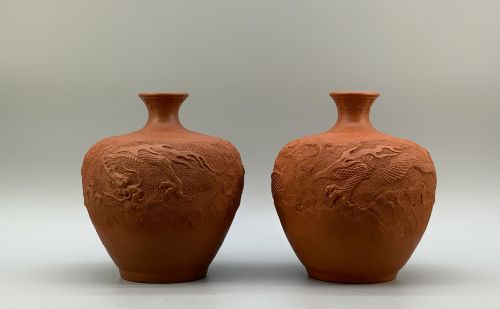
- A Japanese ceramic production centre known for unglazed red clay wares. Pieces from this tradition often feature natural iron impurities visible in the clay body.
- Satsuma
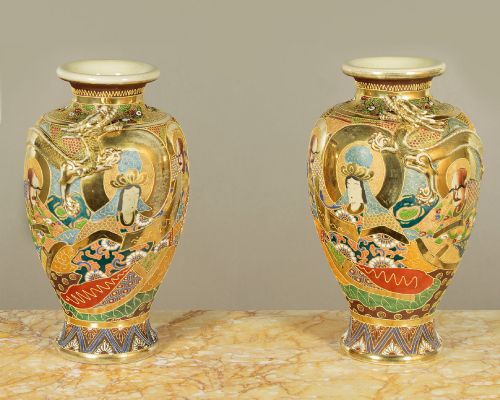
- A type of Japanese earthenware featuring a pale, ivory crackle glaze decorated with enamel and gilt. These wares gained significant popularity for export during the late nineteenth and early twentieth centuries.
- Famille Rose
- A palette of opaque enamel colours dominated by pink, introduced to Chinese porcelain during the Qing dynasty. The style allows for nuanced shading of floral and figurative motifs.
- Lustre Glaze
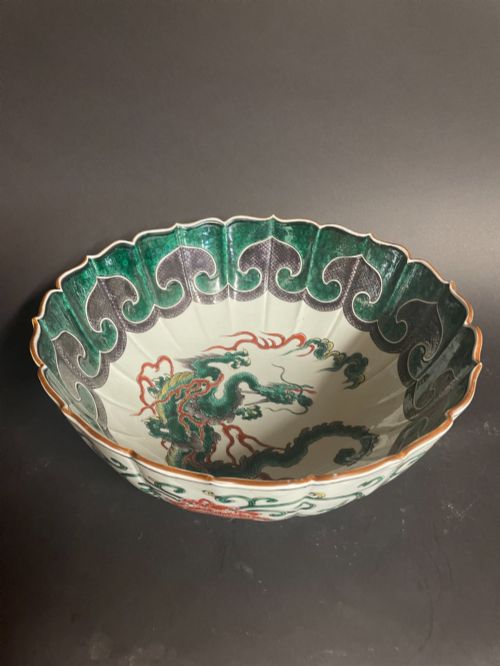
- A metallic film applied to ceramics to create an iridescent, reflective surface. Wedgwood famously utilised this technique on earthenware bowls with mythical creature designs.
- Ironstone
- A heavy, durable type of British pottery patented in the nineteenth century to imitate Chinese porcelain. Makers often decorated these robust bodies with Eastern inspired patterns.
Vintage Ceramic Oriental Dragon: Frequently Asked Questions
How do I identify a Japanese dragon vase?
Japanese dragon designs often feature three-clawed or four-clawed dragons intertwined around the body of porcelain or red clay vessels. Look for regional characteristics such as the unglazed red clay of Tokoname or the fine painting associated with Fukagawa.
Context and stylistic clues, such as Meiji period aesthetic traits or specific signature marks on the base, help confirm the Japanese origin against Chinese equivalents.
What is a lustre glaze on these dragons?
A lustre glaze is a metallic surface treatment that creates a shimmering, iridescent effect when catches the light. Makers applied this technique to accentuate the scales and bodies of dragons on decorative bowls.
This finish alters appearance depending on the angle of illumination, adding depth to the mythical creature motifs.
Were these ceramic lamps originally made as lighting?
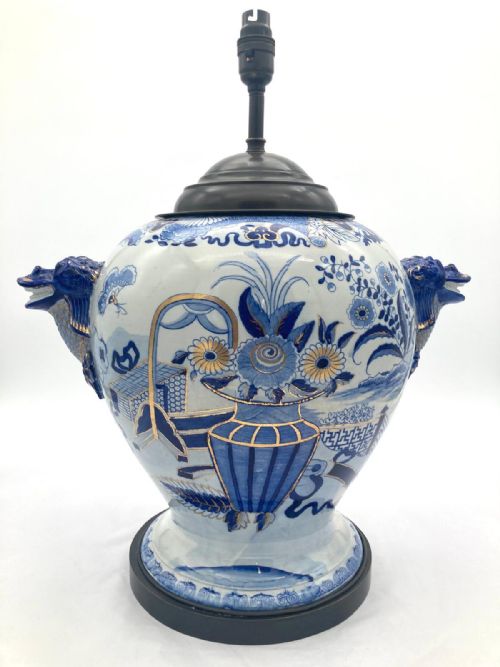
Many ceramic dragon vessels were originally manufactured as decorative vases or temple items before being converted into table lamps later in their existence. Conversion often involved wiring through a drilled base or fitting brass hardware to the top.
This adaptation allowed nineteenth century and Regency pieces to find practical use in modern domestic interiors while retaining their antique bodies.
How do I care for antique ceramic dragons?
Antique ceramics require gentle dusting with a soft, dry brush to prevent accumulation in the recesses of dragon modelling and relief work. Avoid using chemical cleaners or submerging pieces in water, particularly those with delicate enamel or gold leaf details.
Display them away from direct sunlight and areas of high temperature fluctuation to protect the glaze and clay body.