
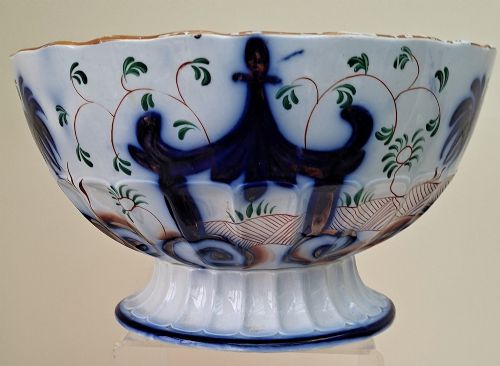


Lustre Glaze Dish
These lustre glaze dish examples bring metallic sheen and rich colour to a room, ranging from early Persian earthenware to twentieth-century bone china.
Lustre Glaze Dish
A lustre glaze dish is a decorative vessel finished with a metallic glaze that creates an iridescent sheen across the surface. When buyers search for a lustre glaze dish, they encounter bowls and footed vessels spanning centuries of ceramic history.
The selection ranges from early Persian Seljuk and Islamic pieces to nineteenth-century Victorian earthenware and Edwardian porcelain. Most items on this page take the form of decorative bowls or footed bowls.
The earlier examples include medieval fragments from Kashan, while later pieces showcase the vibrant Art Deco and Art Nouveau patterns of twentieth-century makers. Each period brings a distinct palette and decorative vocabulary to the ceramic form.
How they were made
Potters achieved the distinctive metallic effect by applying metallic oxides to a fired glaze and subjecting the vessel to a secondary, reduced-oxygen firing. This technique left a thin film of metal on the surface, creating the characteristic rainbow sheen.
The body materials vary widely across the centuries, shifting from early fritware and earthenware to fine porcelain and bone china. Artisans also integrated gold leaf into certain designs to heighten the reflective quality of the finished surface.
Materials across the selection include fritware, earthenware, porcelain, and gold leaf.
What varies in quality
Quality in a lustre glaze dish rests upon the clarity of the metallic sheen and the precision of the underlying glaze. Superior pieces maintain an even distribution of the metallic film without dull patches or heavy firing blemishes.
The artistry of the painted or transferred design also distinguishes fine examples from simpler production pieces. Intricate pictorial scenes, such as horses and riders or complex dragon motifs, demand a higher level of ceramic skill.
Wedgwood·Daisy Makeig-Jones
The Lustre Glaze Dish Glossary
- Fritware
- A type of pottery body made by mixing clay with crushed quartz or glass, allowing for finer detail in early Islamic ceramics.
- Earthenware
- Porous pottery fired at lower temperatures, commonly used for traditional and nineteenth-century footed bowls.
- Bone china
- A hard, durable porcelain containing bone ash, utilised in twentieth-century English decorative wares.
- Gold leaf
- Hammered sheets of gold applied to ceramic surfaces to enrich the decorative scheme.
- Footed bowl
- A vessel raised on a small pedestal base, a prevalent form among the decorative bowls listed here.
Lustre Glaze Dish: Frequently Asked Questions
How do I care for my lustre glaze dish?
These ceramic pieces require gentle dusting with a dry, soft cloth to protect the delicate metallic surface. Avoid using water, abrasive cleaners, or chemical polishes, as these can strip away the historic glaze.
Display the vessel away from direct sunlight and areas of high moisture to preserve the integrity of the earthenware or bone china body.
Are these bowls safe for serving food?
Historic decorative bowls and early earthenware pieces are intended strictly for display rather than culinary use. The metallic glazes and age of the materials mean they suit visual appreciation rather than the dining table.
Enjoy them as centrepieces on a table or cabinet where their reflective qualities catch the light safely.
How can I tell early Persian pieces apart from later wares?
Early Persian pieces from centres like Kashan typically utilise fritware bodies with hand-painted animal or geometric motifs in a subtle metallic wash. They belong to the pre-sixteenth-century eras and show the characteristic wear of medieval ceramics.
In contrast, twentieth-century pieces often display bright, printed patterns on bone china or porcelain, reflecting Art Deco and Edwardian tastes.
What distinguishes Victorian lustre from Edwardian designs?
Victorian examples lean towards traditional pottery forms with robust earthenware bodies and regional patterns like the Gaudy Welsh style. They emphasise sturdy utility combined with cheerful coloured glazes.
Edwardian and later twentieth-century pieces, particularly those by Wedgwood, focus on highly stylised pictorial themes such as dragons and fantasy landscapes executed on octagonal or footed bowl shapes.