

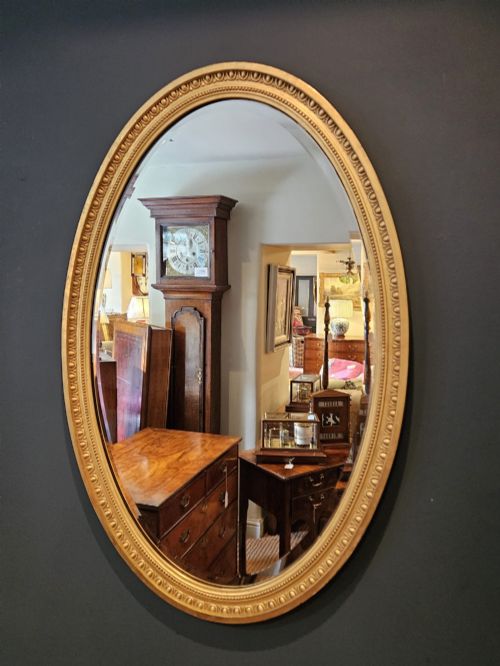
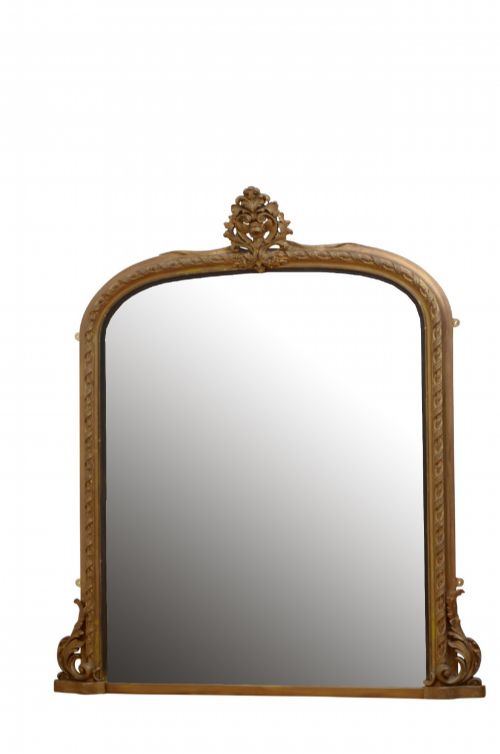


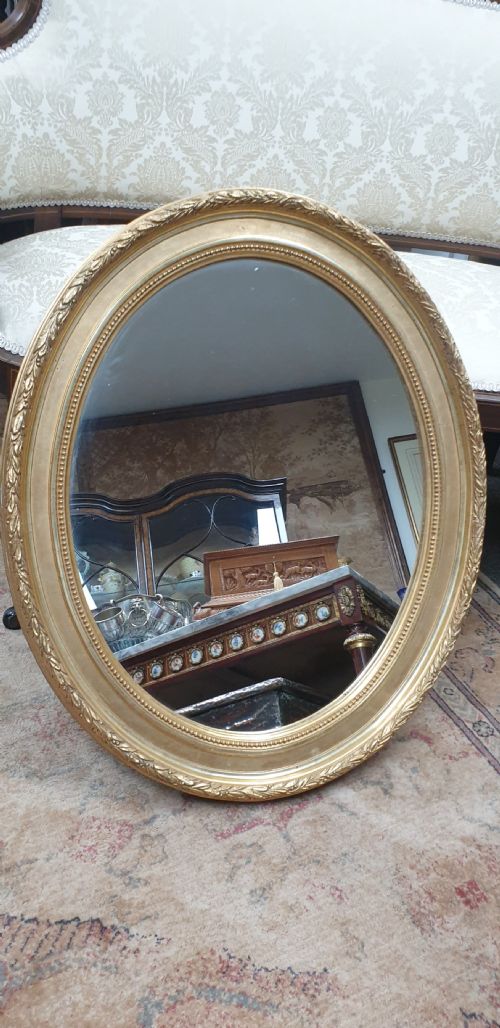


Gilded Plaster Mirror
These gilded plaster mirror examples bring together nineteenth century wall and overmantel forms with giltwood, gesso and gold leaf surfaces.
Gilded Plaster Mirror
When you search for a gilded plaster mirror, you find large wall mirrors and overmantle mirrors spanning Victorian, Edwardian and nineteenth century periods. These statement frames include oval and arched shapes designed to hang in halls and principal rooms.
The versions most commonly met here originate from French chateau and English Victorian traditions, employing ornate Rococo Revival, Neoclassical and Art Nouveau styles. They function as both functional reflective glass and decorative architectural centerpieces.
How they were made
Maker workshops built these frames using a wooden foundation coated in plaster, gesso and composition mouldings to create high-relief ornamentation. Artisans then applied gold leaf or gilt finishes over the prepared surfaces to achieve a bright metallic sheen.
Heavy mirror glass sits within these robust structures, secured by traditional backing boards that support the considerable weight of large overmantle and wall formats.
Gilded Plaster Mirror Retail Price Guide 2026
Typical asking prices for gilded plaster mirror among the pieces listed under this phrase on Sellingantiques today, from the lower quarter to the upper quarter. They describe what is for sale here now, not the wider market.
What varies in quality
Quality rests upon the crispness of the moulded relief and the depth of the original gilding rather than simple age alone. Finer examples display sharp, well-defined ornamentation where the gesso layer holds intricate details without softening.
The condition of the gold leaf and the authenticity of the underlying plaster structure distinguish superior pieces. Even with natural wear, better items retain the structural integrity of their heavy frames and clarity within the antique glass.
The Gilded Plaster Mirror Glossary
- Gesso
- A plaster-based mixture applied to wood frames to create a smooth surface for gilding. It provides the foundation for intricate moulded details.
- Giltwood
- Timber that has been decorated with gold leaf or gold paint. It forms the structural core of many antique frames.
- Overmantel
- A large mirror designed specifically to hang above a fireplace mantelpiece. These pieces often feature wide horizontal or arched proportions.
- Composition
- A mixture of whiting, rosin, linseed oil and glue pressed into moulds to create decorative ornaments. It hardens into a durable material on the frame.
- Rococo Revival
- A decorative nineteenth century style characterised by asymmetrical curves, scrollwork and naturalistic plant motifs. It heavily influences ornate mirror frames.
Gilded Plaster Mirror: Frequently Asked Questions
How do I hang a heavy overmantel mirror?
These heavy frames require secure wall fixings attached directly into masonry or substantial timber studs. Professional mirror hangers utilise heavy-duty brackets to distribute the considerable weight safely.
Avoid relying on simple picture wire for large nineteenth century pieces. Proper wall anchors ensure the heavy plaster and wood construction remains secure.
Where should I place a large wall mirror?
Position these large frames opposite windows to maximise natural daylight in a room. Overmantels look most traditional placed directly above a fireplace.
Ensure the wall structure can support the substantial dimensions of nineteenth century French and Victorian formats before installation.
How do I date a gilded mirror?
Examine the style of the frame, such as Victorian Neoclassical, Rococo Revival or Art Nouveau, alongside the construction materials. The backing boards and fastening methods also offer clues to the period.
Inspect the mirror glass for signs of foxing and age, which help confirm nineteenth century or Edwardian origins.