
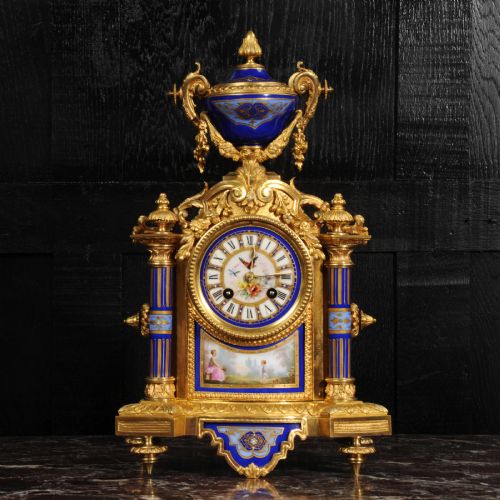
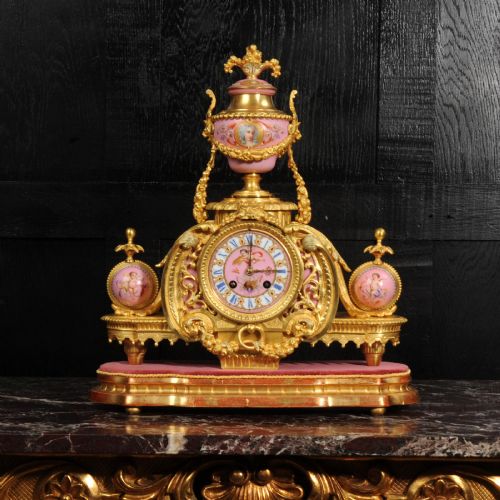
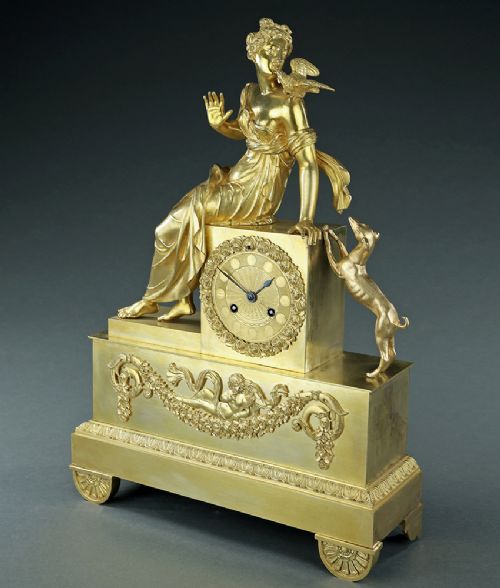
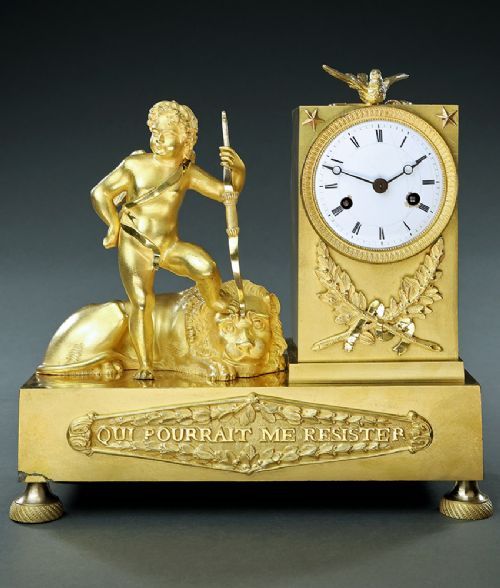




Gilded Pendulum Clock
These pieces combine cast metalwork and swinging escapements to measure hours with theatrical gleam.
Gilded Pendulum Clock
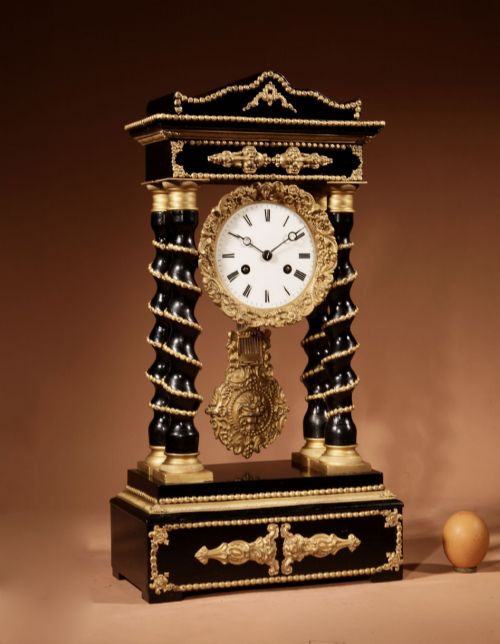
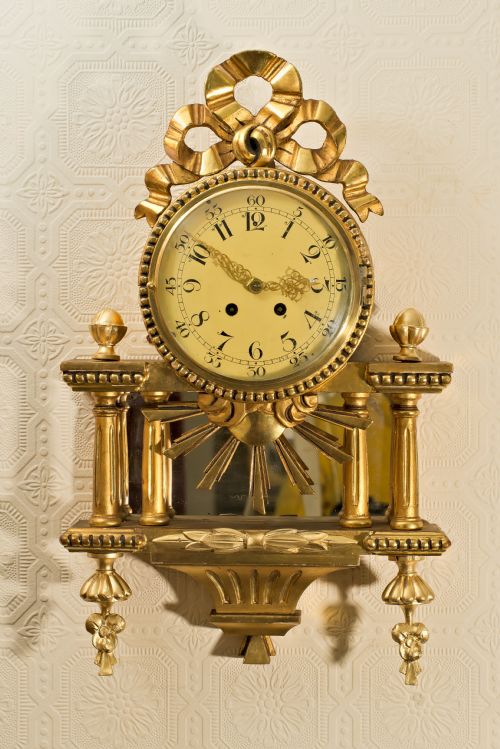
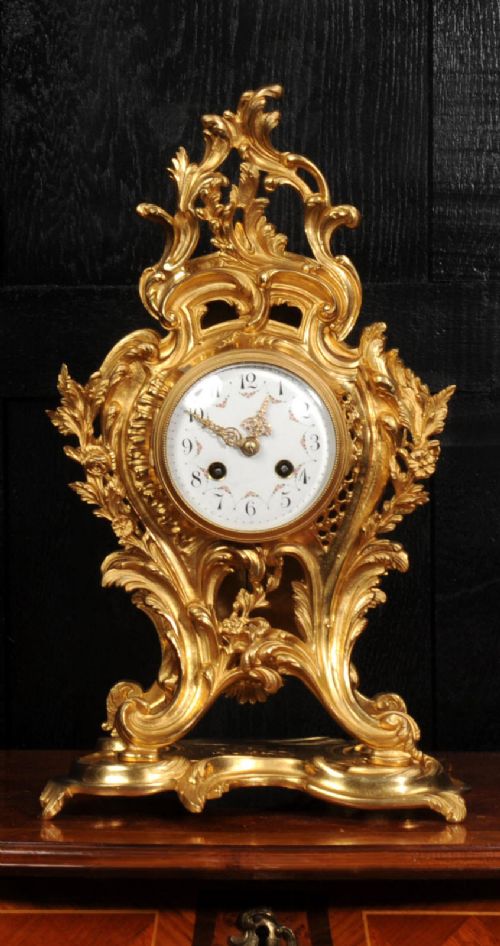
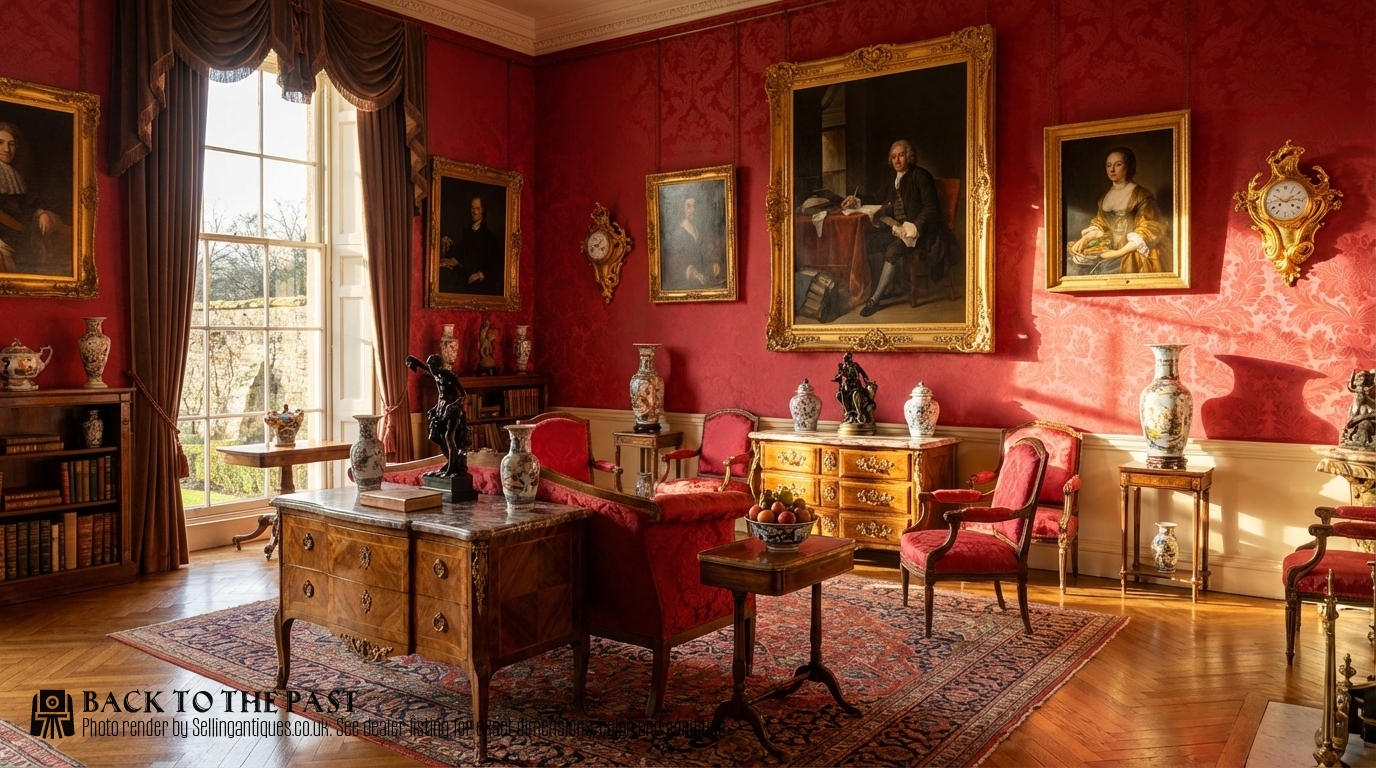
A gilded pendulum clock draws the eye through polished metallic surfaces that reflect light across a room. When you search for a gilded pendulum clock, you encounter heavy French mantel designs, architectural portico models, and wall-hung cartel versions.
The nineteenth century dominates the examples seen here, spanning the Victorian era, Charles X period, and Napoleon III reigns. Most items take the form of mantel clocks or four-glass bracket clocks housing visible mechanisms.
Originating predominantly from French workshops and makers, these pieces showcase styles ranging from flamboyant Rococo curves to restrained Louis XVI symmetry. Enamel dials and swinging bobs define the visual rhythm of the group.
Materials and construction
Ormolu and gilt bronze provide the golden sheen characteristic of these objects, applied over cast brass or bronze bases. Enamel dials, white porcelain plaques, and cut crystal or glass panels complete the structural casing.
Cabinetmakers and bronze-workers utilised red marble, ebonised wood, and giltwood to build heavy architectural housings. Movements rely on brass gear trains driven by springs or weights, regulated by the swing of a pendulum.
Materials recorded across the inventory include ormolu, gilt bronze, red marble, porcelain, cut crystal, and ebonised wood.
What separates the best from the rest
The crispness of the bronze chasing dictates the visual success of the metalwork, distinguishing sharp hand-finished acanthus leaves from soft, muddy castings. Heavier ormolu layers retain a warmer, deeper lustre over centuries of existence.
The integration of signed movements by notable clockmakers elevates an object beyond standard factory production. Dial legibility, enamel crispness, and the proportion of glass to metal frame determine the overall balance of the piece.
Japy Freres·Achille Brocot·Le Roy·Tiffany·Wetterstrands·Samuel Marti·Henri Jacot
The Gilded Pendulum Clock Glossary
- Ormolu
- Gilt bronze produced by applying a mercury and gold amalgam to a bronze base and heating it until the mercury vaporised. This technique creates a durable, rich golden finish found on nineteenth-century French cases.
- Portico clock
- An architectural mantel clock supported by four columns, often featuring a suspended pendulum swinging freely between them. These models frequently date from the Charles X and French Empire periods.
- Cartel clock
- A wall clock housed in an ornate, asymmetrical frame of gilt bronze, giltwood, or brass. They emerged during the Rococo period and hang directly on vertical surfaces.
- Four-glass clock
- A mantel clock encased in glass panels on all four sides to expose the mechanical movement and pendulum. They gained popularity in the late nineteenth century.
- Escapement
- The mechanism that converts rotational force from the gear train into periodic impulses to maintain the pendulum's swing. Visible escapements allow viewers to watch the heartbeat of the clock.
Gilded Pendulum Clock: Frequently Asked Questions
How do I wind a mantel clock?
Most mechanical models use a key inserted into winding holes on the enamel dial to tension the internal springs.
Turn the key gently until resistance increases, taking care not to over-wind the mainspring.
Where should I place a heavy marble clock?
Position the piece on a stable, level surface such as a sturdy mantelpiece or heavy sideboard that can support substantial weight.
Avoid locations near direct heat sources or damp exterior walls to protect the movement and marble.
How do I set the correct time?
Move the minute hand gently clockwise until the hands point to the correct hour.
Allow the clock to strike fully after each hour before advancing the hands further.
Why does the pendulum stop swinging?
The clock case may sit out of level on an uneven surface, causing the escapement beats to become uneven.
Adjust the leveling feet or shift the base slightly until the ticking sounds even and regular.
How do I identify a Louis XVI style clock?
Look for neoclassical elements such as straight lines, urns, symmetry, and architectural columns rather than swirling Rococo curves.
Ormolu mounts on these pieces typically feature ribbons, floral garlands, and classical motifs.