
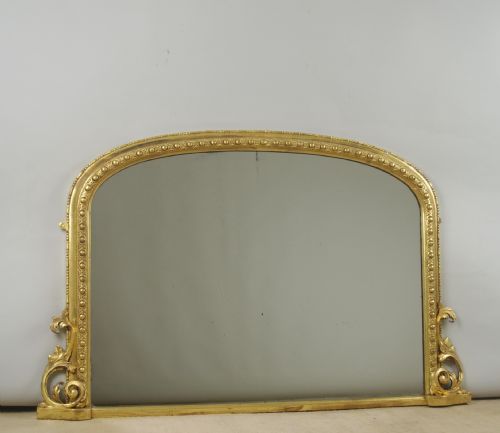
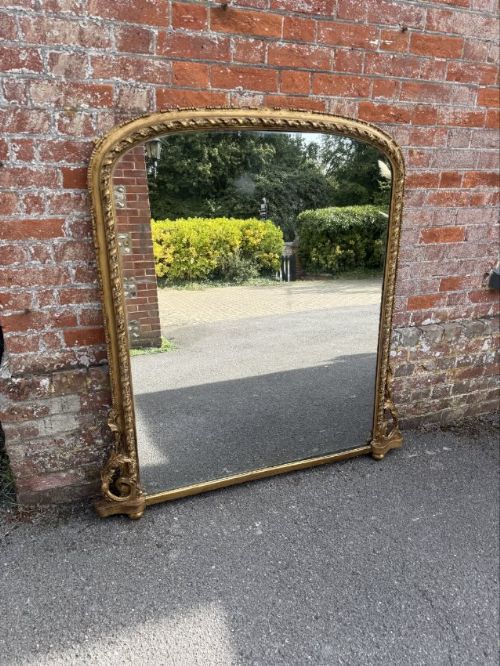
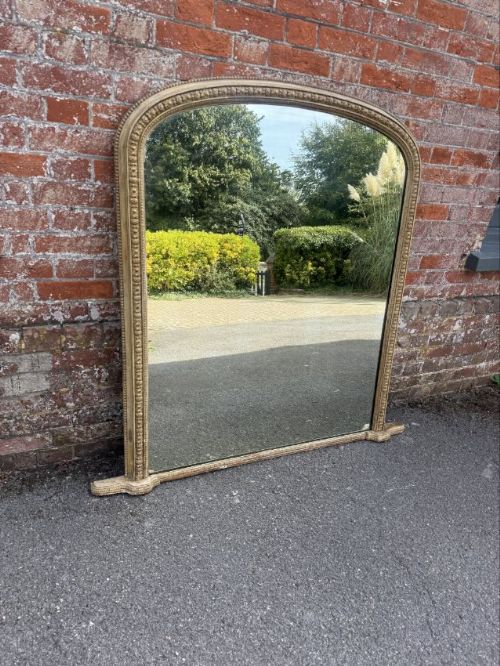
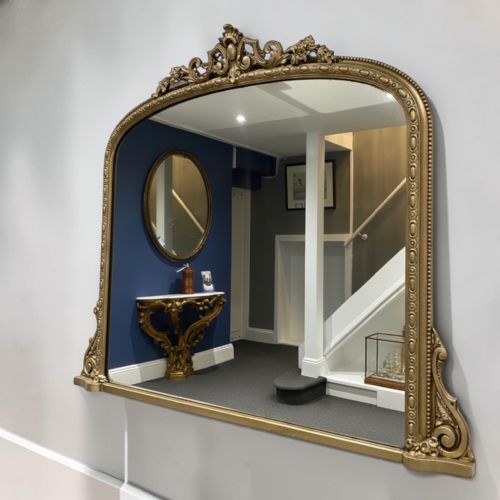
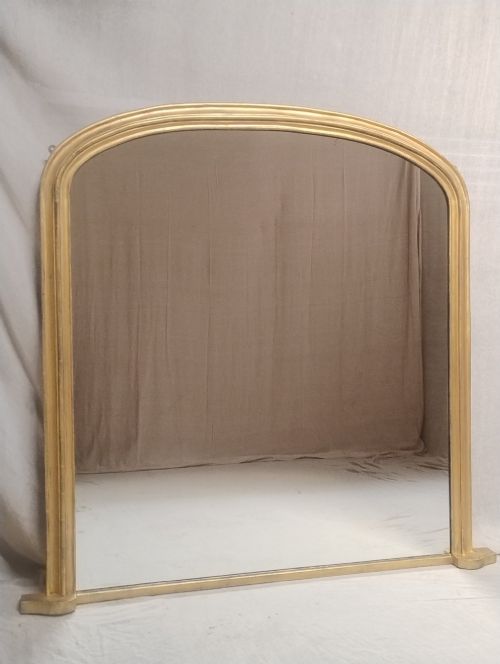
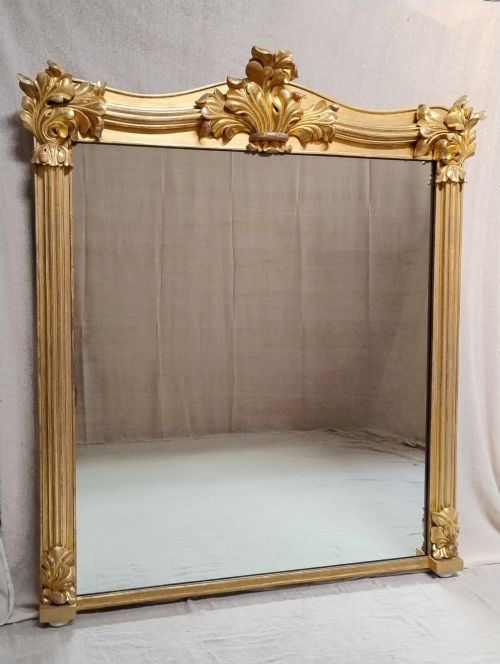
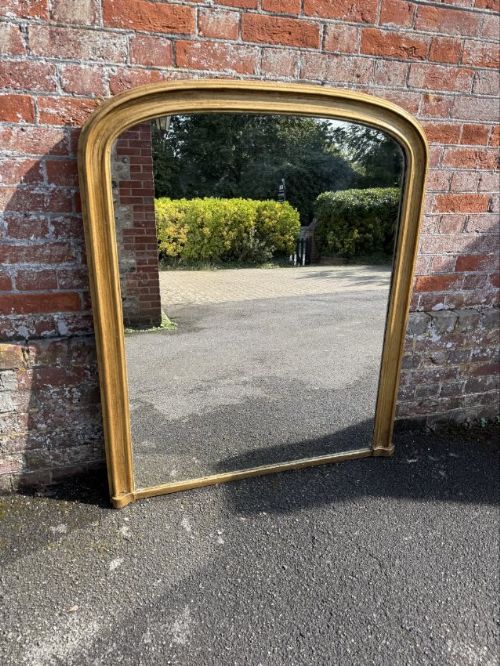
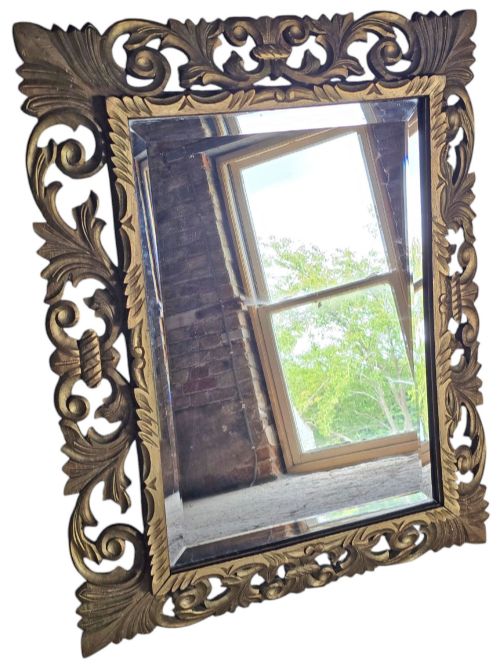
Gilded Overmantle Mirror
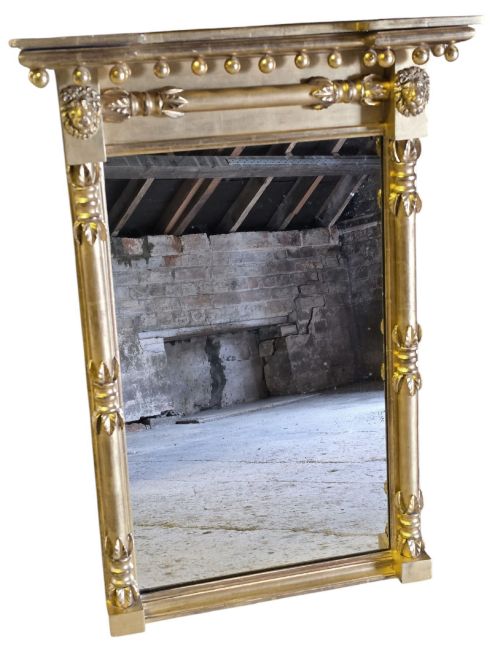
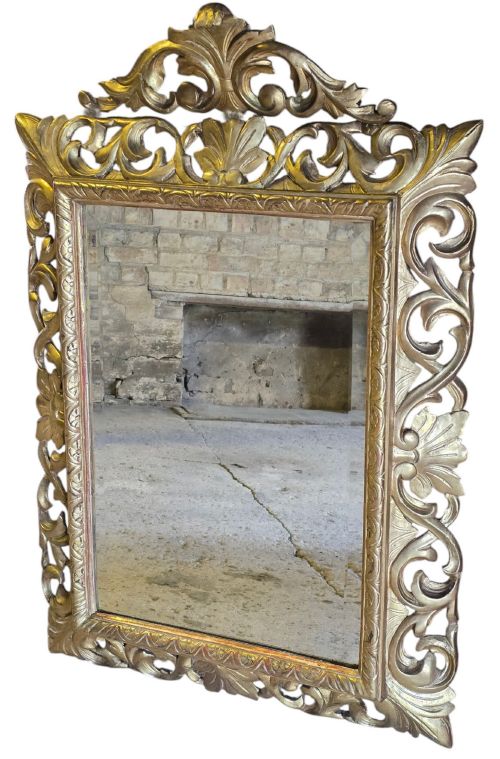
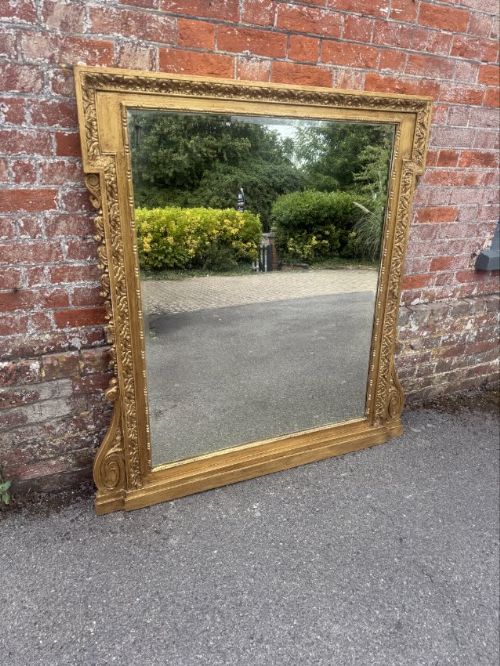
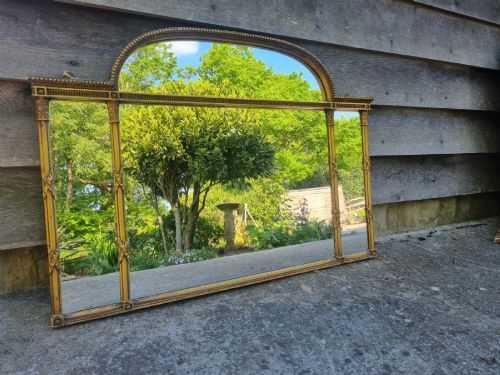
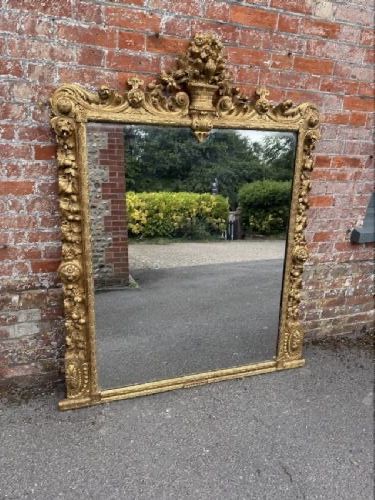
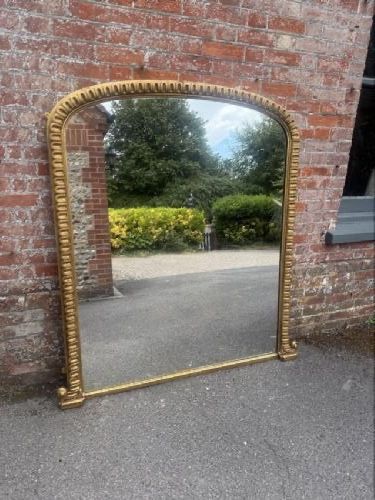
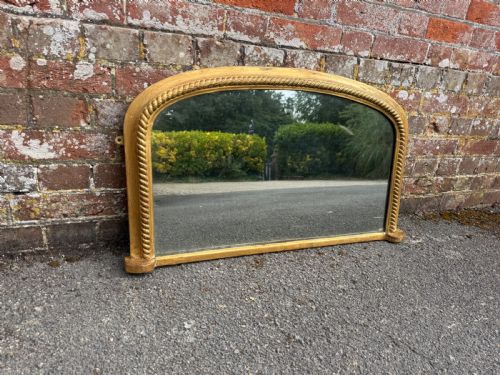
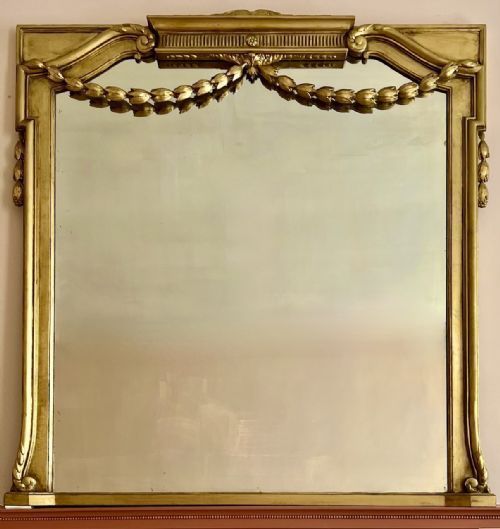
Choosing a gilded overmantle mirror brings a broad, bright architectural presence to a room, reflecting light from a historically wide format designed to sit above a fireplace.
Gilded Overmantle Mirror
A gilded overmantle mirror is a substantial wall-hanging glass panel designed to sit horizontally above a fireplace mantelpiece, serving as a prominent focal point in a reception room.
The pieces available here emerge predominantly from the nineteenth century, encompassing Victorian, Regency, and Georgian eras alongside later reproductions and continental styles.
Makers fashioned these frames in arched top, shaped top, and rectangular formats, frequently incorporating triple plates or architectural columns to fill large wall expanses.
Materials and Construction
Carved wood provides the structural framework for these large mirrors, often built from pine or hardwood to support the considerable weight of the glass.
Gesso, a mixture of plaster and glue, is applied over the wood base to create smooth surfaces and intricate raised mouldings for relief decoration.
Gold leaf or composition gilding covers the gesso and wood layers, catching the light and providing the characteristic metallic lustre seen across the period.
Listings feature eighteenth-century Georgian origins through to early twentieth-century Edwardian interpretations, using wood, gesso, and gold leaf.
Distinctions in Quality
The depth and precision of the carved wood elements dictate the sculptural fidelity of the frame, separating massed composition mouldings from hand-carved details.
The integrity of the original gilding and the preservation of the underlying gesso reveal the history of the object and the care taken in its upkeep.
Mirror glass quality manifests in the clarity of the reflection, with period silvering showing subtle signs of age such as light foxing.
Nosotti
The Gilded Overmantle Mirror Glossary
- Gesso
- A dense plaster mixture applied to wooden frames before gilding, allowing craftsmen to carve or stamp intricate surface ornament. It forms the smooth white base beneath the gold leaf.
- Giltwood
- Timber that has been coated in gold leaf or metallic powder. This material defines the luxurious finish of classical and Victorian looking glasses.
- Foxing
- The natural degradation of the silver backing on older mirror glass, appearing as small dark spots or cloudy patches. It serves as an indicator of glass age.
- Pier glass
- A tall mirror designed to hang on the wall space between windows. These pieces share stylistic traits with wider mantel designs.
- Composition
- A moulded mixture of whiting, resin, and glue pressed into decorative ornaments for frames. It offered a quicker alternative to hand carving during the nineteenth century.
Gilded Overmantle Mirror: Frequently Asked Questions
How do I hang a heavy overmantle mirror safely?
Due to the substantial weight of the timber and glass, these mirrors require secure wall fixings into masonry or heavy studwork rather than standard plasterboard hooks.
Professional mirror plates or batten systems distributed along the lower and upper frame help bear the load safely against the wall.
Can I place these mirrors in rooms other than the living room?
While originally conceived for the drawing room fireplace, their expansive proportions work effectively in entrance hallways, dining rooms, and bedrooms.
Placing them opposite a window maximises natural light distribution across larger interior spaces.
How do I clean antique gilt surfaces without damage?
Dusting gently with a soft dry brush prevents accumulation in the crevices of the gesso mouldings without disturbing fragile leaf.
Moisture and modern chemical solvents should be kept away from the gilded areas to preserve the historical finish.
How can I tell a Victorian mirror from a Regency one?
Regency examples often display neoclassical motifs, classical proportions, and simpler architectural lines rooted in the early nineteenth century.
Victorian pieces tend toward heavier ornamentation, floral relief work, and elaborate arched or shaped crests from the mid to late nineteenth century.