


Gilded Oval Picture Frames
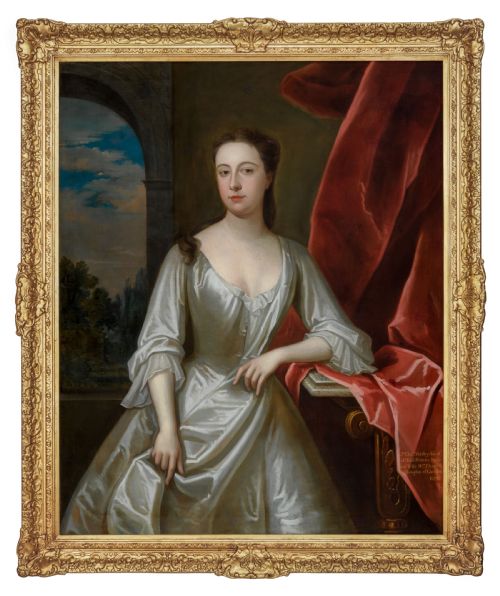
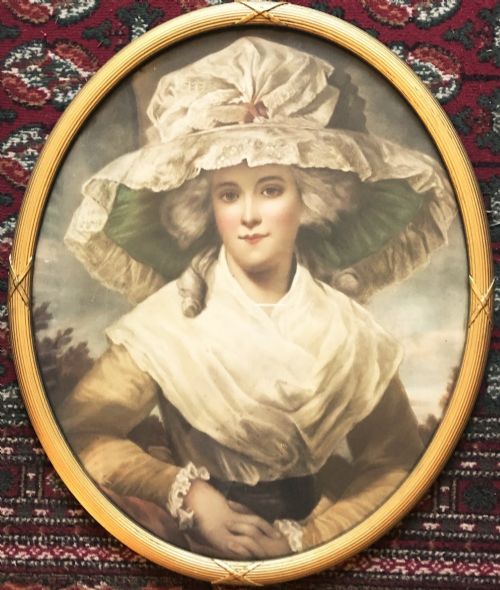
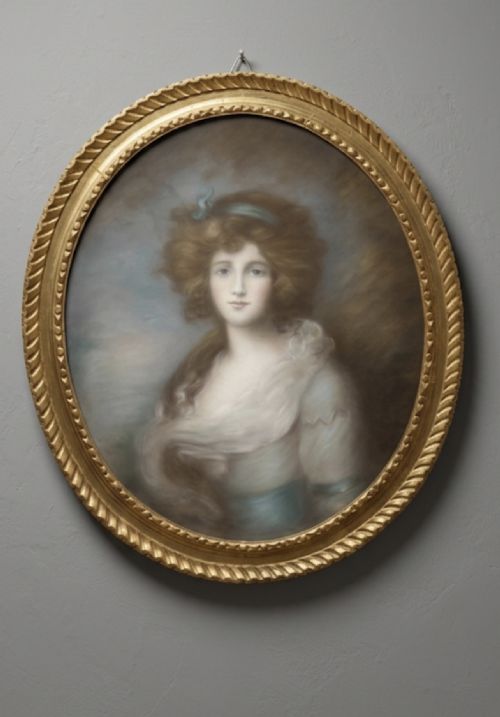
These gilded oval picture frames bring curved lines and bright metallic finishes to portraits, mirrors, and needleworks.
Gilded Oval Picture Frames
Gilded oval picture frames enclose portraits, mirrors, textiles, and prints produced across the eighteenth, nineteenth, and early twentieth centuries. When searching for gilded oval picture frames, buyers encounter items ranging from Georgian and Regency examples to Victorian and Edwardian pieces.
The objects housed within these boundaries include oil paintings, pastels, silhouettes, silkwork embroideries, and portrait miniatures. Many selections on this page pair the curved moulding directly with historical artworks or decorative mirrors.
Origins stretch from British workshops to French and Italian makers, encompassing styles from British Baroque and French Louis XVI to Georgian Revival. The shapes vary from compact miniature surrounds to large wall-hanging picture frames and mirrors.
Materials and construction
Makers formed the curved wooden foundations of these pieces using joined timber and carved elements. Giltwood and plain wood served as the primary base materials for shaping the distinct elliptical profiles.
Surfaces received layers of gesso to smooth the wood before the application of gold leaf or metallic gilding. Some French examples utilised cast bronze or brass alongside traditional wooden structures.
Specialised framing techniques also incorporated glass fronts, such as verre églomisé panels, to protect delicate woolwork pictures and paper prints.
Listings feature periods spanning the seventeenth, eighteenth, nineteenth, and early twentieth centuries, including Regency and Edwardian pieces.
Quality differences
The depth and crispness of the carved ornamentation separate standard mouldings from superior hand-carved pieces. Frames displaying intricate relief work or deep profiles reflect greater skill in the workshop.
The integrity of the surface finish dictates the visual impact of the metal leaf. Examples retaining their original gold leaf or finely applied gesso demonstrate higher craftsmanship than later overpainted surfaces.
The harmony between the elliptical timber frame and its enclosed artwork or mirror glass indicates deliberate pairing and period accuracy.
Sir Godfrey Kneller·Thomas Gainsborough·Arthur Percy Dixon·George Miers·George Hargreaves·Fernand Toussaint·Élisabeth Louise Vigée Le Brun
The Gilded Oval Picture Frames Glossary
- Giltwood
- Wood that has been coated with gold leaf or a gold-coloured finish. This material provides the bright metallic sheen seen on historical frames.
- Gesso
- A plaster-like mixture applied to wood surfaces as a preparation for gilding. It allows carvers to shape fine details before applying gold leaf.
- Verre églomisé
- A process of applying cold painting and gold leaf to glass. This technique frames delicate historical pictures and silhouettes.
- Silhouette
- A portrait profile cut from paper or painted in solid dark tones. These items frequently appear inside small oval surrounds.
- Needlework
- Hand-stitched textile art created using wool, silk, or thread. These pieces often occupy period water-gilded oval frames.
Gilded Oval Picture Frames: Frequently Asked Questions
What fits inside these frames?
These surrounds accommodate portrait miniatures, oil paintings, pastels, silhouettes, and textile works such as silkwork and needlework. Mirrors also utilise this curved format.
Many pieces retain their original contents, while others provide an enclosure for similar period works on paper or canvas.
How do I hang an oval frame?
Most wall-hanging pieces use a single secure fixing attached to the upper wooden reverse. Because oval shapes lack horizontal edges, centring relies entirely on the suspension point.
Matching the weight of the timber and glass to a suitable wall anchor ensures safe display in domestic spaces.
Are these frames French or British?
The listings include examples from various European traditions, with British and French origins appearing frequently. Stylistic cues like Napoleonic bees or French Louis XVI motifs indicate continental manufacture.
Georgian and Regency pieces often reflect domestic British cabinet-making and carving standards of the period.
How do I date an oval frame?
Dating relies on the construction materials, joinery methods, and the style of the gesso or carved decoration. Georgian and Regency pieces display different moulding profiles compared to Edwardian or later items.
Original backing boards, labels, and the accompanying artwork or mirror glass provide further chronological context.