
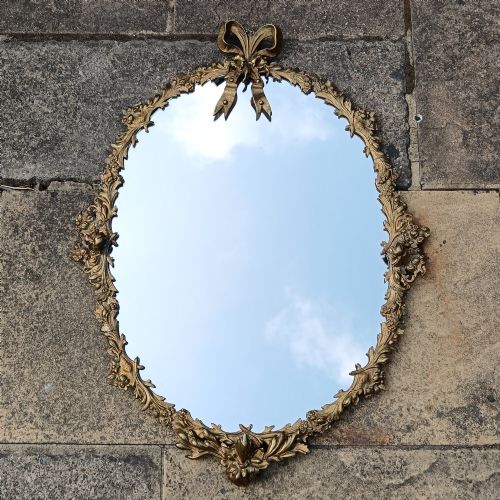
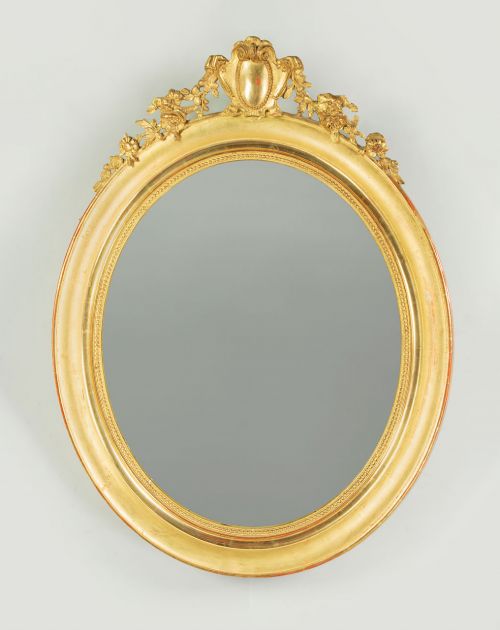
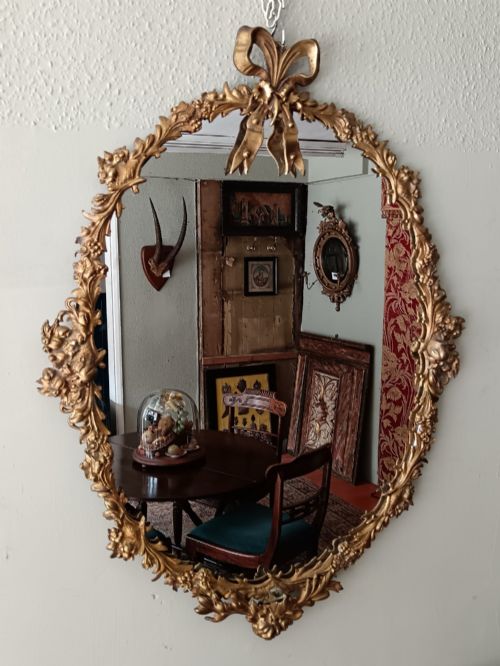
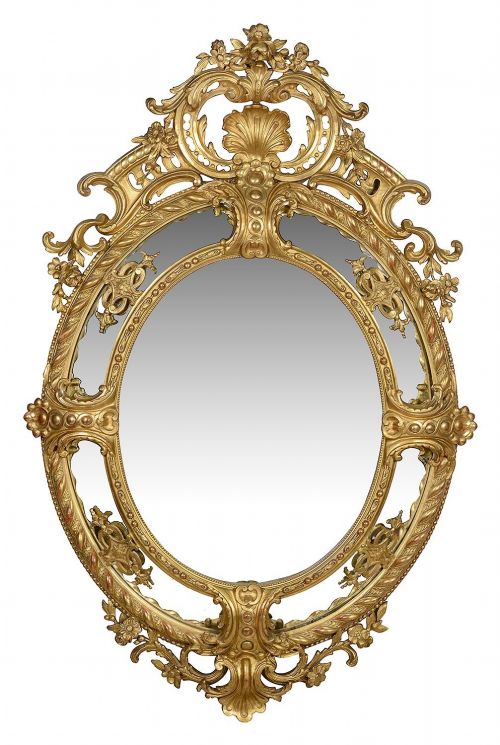


Gilded Oval Hanging Mirror
A gilded oval hanging mirror brings light and classical proportion to a room, drawing the eye with its curved gilt frame.
Gilded Oval Hanging Mirror
A gilded oval hanging mirror is a wall-mounted glass plate set within a shaped, gold-finished frame that hangs from a designated fixing. When you search for this phrase, you encounter pieces spanning from the early eighteenth century through the Georgian, Regency, and Victorian eras up to the Edwardian period.
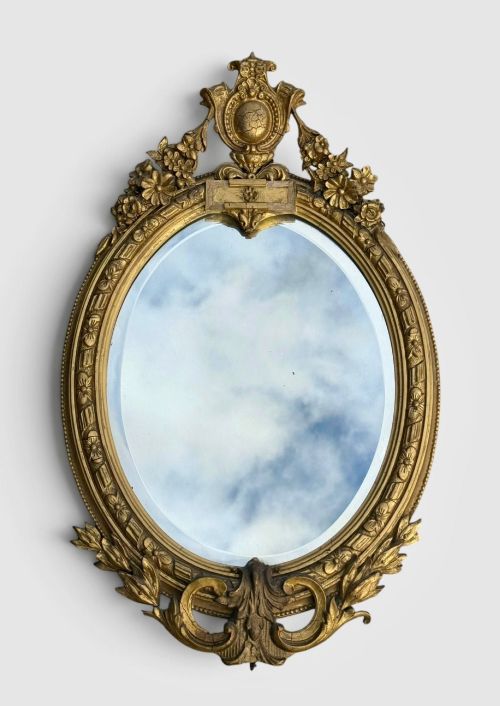
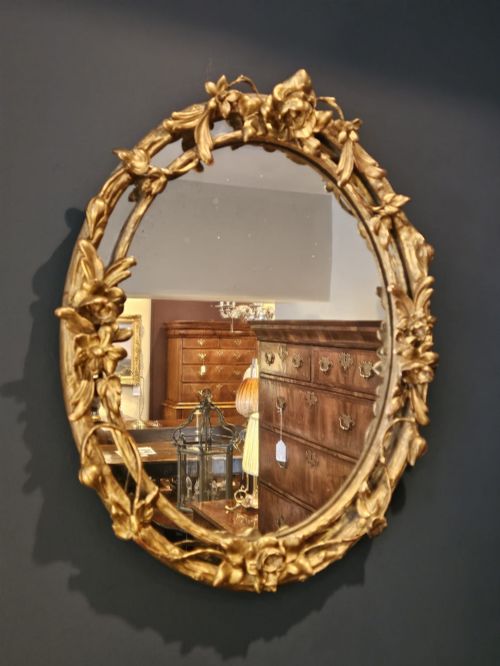
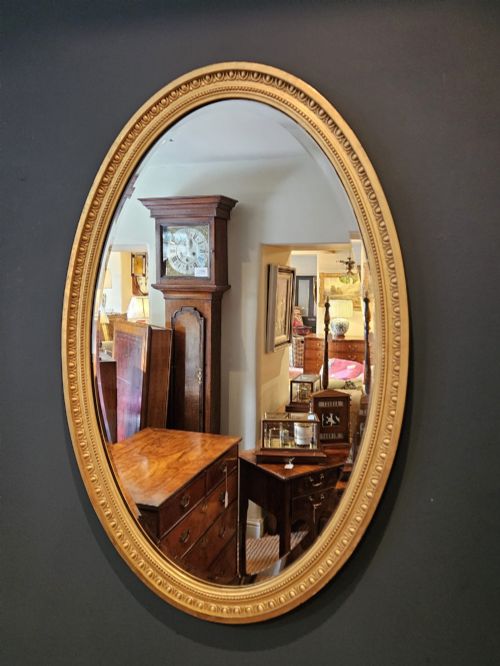
The most common examples on this page are Victorian and nineteenth-century pieces, often featuring gesso or carved wood frames. These range from restrained neoclassical designs to heavily ornamented rococo revivals.
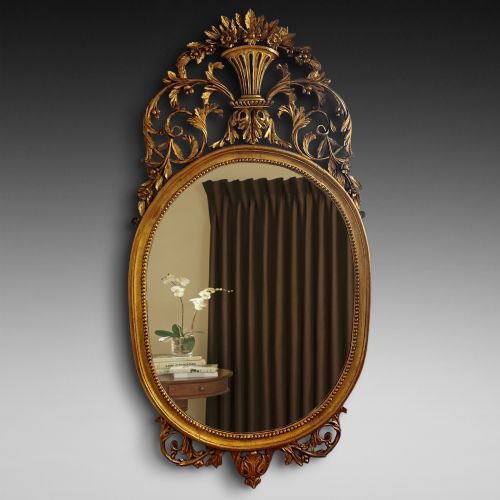
Makers drew on various historical aesthetics, producing Adam style, Louis XVI revival, and chinoiserie variations alongside traditional English and Italian frames. The vertical or horizontal oval format softens rectilinear interiors and reflects light into darker corners.
Materials and construction
Makers typically constructed the core frames from timber, wood, or plaster before applying layers of gesso to build up intricate relief decoration. Artisans then gilded these surfaces using gold leaf or applied metal finishes to achieve the characteristic metallic sheen.
Mirror glass plates were set into the rebates behind wooden or composition mouldings, sometimes featuring bevelled edges. Carved giltwood examples involved skilled hand-carving directly into the timber base prior to the gilding process.
Listings feature periods from the early eighteenth century to the Edwardian era, predominantly using timber, gesso, and glass.
Craftsmanship and condition
The depth and crispness of the carved detail distinguish superior frames from simpler moulded versions. Hand-carved giltwood exhibits sharp undercut foliage and scrolls, whereas composition ornaments can appear softer and more uniform.
The integrity of the original gilding and the clarity of the mirror glass dictate the overall standard of the piece. Period glass often shows natural foxing and age spots that evidence authenticity without detracting from the reflection.
The Gilded Oval Hanging Mirror Glossary
- Giltwood
- Timber that has been coated in gold leaf or gold paint. This technique provides a durable and luminous finish characteristic of formal antique frames.
- Gesso
- A plaster mixture applied to wood frames to create a smooth surface for carving or moulding. It accepts fine detail before gilding takes place.
- Chinoiserie
- European decorative style imitating Chinese artistic traditions. It appears on frames through asymmetrical motifs and painted or lacquered scenes.
- Bevelled glass
- A mirror plate with edges cut and polished at an angle. This technique creates a prismatic border that catches and refracts incoming light.
Gilded Oval Hanging Mirror: Frequently Asked Questions
Where should I hang a gilded oval mirror?
These mirrors suit placement above a mantelpiece, a console table, or a chest of drawers where the vertical curve balances surrounding furniture.
Ensure the wall fixing supports the weight of the timber and gesso frame securely before hanging.
How do I clean a gilt frame?
Dust the carved surface gently with a soft dry brush to remove particles without disturbing the delicate gold leaf.
Avoid using water, chemical sprays, or abrasive cloths that can strip the historic gilding from the gesso.
How do I date an antique mirror?
Examine the construction of the wooden backboards, the type of screws or nails used, and the mounting rings. Period materials and framing styles help place the piece within Georgian, Regency, or Victorian eras.
Inspect the glass plate for signs of age, such as slight distortion or oxidation behind the silvering.
Are these mirrors heavy?
Solid wood and gesso frames carry substantial weight due to the density of the timber and plaster construction. Large nineteenth-century examples require robust wall anchors.
Check the hanging wire or fixing loops on the reverse to ensure they remain secure.