


Gilded Lustre China Bowl
These gilded lustre china bowl examples bring iridescent surfaces and intricate fantastical scenes straight from the early twentieth century into your home.
Gilded Lustre China Bowl
When you search for a gilded lustre china bowl, you encounter richly decorated ceramic vessels originating primarily from the Edwardian era and the nineteen-tens and twenties. These pieces combine lustrous metallic sheens with vibrant enamel imagery, taking the form of standard decorative bowls as well as striking octagonal variations and miniature sets.
The versions you are most likely to meet on this page stem from distinct artistic visions developed during the 1910 and 1920 periods. They range from small cabinet pieces to large display items featuring elaborate mythological and natural motifs.
How they were made
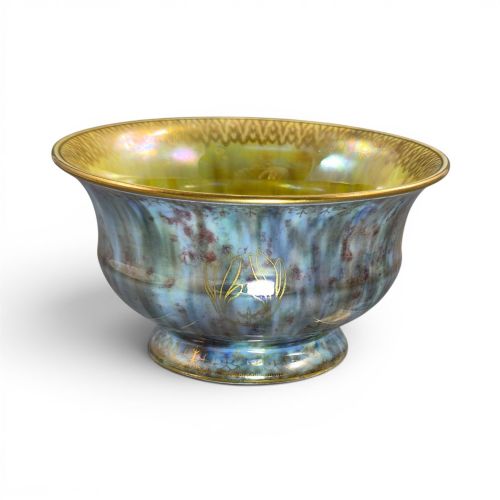
Makers utilised bone china and standard porcelain as the foundational bodies for these vessels, applying specialised glaze techniques to achieve their characteristic iridescent finish. Lustre glaze creates a shimmering metallic optical effect on the ceramic surface.
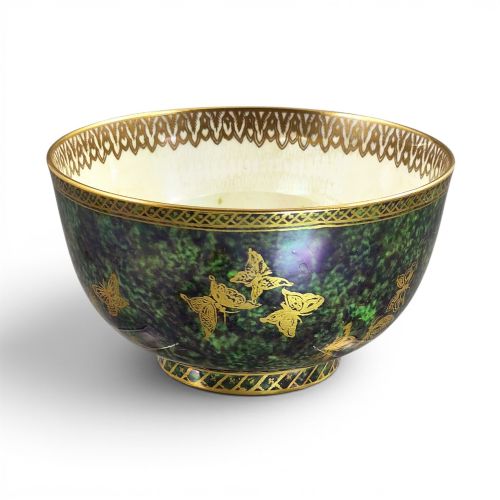
Artisans enhanced these decorated surfaces using gold leaf, gold gilding, and gilt accents alongside colourful enamel pigments. This combination of metallic application and fired enamel produced deep visual complexity across both dragon and butterfly motifs.
Every listing on this page employs either bone china or porcelain as the base material.
What varies in quality
The distinction between standard production items and exceptional examples lies in the complexity of the narrative design and the density of the gilding. Highly intricate mythical scenes involving dragons or underwater themes require superior painting skill compared to simpler geometric diaper patterns.
The precision of the lustre glaze application also dictates the visual depth of the piece. Superior examples display vibrant, shifting colour play across the porcelain body without cloudiness in the metallic finish.
Daisy Makeig-Jones·James Hodgkiss
The Gilded Lustre China Bowl Glossary
- Lustre glaze
- A type of pottery glaze containing metallic oxides that leaves an iridescent, metallic sheen upon firing. This technique creates the signature rainbow effect seen on early twentieth-century decorative pieces.
- Bone china
- A type of soft-paste porcelain containing bone ash, providing high strength and a bright white body. It serves as a smooth canvas for detailed enamel painting and gold gilding.
- Enamel
- Opaque or translucent glass-like substance fused to the ceramic surface through firing. It provides the brilliant colours found in fantasy and nature motifs.
- Gilding
- The application of gold leaf or gilt paint to accent rims, handles, and internal pictorial scenes. This adds rich contrast to the shimmering lustre background.
- Octagonal bowl
- A vessel formed with eight distinct flat sides rather than a standard circular profile. This geometric shaping appears on specific fantasy-themed display pieces.
Gilded Lustre China Bowl: Frequently Asked Questions
How do I care for a gilded lustre bowl?
Keep these fragile ceramic pieces away from direct sunlight and abrasive cleaning materials to protect the delicate enamel and gold leaf.
Dust them gently with a soft, dry cloth rather than washing them in water to preserve the historical surface.
What periods do these bowls come from?
The pieces listed originate primarily from the Edwardian era, spanning the nineteen-tens and early nineteen-twenties.
This specific timeframe represents the height of imaginative lustre glaze development in British ceramics.
Are these bowls meant for food use?
These decorative items serve primarily as visual display pieces rather than functional tableware for dining.
The heavy use of enamel and gold gilding on lustre surfaces is best preserved by keeping them empty in cabinets or on display stands.
What motifs appear on these bowls?
Common decorative themes include fantastical creatures like dragons and butterflies, alongside intricate geometric diaper patterns.
Many designs incorporate detailed narrative scenes set within magical landscapes.