
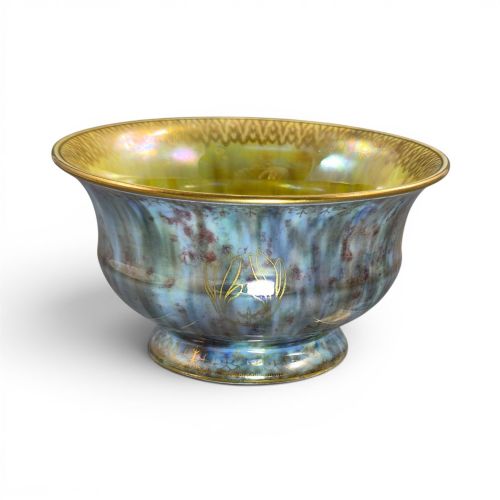
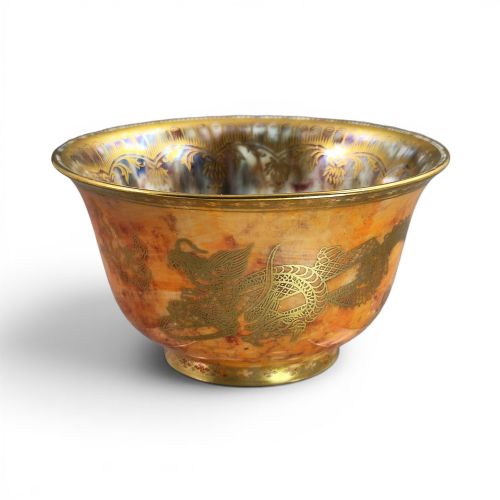


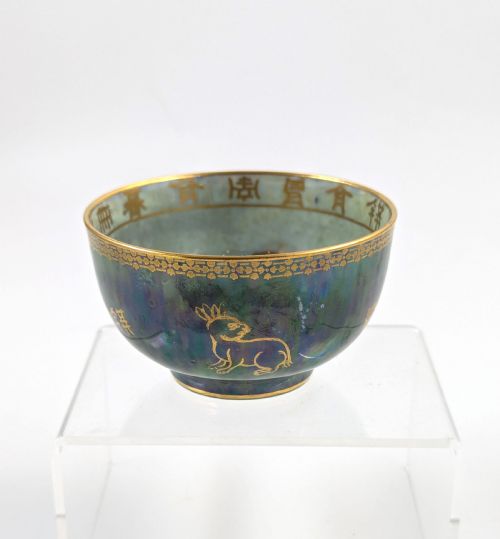


Wedgwood Dragon Lustreware Bowl
These pieces of wedgwood dragon lustreware bowl combine rich ceramic glazes with mythical dragon motifs designed to catch the eye.
Wedgwood Dragon Lustreware Bowl
A wedgwood dragon lustreware bowl brings vibrant colour and intricate mythical imagery to a room, drawing the eye immediately. Buyers seeking a wedgwood dragon lustreware bowl will most frequently encounter Edwardian examples from the 1910s and 1920s.
The forms span decorative bowls, octagonal bowls, lantern bowls, and miniature cups. These pieces originate from the early twentieth century and showcase distinct artistic styles such as Art Nouveau and Art Deco.
Materials and Techniques
Potters shaped these vessels from ceramic, porcelain, or bone china before applying a glossy lustre glaze. This special glaze creates an iridescent sheen across the surface of the ceramic.
Makers embellished the pieces using gold leaf, gold gilding, and gilt highlights. The metallic details frame the painted dragon motifs and catch the light from different angles.
Listings feature Edwardian pieces from the 1910s and 1920s, incorporating bone china, porcelain, gold leaf, and lustre glaze.
Evaluating Quality
The depth and coverage of the lustre glaze dictate visual success, with certain pieces displaying a richer iridescence than others. Colour choices, from deep green to blue, alter the overall impact of the dragon design.
Intricacy in the application of gold leaf and gilt work separates standard production from more ambitious forms like octagonal or lantern shapes. The precision in rendering the coiling or celestial dragon motifs determines the artistic merit of the vessel.
Daisy Makeig Jones·Wedgwood
The Wedgwood Dragon Lustreware Bowl Glossary
- Lustre Glaze
- A type of ceramic glaze containing metallic oxides that produce an iridescent, mother-of-pearl sheen upon firing. This finish defines the distinctive surface of the ware.
- Fairyland Lustre
- A specific decorative line developed for the pottery, known for fantastical subjects and rich colour palettes. It represents a pinnacle of early twentieth-century ceramic design.
- Gilt
- A thin layer of gold applied to the surface of the ceramic for decoration. It is often used to outline motifs and enhance the edges of the form.
- Bone China
- A type of soft-paste porcelain containing animal bone ash, resulting in high strength and translucency. It provides a smooth white base for colourful glazes.
Wedgwood Dragon Lustreware Bowl: Frequently Asked Questions
What periods do these bowls come from?
The pieces date primarily from the Edwardian era, spanning the 1910s and 1920s. This period saw the creation of the most notable lustre designs.
Production methods during these decades relied on traditional ceramic techniques combined with innovative glaze recipes.
How do I care for a lustreware bowl?
Keep the bowl away from direct sunlight to preserve the vibrant metallic glazes and gold leaf details. Dust gently with a soft, dry cloth rather than using liquid cleaners.
Handle the vessel with clean hands to prevent skin oils from affecting the sensitive iridescent surface.
What motifs appear on these bowls?
Dragons serve as the primary subject, appearing in forms such as coiling dragons and celestial dragon patterns. These mythical creatures are often rendered in vivid colours against contrasting backgrounds.
Additional motifs draw from fantastical themes developed during the early twentieth century.
Are all these bowls round?
While many pieces follow traditional circular forms, some examples feature octagonal shapes or lantern configurations. These varied silhouettes offer different ways to display the glaze effects.
Miniature cups also appear alongside the larger decorative bowls in the design range.