


Porcelain Dragon Dish
A porcelain dragon dish brings mythic beasts to the table through blue and white charging, lustre glazes and painted compartments.
Porcelain Dragon Dish
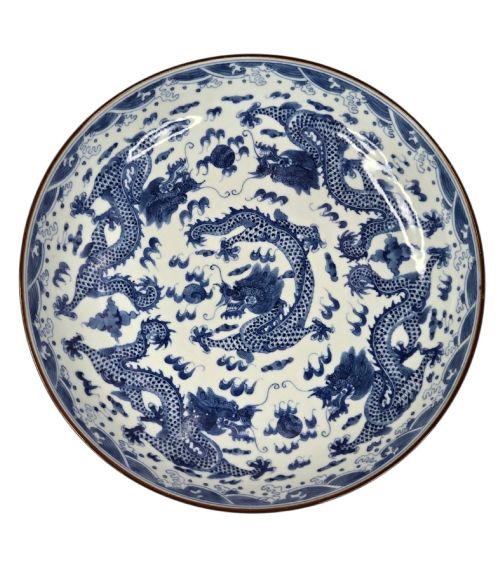
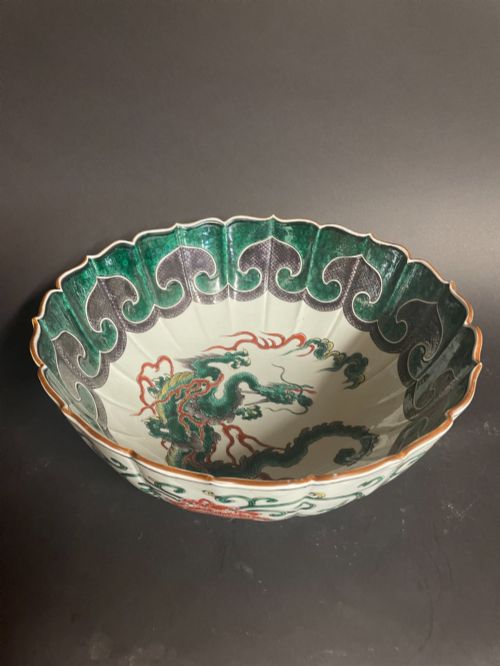
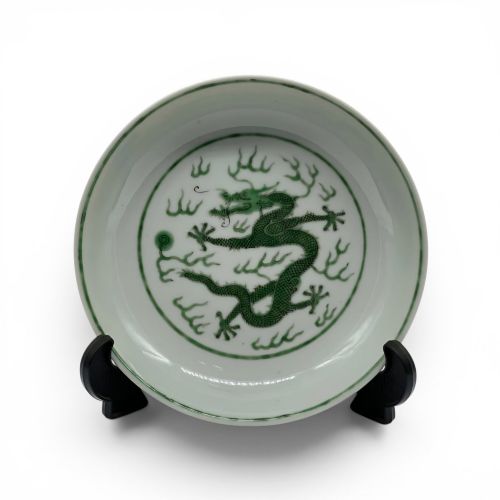
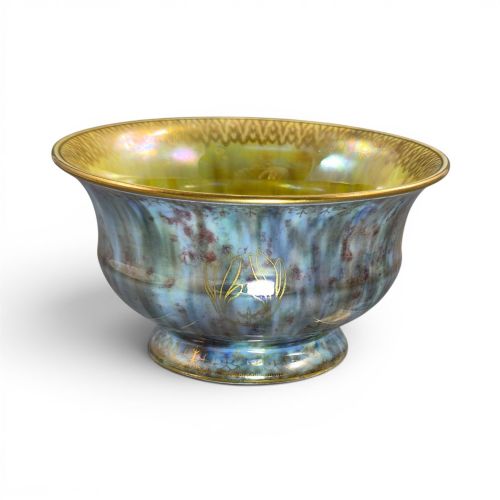
A porcelain dragon dish covers chargers, cabinet plates, bowls and decorative dishes depicting dragons across various periods. These objects range from Chinese imperial-style vessels and Japanese Imari export wares to Georgian English porcelain and Edwardian lustre creations.
The porcelain dragon dish most frequently met on this page is the English bone china or earthenware plate produced by Worcester or Wedgwood, often featuring traditional Japanese-inspired motifs. Alongside these sit Chinese blue and white bowls and Japanese chargers from the Meiji period.
Makers adapted the dragon motif for dessert plates, armorial services and large display bowls. Form follows function through deep chargers designed for display and shallow plates shaped for cabinet or table use.
How they were made
Potters utilised hard-paste and bone china bodies, applying cobalt underglaze, enamel colours and lustre glazes before firing. Artisans incorporated gold leaf, gilt and intricate enamel work to delineate the scales and claws of the dragon motif.
Techniques spanned Chinese imperial throwing and painting, Japanese Arita potting, and English factory transfer printing combined with hand-painted enamel compartments. Glazing methods produced both high-gloss finishes and iridescent lustre effects.
Listings feature porcelain dragon dishes spanning the 19th Century, Regency, Edwardian era, and Art Deco periods, utilising bone china, enamel, and lustre glaze.
What varies in quality
Quality rests on the crispness of the painted or printed dragon motif and the depth of the glaze, whether cobalt underglaze or iridescent lustre. Precision in the rendering of five-clawed imperial dragons or compartmented patterns separates standard production from masterworks.
The sophistication of the palette and the execution of gilding govern the tier of the piece. Hand-painted detail by notable designers elevates the status of English lustre ware far above simpler factory output.
Wedgwood·Worcester·Meissen·C.J. Mason·Chamberlain Worcester
The Porcelain Dragon Dish Glossary
- Charger
- A large decorative plate or platter intended primarily for display rather than service. These wide vessels provide a broad canvas for complex dragon motifs.
- Lustre Glaze
- A metallic glaze technique creating an iridescent, shimmering surface effect. Wedgwood utilised this extensively on dragon bowls.
- Cobalt Underglaze
- Pigment applied to the ceramic body before glazing and firing, yielding deep blue tones. This method protects the painted dragon design beneath a glassy layer.
- Imari
- A style of Japanese export porcelain featuring deep blue, iron red and gilt decoration. These pieces often incorporate dragons alongside floral compartments.
- Doucai
- A Chinese porcelain technique combining underglaze blue outlines with overglaze enamel infill. This method creates vibrant, multi-coloured dragon designs.
Porcelain Dragon Dish: Frequently Asked Questions
How do I care for a porcelain dragon dish?
Wash porcelain gently by hand in warm water using mild soap. Avoid abrasive sponges that can scratch delicate gilt or lustre surfaces.
Keep these pieces out of direct sunlight to prevent the enamel colours from fading over decades.
Were these dishes meant for food?
Many smaller plates and bowls served practical functions for desserts or table service during the Georgian and Victorian eras. Larger chargers and cabinet plates were made specifically for visual display.
Over time, even functional items transitioned into decorative display pieces due to their artistic value.
What does a five-clawed dragon mean?
In Chinese imperial tradition, the five-clawed dragon symbolised the Emperor and supreme authority. Such motifs denote pieces created for court use or inspired by imperial standards.
Export wares for Western markets often featured varying claw counts depending on the source and period.
How can I distinguish English from Asian dragon dishes?
English factories like Worcester and Wedgwood adapted Eastern motifs onto local bone china bodies during the Georgian and Edwardian periods. Asian pieces display distinct paste compositions, regional potting techniques and traditional mark styles.
Examining the foot ring and glaze pooling helps identify the manufacturing origin.