

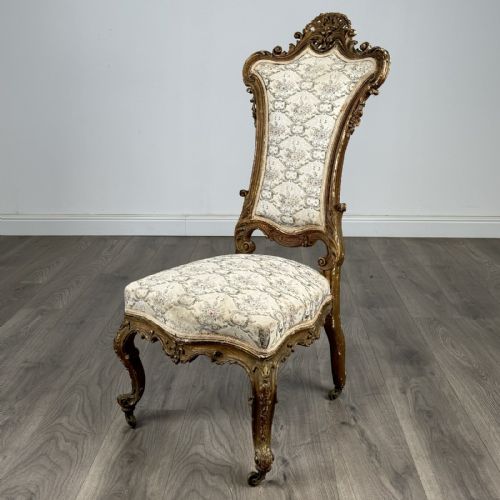


Gilded Hall Seat
These gilded hall seat pieces bring architectural presence and metallic lustre into an interior, offering a distinct focal point for a grand entrance.
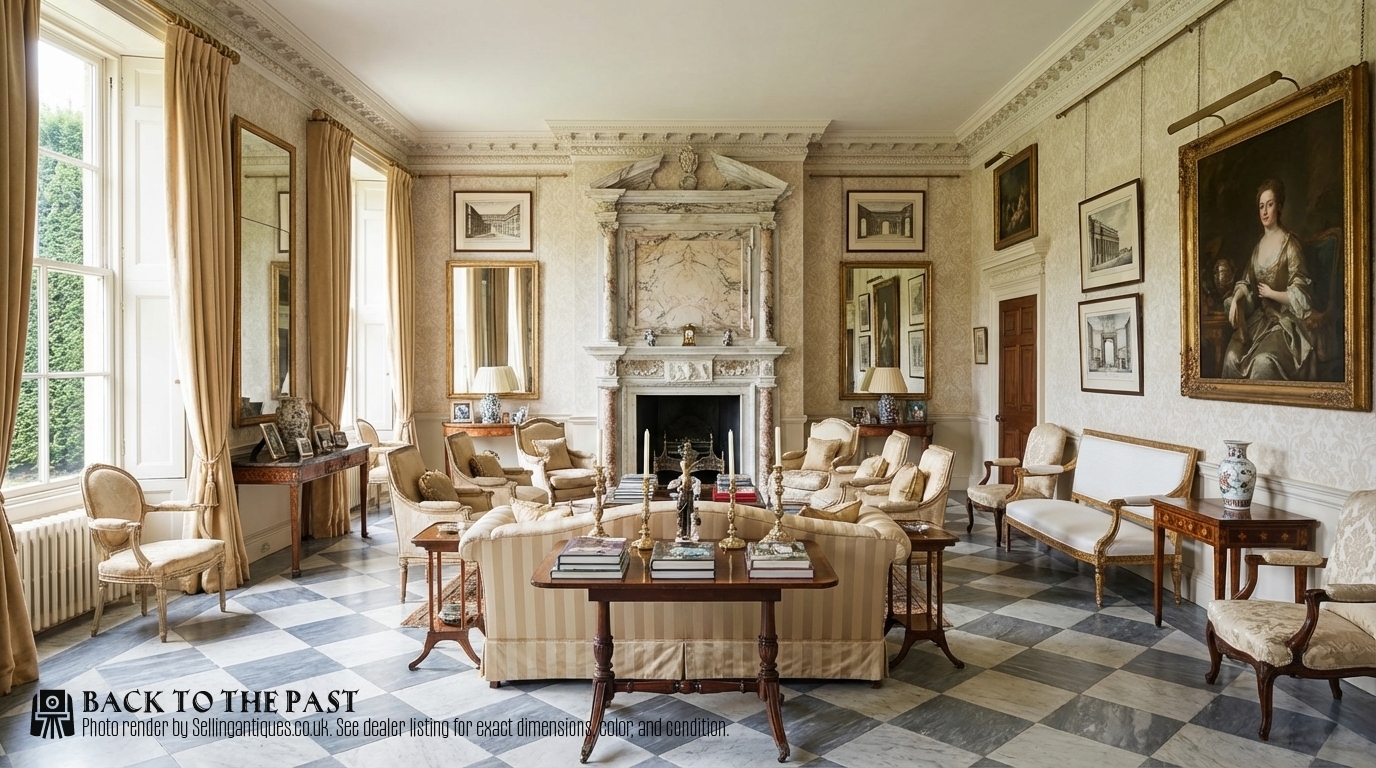
Gilded Hall Seat
A gilded hall seat encompasses a variety of formal seating forms designed to impress visitors in corridors, landings and entranceways. The pieces appearing here span the Regency, Victorian, and Edwardian periods, alongside Continental and French Napoleon III designs.
The selection ranges from structural hall chairs and side chairs to window seats, settees, and benches. Buyers encounter diverse regional interpretations, including Adams style neoclassical window seats and Gothic revival pieces in the manner of Pugin.
Makers utilised contrasting finishes, pairing giltwood and gold leaf with ebonised wood or simulated bamboo. Seating surfaces incorporate cane, velvet, and various fabric upholsteries to balance decorative splendour with utility.
Materials and construction methods
Workshops formed these frames primarily from hardwoods such as beech and walnut, often applying ebonisation to contrast with metallic gilding. Giltwood and gold leaf were painstakingly applied to carved wooden surfaces to catch candlelight and daylight in formal interiors.
Structural elements frequently feature woven cane panels or padded upholstery finished in velvet and decorative fabrics. Artisans employed traditional joinery techniques suited to high-traffic entrance areas, ensuring the structural integrity of chairs and window seats.
Gilded Hall Seat Retail Price Guide 2026
Typical asking prices for gilded hall seat among the pieces listed under this phrase on Sellingantiques today, from the lower quarter to the upper quarter. They describe what is for sale here now, not the wider market.
One piece captures the final glimpse of Trentham Hall for a duke, proving that even a seat can witness high drama.
Assessing quality in execution
The refinement of the surface gilding and the depth of the woodcarving separate standard utility pieces from masterworks. Crisp detailing in neoclassical or Gothic motifs indicates skilled hand-tooling rather than mass production.
The integrity of the underlying timber frame and the authenticity of period elements dictate the overall grade. Superior examples retain their original cane work, textiles, and gilding without heavy modern intervention.
Bruce J Talbert
The Gilded Hall Seat Glossary
- Giltwood
- Timber that has been coated with gold leaf or gold paint to simulate solid gold. This finish defines the primary visual appeal of these seating forms.
- Ebonised wood
- Timber treated with a chemical stain or paint to resemble heavy, dark ebony. Makers frequently combined this dark finish with gilt details.
- Cane
- Woven rattan or split reed used to form breathable seating panels. It provides a lightweight yet durable surface on historical chairs.
- Bergere
- An enclosed upholstered armchair with wooden framing exposed. These seats typically feature padded armrests and a tight upholstered seat.
- Savonarola chair
- A folding chair constructed from intersecting wooden slats in a scissors configuration. This Renaissance revival form offers architectural rigidity.
Gilded Hall Seat: Frequently Asked Questions
What is a gilded hall seat?
A gilded hall seat is a decorative item of furniture finished in gold leaf or giltwood, designed originally for grand entranceways and corridors.
These pieces include window seats, benches, and hall chairs dating from the Regency era through to the Edwardian period.
Where were hall seats placed?
Historically, hall seats stood in the main entrance halls and vestibules of large houses and country residences. They served as formal resting places for visitors waiting to be received.
Today, buyers use them in similar transitional spaces such as wide corridors, large landings, and reception rooms.
How do I care for giltwood?
Giltwood requires gentle maintenance to protect the delicate gold leaf application from abrasion and moisture. Dusting should be performed with a soft, dry brush rather than chemical cleaning agents.
Keep these pieces away from direct sunlight and humidity fluctuations to prevent the wood underneath from expanding or cracking.
How do I identify a Regency hall seat?
Regency pieces often display classical neoclassical motifs, clean architectural lines, and contrasting finishes such as ebonised wood paired with giltwood. The forms draw inspiration from ancient Roman and Greek designs.
Examination of the joinery and material ageing helps confirm the early nineteenth-century manufacturing period.