

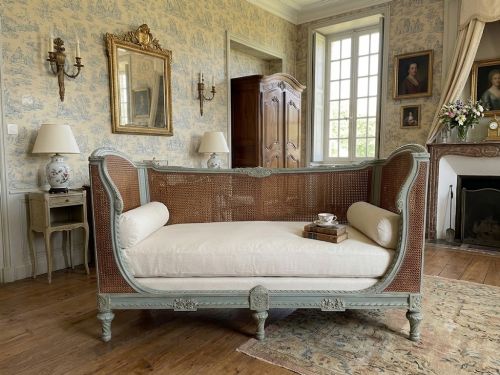


French Neoclassical Canape
A French neoclassical canape brings classical restraint and carved elegance to a room, offering a seat defined by structured symmetry.
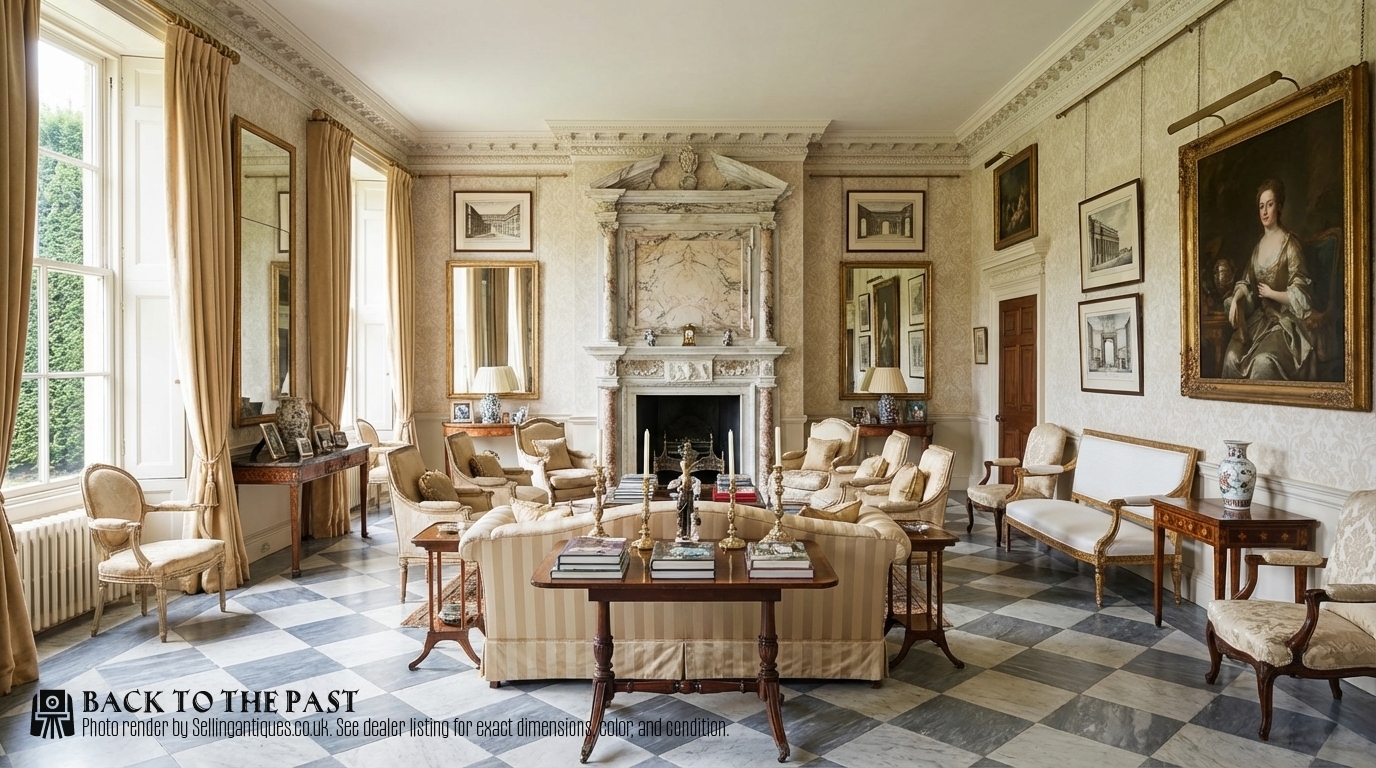
French Neoclassical Canape
A French neoclassical canape is a seating form that draws on classical motifs, appearing across nineteenth century and early twentieth century periods. These pieces span forms such as day beds, two seat sofas, and larger salon suites.
The versions most commonly met on this page include Louis XVI style pieces and Empire revival designs. They arrive in formats ranging from painted cane day beds to carved walnut or giltwood settees.
Makers and makers of revival suites utilised walnut, mahogany, and beech frames, alongside giltwood and paint. The decorative vocabulary borrows heavily from French Empire and Edwardian neoclassical revivals.
Materials and construction
Frames rely on hardwoods such as walnut, mahogany, and beech, alongside giltwood and painted timber. Canework appears as a lighter structural alternative to solid upholstery.
Upholstery employs materials such as linen, velvet, and various decorative fabrics. Carved wooden elements establish the architectural lines characteristic of the style.
French Neoclassical Canape Retail Price Guide 2026
Typical asking prices for french neoclassical canape among the pieces listed under this phrase on Sellingantiques today, from the lower quarter to the upper quarter. They describe what is for sale here now, not the wider market.
Some day beds double as elegant lounges, proving that nineteenth century comfort still accommodates a lazy afternoon.
Assessing quality and finish
The definition of the carving on wooden and gilt frames separates finer examples from simpler production. Crisp lines in the woodwork reflect the ambition of the maker.
The integration of canework and the choice of surface finish, whether original paint or gold leaf, determine the visual weight of the piece.
The French Neoclassical Canape Glossary
- Canapé
- A French upholstered sofa or settee, typically featuring an exposed wooden frame and decorative carving. These seats often form part of larger salon suites.
- Giltwood
- Timber coated with gold leaf or gilt preparation, providing a bright reflective surface. This finish appears frequently on formal nineteenth century seating.
- Canework
- Woven cane material utilised for chair and sofa panels, offering a lighter texture than solid upholstery. It appears on day beds and couches.
- Empire Revival
- A design movement reviving the heavy classical forms of the French Empire period. Pieces in this style utilise dark woods and bold classical motifs.
French Neoclassical Canape: Frequently Asked Questions
What is a French neoclassical canape?
A French neoclassical canape is a formal upholstered seat with classical proportions, dating from the nineteenth and early twentieth centuries.
These pieces feature exposed wooden frames, often painted or gilt, reflecting historical French design revivals.
How were these sofas used?
They served as formal seating in reception rooms, parlours, and salons, designed to impress visitors and complement interior architecture.
Day bed variants also provided a place for resting during the day within private chambers.
How do I date a canape?
Dating relies on the specific revival style, such as Louis XVI or Empire, combined with the materials and construction methods evident in the frame.
Nineteenth century pieces often show heavier gilt frames, while early twentieth century examples include painted finishes and cane panels.
How do I live with a canape?
Placing a canape in a drawing room or hallway creates a distinct focal point that balances classical elegance with functional seating.
Care should be taken to protect delicate fabrics like velvet and linen, as well as original painted or gilt surfaces.