


French Giltwood Bench
A French giltwood bench brings neoclassical grandeur into a room through carved timber and gold leaf.
French Giltwood Bench
A french giltwood bench encompasses seating forms ranging from compact footstools and window seats to expansive canapés and settees. These pieces date principally from the nineteenth century and the early decades of the twentieth century, reflecting enduring revivals of earlier court tastes.
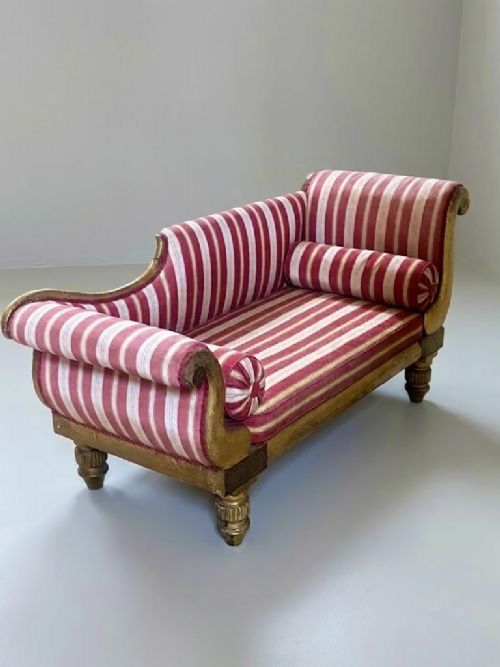
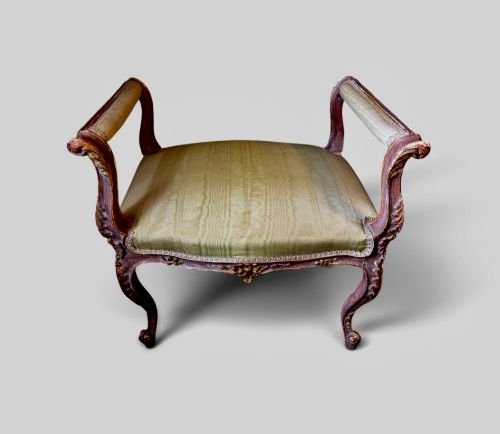
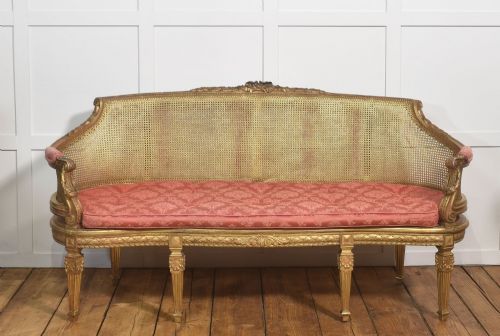
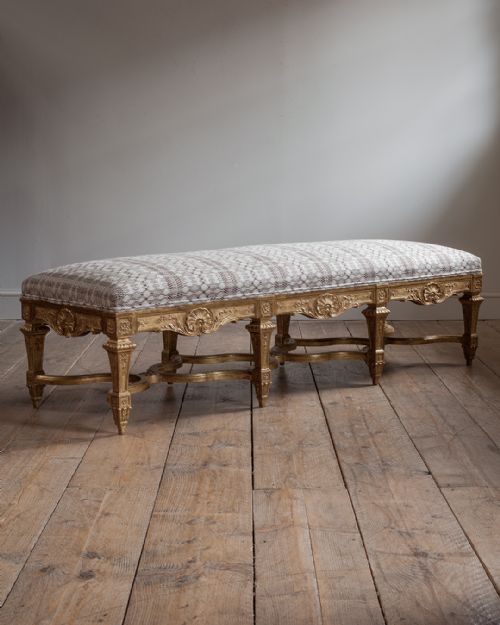
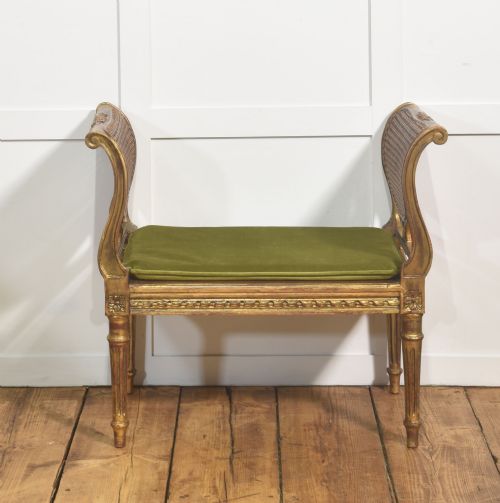
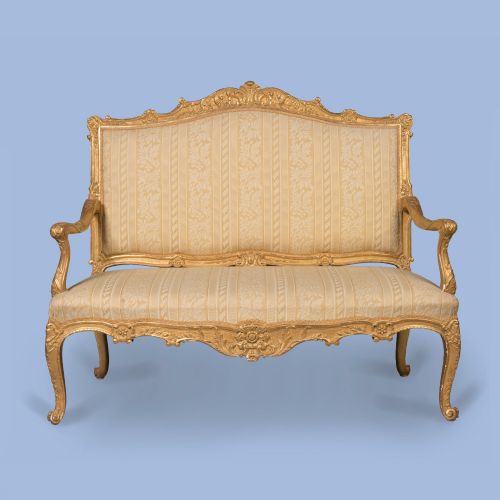
The selection on this page demonstrates various stylistic revivals including Louis XVI, Louis XV, Louis XIV, Regency, and Empire. Forms include window seats, duet stools, footstools, and larger two-seater sofas upholstered in silk, fabric, cane, or textile.
Materials and construction
These frames rely upon timber, most notably beech, carved by hand into scrolling motifs, foliate details, and fluted legs. Artisans applied thin layers of gold leaf or gilt paint over the wooden structure to achieve a luminous surface finish.
Upholstery methods involve traditional stuffing techniques paired with silk, patterned textiles, or woven cane panels. Frames frequently combine carved wooden elements with parcel gilt accents, painted surfaces, or exposed timber grain.
Several pieces include the curious category of duet stools, built specifically for two people to sit together at a pianoforte.
Evaluating quality and craftsmanship
Quality rests primarily on the depth and crispness of the hand carving across the wooden frame. Superior examples display sharply defined acanthus leaves, crisp fluting, and clean joints rather than soft, moulded contours.
The application of the gilding also determines standard, with genuine gold leaf ageing with a softer lustre than flat modern metallic paint. Furthermore, the integrity of original cane work and the selection of period silk or textile upholstery elevate the standing of a piece.
The French Giltwood Bench Glossary
- Giltwood
- Timber covered with a thin layer of gold leaf. This finish defines the reflective, ornate surfaces characteristic of formal European seating.
- Canapé
- A decorative French settee or sofa. These upholstered seats typically feature exposed carved wooden frames and multiple seating places.
- Cane
- Woven rattan material used for seat panels or backrests. It provides a light, textured contrast to solid carved timber frames.
- Curule stool
- An ancient Roman magistrate chair design adapted into X-frame seating. This folding-style X frame appears frequently in Empire style pieces.
- Window seat
- A long, narrow stool or bench designed to fit beneath a window recess. These seating forms often lack a full backrest.
French Giltwood Bench: Frequently Asked Questions
How do I distinguish Louis XV and Louis XVI styles?
Louis XV pieces exhibit asymmetrical curves, sweeping cabriole legs, and exuberant rococo carving. The overall aesthetic leans towards fluid organic forms and scrollwork.
Louis XVI pieces introduce neoclassical straight lines, symmetrical geometry, and fluted column legs. Rectangular shapes and classical motifs replace the earlier curves.
Where should I place a giltwood bench?
These benches suit formal drawing rooms, bedrooms as end-of-bed seating, or hallways as statement pieces. Window seats fit naturally in bay windows or narrow transitional spaces.
Keep them away from direct sunlight and damp environments to protect the fragile gold leaf and antique silk upholstery.
Are these benches comfortable for daily seating?
Many of these pieces serve primarily as decorative accent furniture rather than lounging sofas. The upright posture of classical French seating encourages formal sitting.
Stools and window seats work well for short-term seating, while larger canapés offer more relaxed support depending on the cushion filling.
What does cane seating indicate?
Cane panels denote a lighter, more breathable construction often utilised in warmer climates or summer rooms. This woven technique lightens the visual weight of heavy giltwood frames.
Original period cane requires careful handling to prevent breakage and drying out over time.