

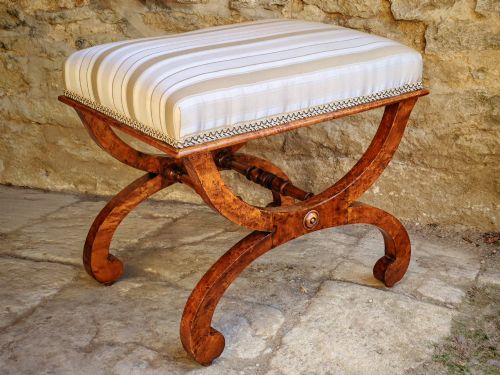


Carved Wood Padded Bench
When you search for a carved wood padded bench, you are looking at upholstered seating designed for dressing tables, windows, and formal rooms.
Carved Wood Padded Bench
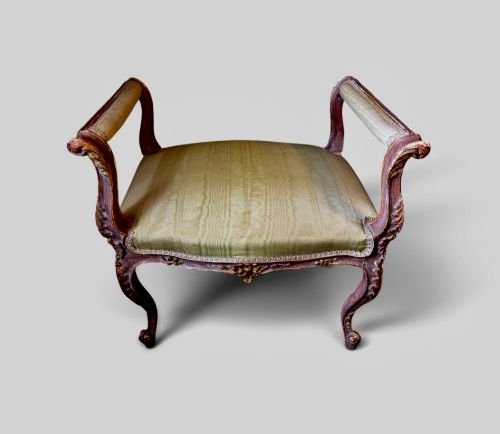
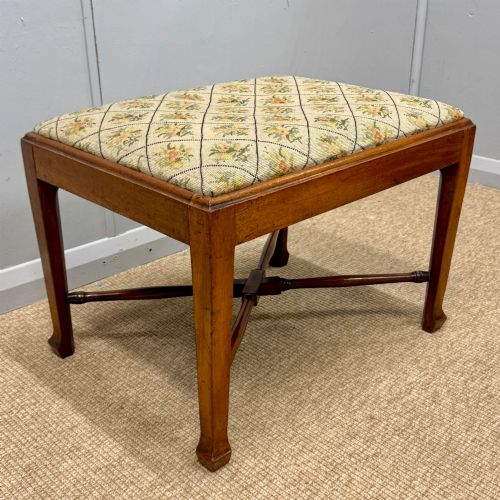
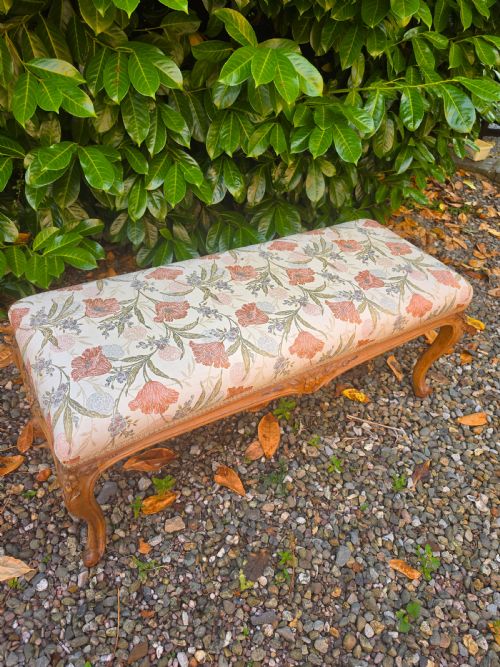
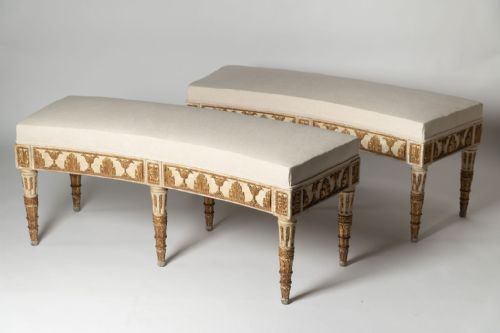
A carved wood padded bench encompasses a variety of low seating forms, ranging from single dressing table stools and piano seats to longer footstools, window seats, and settees. The pieces recorded here predominantly date from the nineteenth century and the early decades of the twentieth century, reflecting revival styles like French Rococo, Georgian, and Queen Anne. These forms served practical domestic functions in bedrooms, parlours, and music rooms.
Buyers will most frequently encounter compact stools and longer benches framed in mahogany, walnut, or giltwood, often featuring padded tops covered in fabric, velvet, or tapestry. Many examples show distinct regional or stylistic influences, including Italian Neoclassical, Arts and Crafts, and Gustavian designs. The combination of carved wooden frames and soft upholstery defines the group as a whole.
Materials and construction
The wooden frames of these benches rely on hardwoods such as mahogany, walnut, rosewood, and burr maple, selected for their strength and grain. Cabinetmakers shaped these materials into cabriole legs, twisted rope supports, and cross stretchers, applying hand carving and occasional giltwood or parcel gilt finishes. French and Italian examples often utilise painted or gilded surfaces over carved walnut and softer woods.
Upholstery forms the other half of the construction, utilising padded textile covers over supportive internal bases. Materials range from traditional tapestry and leather to velvet and modern printed cottons, sometimes applied during later restoration work. Hinged seats occasionally appear in piano stools, revealing internal storage compartments constructed from secondary timbers.
Listings feature mahogany, walnut, and giltwood frames paired with velvet, tapestry, and leather upholstery across nineteenth and early twentieth-century periods.
Assessing quality in carved wooden seating
Quality rests significantly on the crispness and depth of the hand carving on the wooden frame. Pieces with deeply undercut foliage, clean cabriole lines, and well-defined mouldings stand apart from simpler, more mechanically produced items. The choice of primary timber also dictates merit, with dense figured walnut and burr maple commanding greater attention than plain woods.
The standard of the upholstery work and the integrity of the frame joints complete the assessment. Solid joinery without excessive movement, combined with sympathetic padding and high-grade textile covers like silk velvet or period-appropriate tapestry, indicates a higher grade of manufacture. Original finishes, where retained, show a mellow patination that enhances the visual weight of the carved details.
Jas Shoolbred
The Carved Wood Padded Bench Glossary
- Cabriole leg
- A furniture leg that curves out and then narrows inward, typically ending in a pad or claw foot. This form derives from animal legs and became popular in eighteenth-century designs and later revivals.
- Giltwood
- Timber that has been coated with a thin layer of gold leaf or gesso preparation. It creates a bright, reflective surface often seen on formal French and neoclassical seat frames.
- Cross stretcher
- Wooden bars connecting the legs of a stool or table near the base to provide structural stability. They frequently feature turned details or central finials.
- Tapestry
- A heavy textile woven with pictorial or geometric designs, commonly used for durable seat upholstery. Antique pieces often feature hand-stitched wool needlework.
- X framed stool
- A form of seating supported by intersecting diagonal legs forming an X shape when viewed from the side. This ancient architectural form experienced revivals during the nineteenth century.
Carved Wood Padded Bench: Frequently Asked Questions
What rooms suit a carved wood padded bench?
These pieces fit naturally at the foot of a bed, beneath a dressing table, or placed by a window. Their compact proportions allow them to function as flexible extra seating in living spaces.
Longer examples and settees serve well in hallways or drawing rooms where low-backed seating is preferred. The combination of carved wood and soft padding provides both visual interest and practical comfort.
How do I care for the upholstery?
Maintenance depends on the specific textile used, whether it is velvet, leather, or woven tapestry. Gentle vacuuming with a soft brush attachment helps remove dust from the surface fibres.
Avoid placing antique fabrics in direct sunlight to prevent fading of the dyes. Professional cleaning is recommended for delicate historical textiles.
Are these benches sturdy enough for daily sitting?
Most nineteenth-century and early twentieth-century frames were built from solid hardwoods like mahogany and walnut to endure daily use. Checking the stability of the joints ensures the piece remains safe for regular sitting.
Frames with reinforced cross stretchers typically offer high structural resilience. Lighter decorative giltwood items may require more careful placement.
How can I tell the period of a bench?
Dating relies on stylistic clues such as the form of the legs, the carving motifs, and the construction methods. Victorian pieces often display heavy walnut frames and cabriole legs, while Arts and Crafts examples show simpler, functional woodwork.
Revival styles draw inspiration from Georgian, Queen Anne, or Louis XV eras, though the tool marks and timber seasoning usually point to nineteenth or early twentieth-century production.