

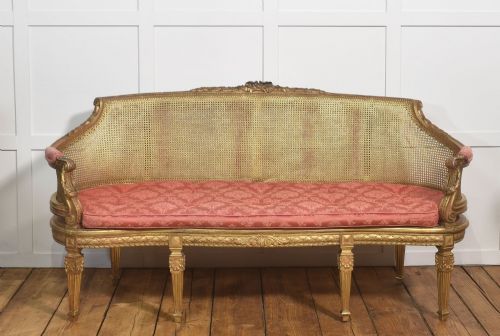


Gilded Wooden Settee
A gilded wooden settee brings grand classical proportion and shining surface to a room, offering both seating and undeniable presence.
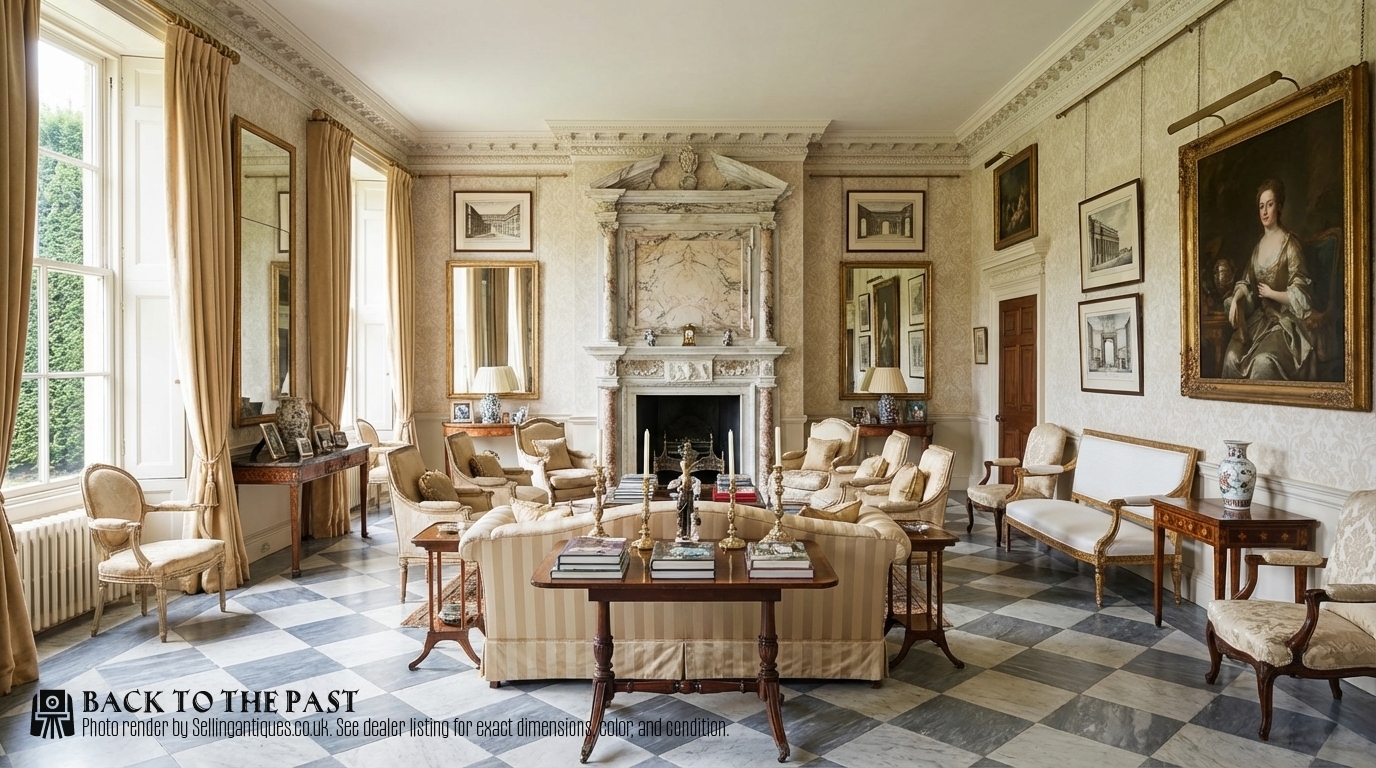
Gilded Wooden Settee
A gilded wooden settee is an ornate upholstered or caned seat designed for formal reception rooms, drawing upon historic European design vocabularies. When searching for a gilded wooden settee, buyers encounter large formal pieces originating from French, Italian, Swedish, and English workshops spanning the nineteenth and early twentieth centuries. These seating forms range from compact caned couches to expansive country house sofas and matching suites.
The aesthetic vocabulary leans heavily on continental revivals, notably Louis XV, Louis XVI, and Empire styles. Pieces from around nineteen-ten sit alongside nineteenth-century examples and earlier Regency forms, demonstrating a continuous taste for gilded seating across generations. Makers applied gold leaf over timber or painted surfaces to achieve the desired metallic brilliance.
Construction varies from modest painted and gilt frames with simple canework to deeply carved giltwood frames upholstered in rich damask and silk damask fabrics. Some examples form part of larger furniture suites, while others stand alone as singular statements of interior decoration. Each piece reflects the prevailing classical revival tastes of its specific decade and region of manufacture.
How they were made
The primary structural element of these settees is timber, shaped into frames and finished with giltwood, painted wood, or applied gold leaf. Craftsmen carved intricate decorative motifs directly into the wood before applying the metallic leaf or paint finish. Canework was frequently utilised for seats and backs on lighter models, providing both flexibility and textural contrast to the gilded framework.
Upholstery required specialist hand techniques, utilising traditional stuffing materials beneath outer layers of silk damask, damask fabric, or standard woven textiles. Frames were constructed using traditional joinery methods suited to large seating forms, ensuring structural integrity beneath the decorative surface. Painted and gilt surfaces were often distressed or layered to achieve specific visual depths appropriate to the chosen style.
Gilded Wooden Settee Retail Price Guide 2026
Typical asking prices for gilded wooden settee among the pieces listed under this phrase on Sellingantiques today, from the lower quarter to the upper quarter. They describe what is for sale here now, not the wider market.
Listings feature periods spanning the nineteenth century, Regency era, and early twentieth century up to nineteen-ten.
What varies in quality
Quality in these settees rests primarily on the depth and crispness of the wood carving across the frame. Superior examples display deeply undercut foliage, ribbons, or classical motifs executed by skilled hands, whereas lesser pieces feature shallow or mechanically stamped decoration. The execution of the gilding itself marks a clear division, with genuine gold leaf ageing differently than bronze paint or modern metallic coatings.
The integrity of the frame construction and the survival of original components such as canework or upholstery textiles determine the standing of an individual piece. Proportion and scale also separate standard production from exceptional salon pieces designed for prominent architectural settings. The harmony between the painted or gilded finish and the underlying timber framework dictates the overall visual success of the object.
John Tesch
The Gilded Wooden Settee Glossary
- Giltwood
- Timber coated with a thin layer of gold leaf or powder over a prepared gesso ground. This finish creates a luminous metallic surface that defines formal classical seating.
- Cane
- Woven rattan or split plant material used to form light, supportive panels for seats and backs. It offers a contrasting texture against heavy carved wooden frames.
- Damask
- A reversible figured fabric woven on a jacquard loom with patterns formed by contrasting warp and weft threads. Silk damask provides a particularly lustrous surface suited to grand reception furniture.
- Canape
- The French term for a decorative sofa or settee designed for multiple occupants. These forms often feature exposed wooden frames and elaborate upholstered backs.
- Regency
- An architectural and decorative style spanning the early nineteenth century characterised by refined classical restraint and archaeological revival motifs. Pieces from this period often incorporate bold architectural lines.
Gilded Wooden Settee: Frequently Asked Questions
Where did these settees sit?
These settees were principally placed in grand drawing rooms, salons, and formal reception spaces where hosts entertained guests. Their decorative carved and gilded frames were intended to project status and refinement within domestic interiors.
Over time, these seating forms moved into country house libraries and large entrance halls as interior fashions shifted toward more eclectic decorating schemes.
How do I clean giltwood?
Giltwood requires extremely gentle dusting with a soft, dry brush to prevent damage to the delicate metallic leaf. Moisture and modern chemical cleaners should be avoided entirely to preserve the historic surface layers.
Professional conservation is recommended for any significant accumulation of grime or deterioration of the underlying gesso ground.
Are these settees comfortable?
Many nineteenth-century and Edwardian examples were built for formal posture rather than casual lounging, reflecting the social etiquette of their original period. Deep upholstery on select country house sofas provides a softer sit compared to rigid caned frames.
Adding matching cushions can alter the support while maintaining the historic appearance of the seat.
How do I date a settee?
Dating relies on examining the characteristic decorative motifs, such as Louis XVI neo-classical swags or Empire-style classical revival elements. The wood preparation, joinery techniques, and any remaining upholstery remnants also offer strong clues to the decade of manufacture.
Comparing the carved details against documented regional workshop practices helps narrow down the origin and time period.