

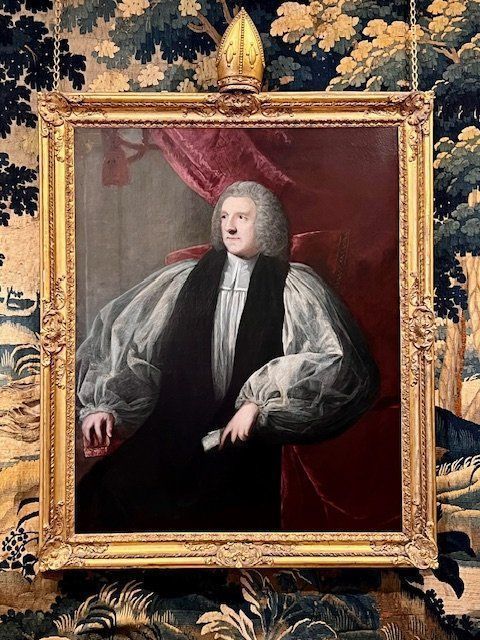
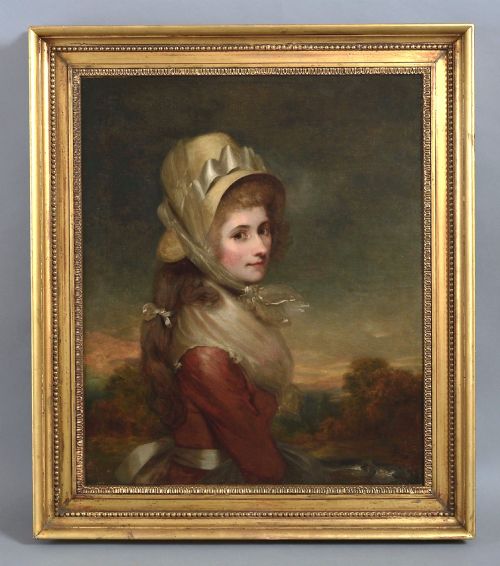
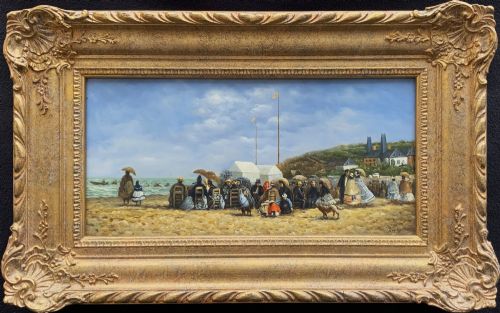
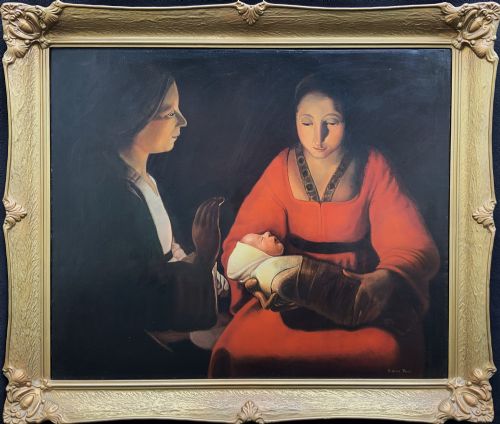


Gilded Gold Framed Painting
A gilded gold framed painting brings the rich warmth of oil on canvas and carved wood into a room, carrying centuries of portraiture and landscape art.
Gilded Gold Framed Painting
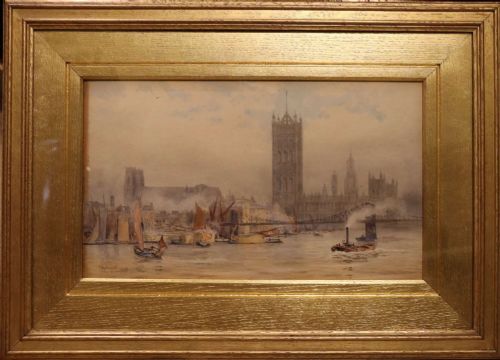
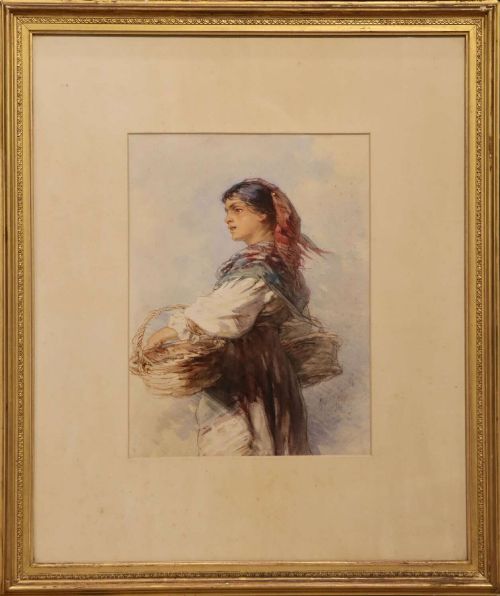
When you search for a gilded gold framed painting, you encounter artworks encased in ornate wooden borders finished with gold leaf, gesso, or giltwood. These pieces primarily span the 17th, 18th, and 19th centuries, alongside later decorative interpretations.
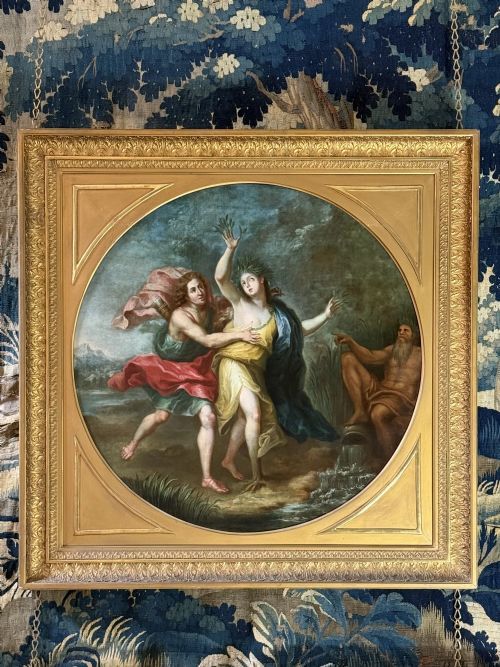
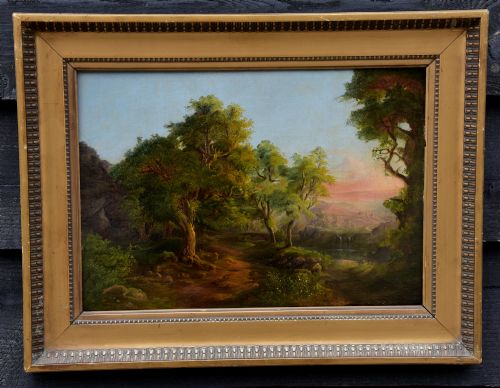
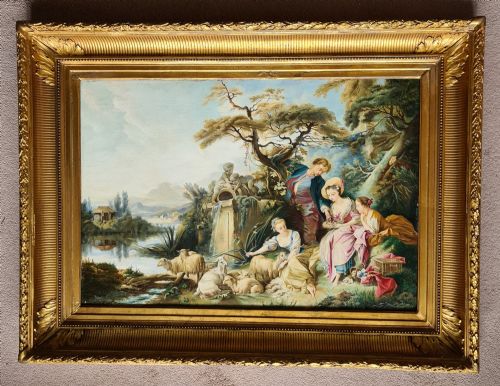
The subjects on this page range from formal aristocratic portraits and classical mythological scenes to pastoral landscapes, floral still lifes, and domestic genre paintings. You are most likely to meet 19th-century oil paintings on canvas or board housed within their original or period-matching gilt frames.
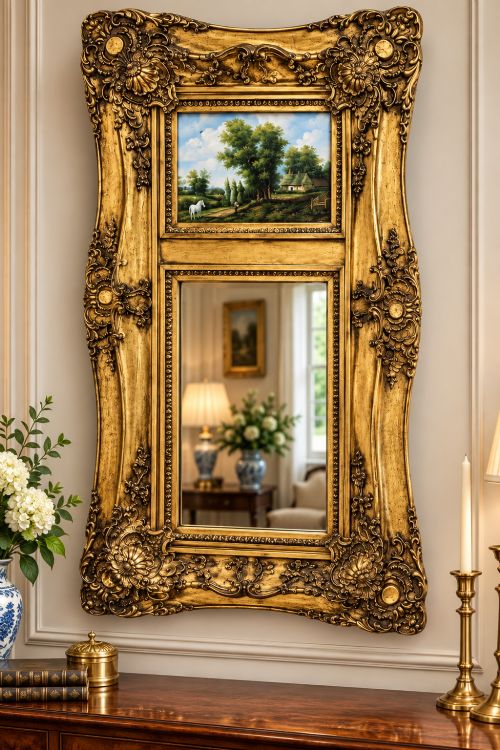
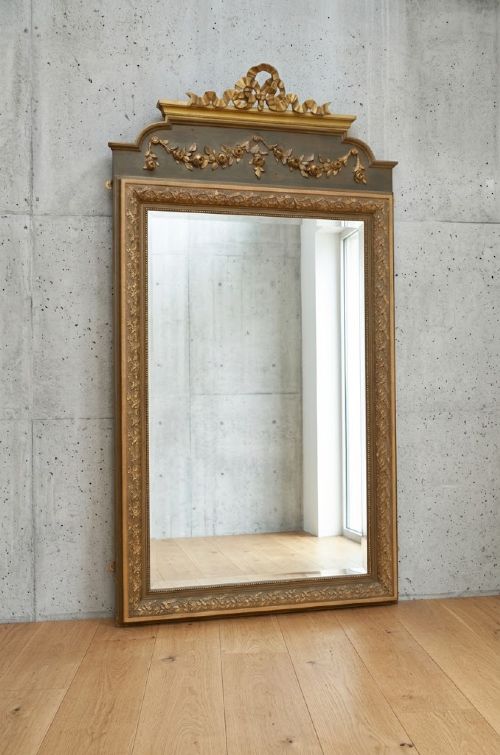
Many of these works reflect distinct stylistic movements such as the Georgian, Victorian, Regency, and Baroque periods, as well as French Rococo and Dutch Golden Age influences. Wall mirrors sharing these decorative surrounds also appear alongside the fine art canvases.
How they were made
Artisans prepared the picture supports using woven canvas or wooden panels, applying layers of oil paint to build depth and luminosity. Frames were constructed from carved wood, coated with gesso to create a smooth base for delicate ornamentation.
Gold leaf or metallic gilding was applied by hand across the wooden mouldings, often burnished to catch the light. Joinery techniques and decorative corner cartouches varied according to the period workshop standards.
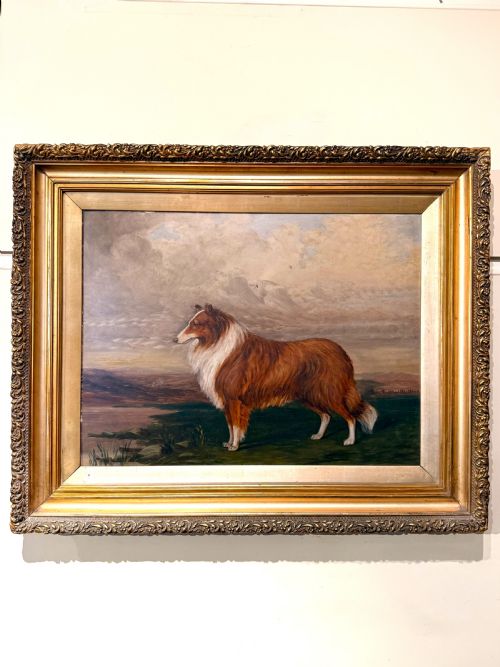
Several canvas portraits quietly preserve the stern gazes of historical domestic dogs alongside their aristocratic human companions.
What varies in quality
The depth of hand-carving on the wooden frame and the purity of the gold leaf application separate superior examples from simpler mouldings. Finer frames exhibit crisp gesso relief work and well-preserved original gilding without heavy modern overpainting.
Within the artwork itself, the handling of pigment, the naturalism of anatomy or botanical detail, and the provenance linking the piece to a known artist or studio determine the overall standing of the painting.
Sir Godfrey Kneller·Charles Antoine Coypel·Sir Joshua Reynolds·Joseph Clover·Oliver Clare
The Gilded Gold Framed Painting Glossary
- Giltwood
- Wood that has been coated with a thin layer of gold leaf or gold powder. This technique provides a luminous metallic surface that defines traditional antique frames.
- Gesso
- A plaster mix used as a base on wooden frames before gilding. It allows craftsmen to carve intricate relief patterns and surface ornamentation.
- Oil on canvas
- Pigments bound in a drying oil applied to a stretched woven fabric support. This method became the primary medium for fine art portraits and landscapes.
- Baroque
- An artistic style spanning the 17th and 18th centuries characterised by drama, rich detail, and grand scale. Paintings and frames from this era emphasise theatrical movement and deep shadows.
- Regency
- A British design period falling in the early 19th century. Pieces from this time often incorporate classical motifs and restrained elegance.
Gilded Gold Framed Painting: Frequently Asked Questions
How do I clean a gilded frame?
Dust the carved wooden surfaces very gently with a dry, soft artist brush to remove surface particles.
Avoid using water, liquid cleaners, or chemical polishes, as these can strip the delicate gold leaf and historical gesso layers.
Are original frames important?
Original period frames complement the aesthetic integrity of the artwork and often share the age of the canvas itself.
Matching a painting to a period-correct gilt frame enhances its visual harmony and historical context within a collection.
How do I identify oil on panel?
Oil paintings on panel utilise a rigid wooden board rather than flexible woven fabric as the primary support medium.
Inspection of the reverse side typically reveals the solid timber grain or historical panel preparation marks characteristic of earlier centuries.
Where should I hang these paintings?
Display the artwork away from direct sunlight and excessive humidity to protect both the oil pigments and the wooden frame construction.
Positioning the piece on an interior wall with stable ambient temperatures preserves the integrity of the gesso and canvas.