


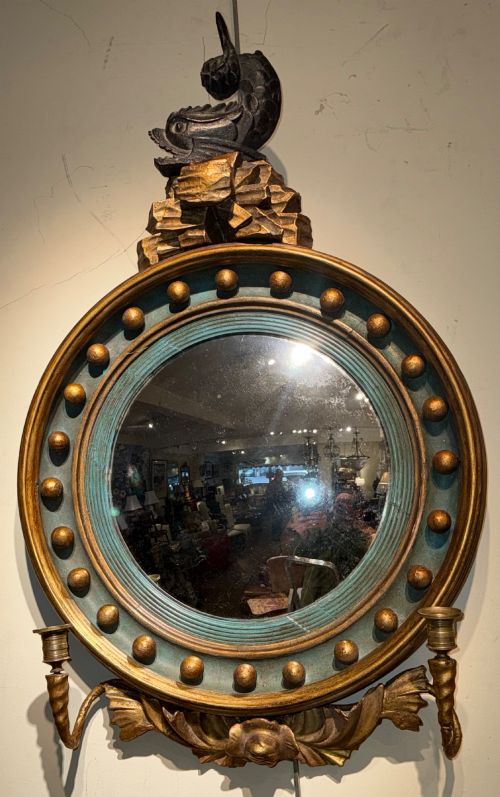

Gilded Girandole Mirror
A gilded girandole mirror brings both reflected light and integrated candle sconces into a room, combining practical illumination with ornamental presence.
Gilded Girandole Mirror
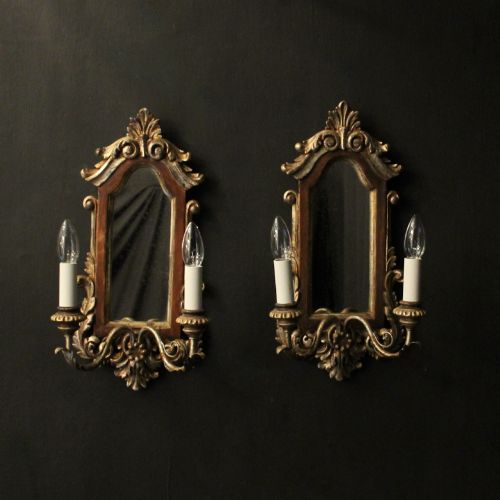
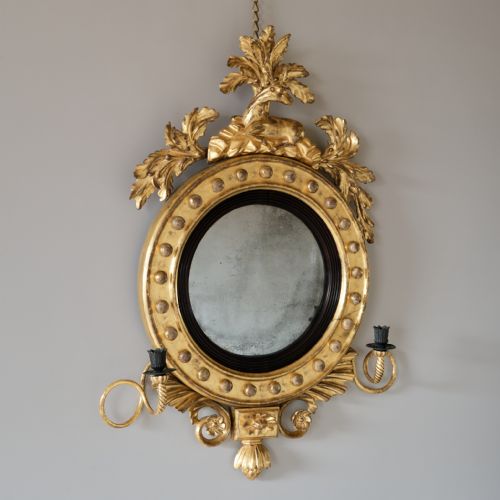
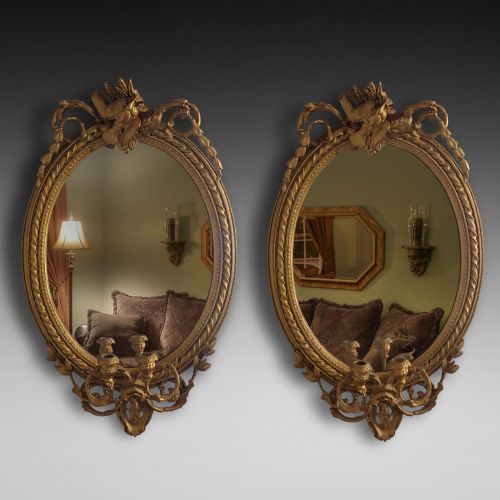
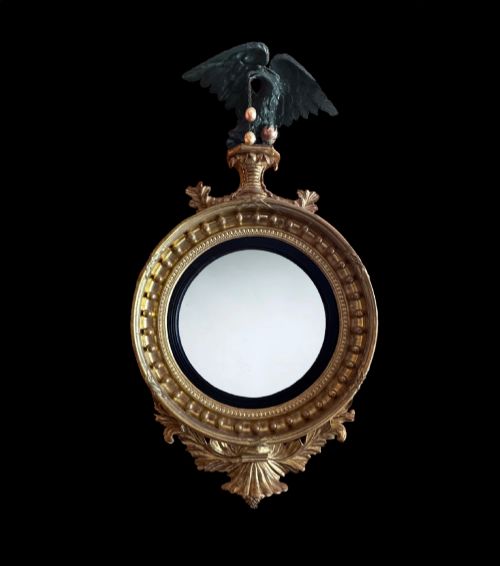
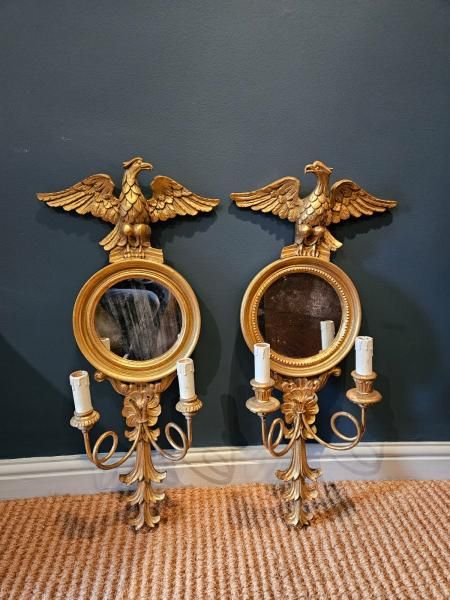
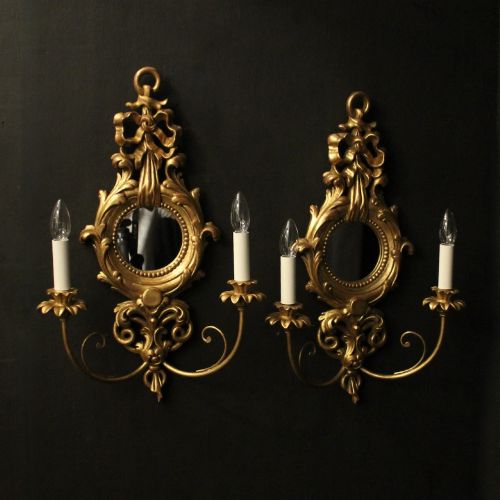
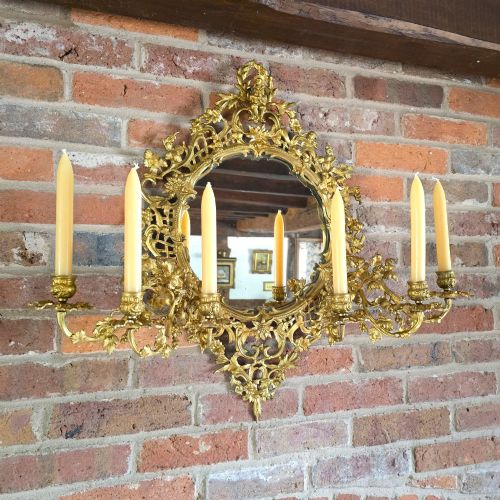
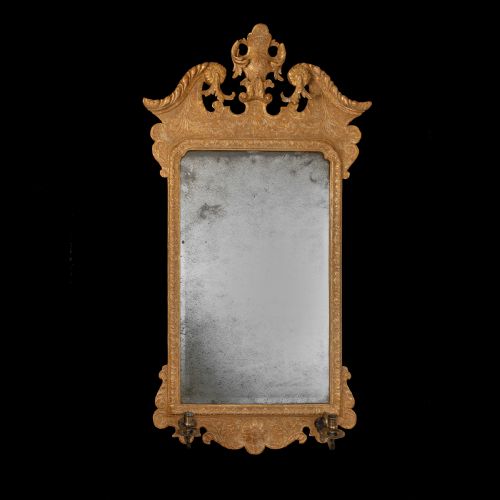
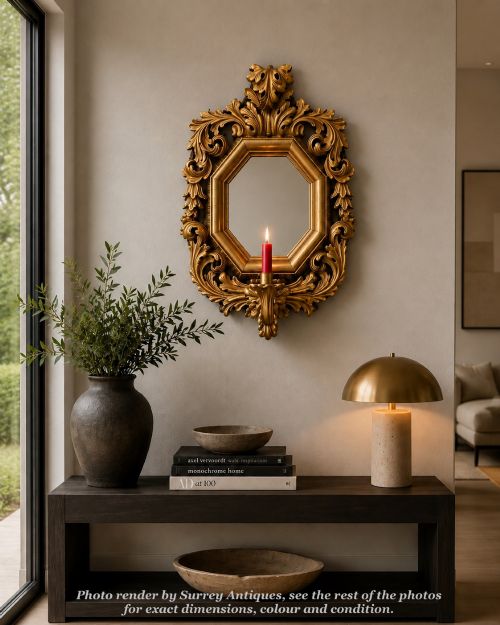
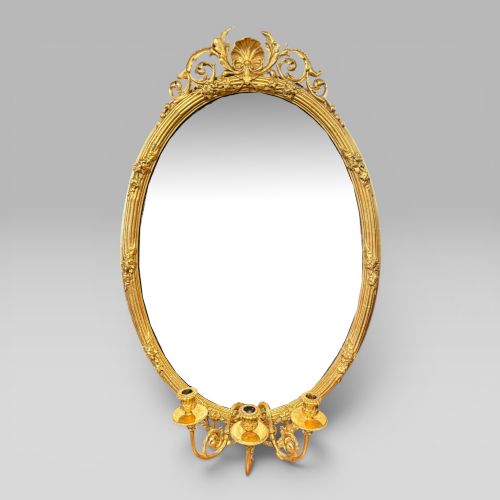
A gilded girandole mirror is a wall-hanging looking glass equipped with one or more candle branches, combining the function of a sconce with that of a mirror. When searching for a gilded girandole mirror, buyers encounter a variety of forms ranging from circular convex plates to oval frames and large pier mirrors.
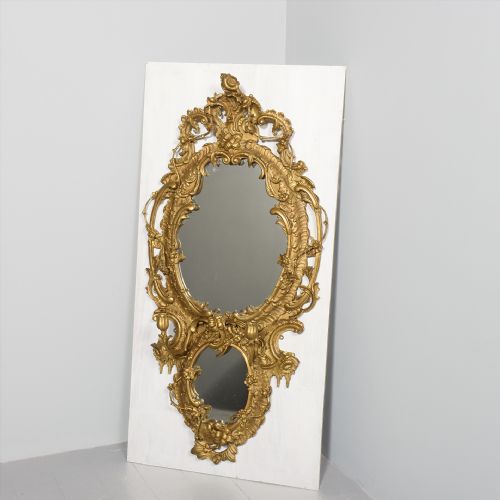
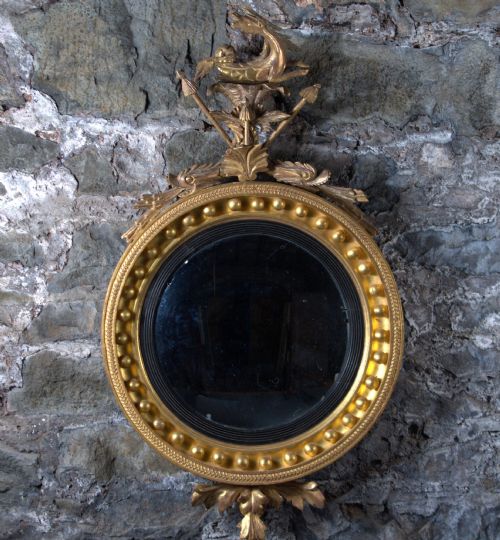
The pieces appearing on this page stretch across multiple periods, with Regency convex examples and nineteenth-century oval girandoles appearing frequently alongside Victorian and eighteenth-century items. Styles lean heavily towards Rococo Revival, Neoclassical, and French chateau aesthetics, often incorporating carved wood, rope twist borders, or figural details such as dragons.
Many examples survive in pairs, particularly the twin-arm girandoles originating from French and Italian workshops. Others present as single convex wall mirrors designed to distort and widen the field of view in a reception room.
Materials and construction
Makers built the foundational framework of these mirrors using timber such as wood and ebonised wood, upon which they applied layers of gesso to build up intricate surface ornamentation. Carvers then gilded these surfaces using gold leaf or applied water gilding and gilt paint to achieve a brilliant metallic lustre.
The optical components rely on heavy glass plates, frequently curved into convex forms that required specialised blowing and silvering techniques during the Georgian and Regency eras. Metal components such as brass and ormolu form the multi-branch candelabra and candle sockets attached securely to the wooden frames.
Gilded Girandole Mirror Retail Price Guide 2026
Typical asking prices for gilded girandole mirror among the pieces listed under this phrase on Sellingantiques today, from the lower quarter to the upper quarter. They describe what is for sale here now, not the wider market.
Assessing craftsmanship
The depth and crispness of the carved gesso decoration distinguish finer examples from mass-produced or later nineteenth-century interpretations. Hand-carved wooden foliage and robust structural joinery indicate superior workshop production compared to simpler moulded compositions.
The quality of the mercury or silvered mirror glass plate, along with the retention of original water gilding rather than later overpainting, dictates the integrity of the piece. Furthermore, the secure integration of heavy brass or ormolu candle arms without sagging or splitting the surrounding wood marks the work of a skilled maker.
Benjamin Goodison
The Gilded Girandole Mirror Glossary
- Girandole
- A wall mirror featuring attached candle branches or sconces designed to reflect candlelight into the room. These fixtures were popular in formal drawing rooms during the eighteenth and nineteenth centuries.
- Convex mirror
- A round looking glass with an outward-curving surface that provides a wide-angle, fish-eye reflection of the interior space. Regency examples often incorporate an ebonised inner reeded bezel.
- Gesso
- A plaster-like mixture applied to wooden frames and carved once dry to create relief ornament before gilding. It allows for sharp, detailed scrollwork and floral motifs.
- Water gilding
- A traditional technique where gold leaf is laid over a wet bole ground and subsequently burnished to a high shine. This method produces a rich, deep metallic reflection.
- Pier mirror
- A tall looking glass specifically designed to hang on the wall space between two windows. They often incorporate girandole arms at the base to maximise ambient light.
Gilded Girandole Mirror: Frequently Asked Questions
What is a girandole mirror?
A girandole mirror is an ornamental wall glass that incorporates one or more candle branches, known as sconces, extending from the frame. The reflective surface doubles the light cast by the candles.
These pieces served a practical purpose in period interiors before the advent of gas and electric lighting, illuminating dark corners and hallways.
How do I date a convex mirror?
Dating relies heavily on frame construction, glass characteristics, and stylistic markers such as Regency eagle crests or Victorian rope twist borders. Earlier Georgian and Regency frames often feature detailed hand-carved gesso work.
Examining the backboards and fixings also helps establish the age of the piece, as older mirrors show distinct joinery and oxidation patterns on the glass.
Where should I hang a girandole?
These mirrors suit principal reception rooms, dining rooms, and hallways where they can capture and reflect natural daylight or evening candle illumination. Placing them opposite a window enhances their lighting effect.
Because many examples carry heavy candelabra arms and thick glass plates, secure wall fixings into masonry or studs are essential for safe hanging.
Are the candle branches functional?
The brass or ormolu arms are designed to hold standard taper candles securely in their drip pans and sockets. Many buyers continue to use them with wax candles for ambient lighting.
Care must be taken to prevent wax from dripping onto the antique giltwood frame below during use.