
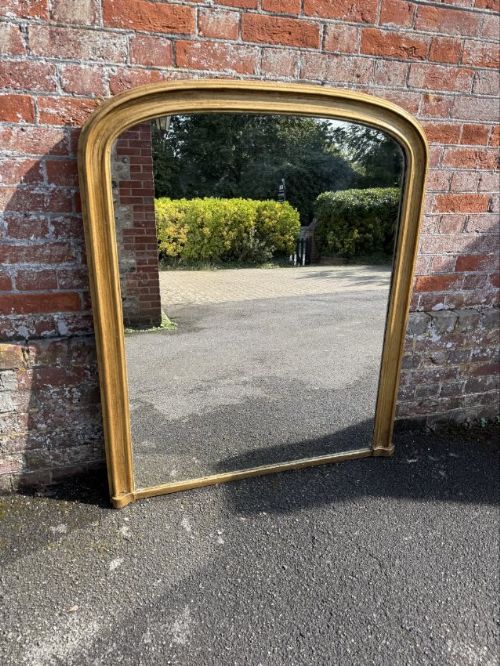
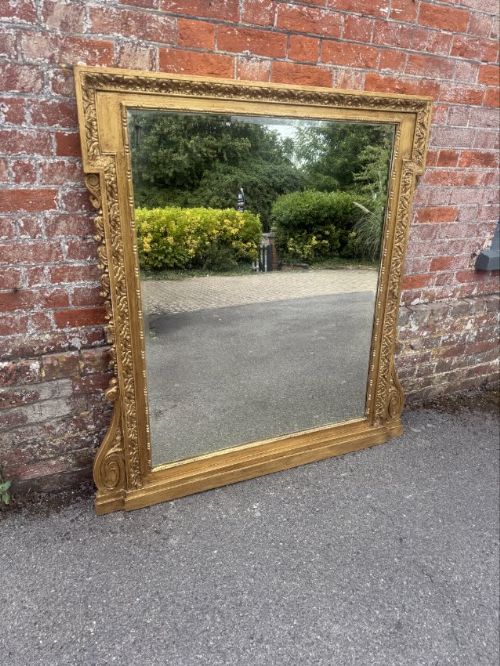
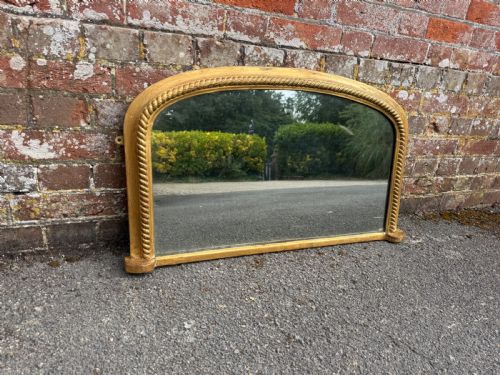
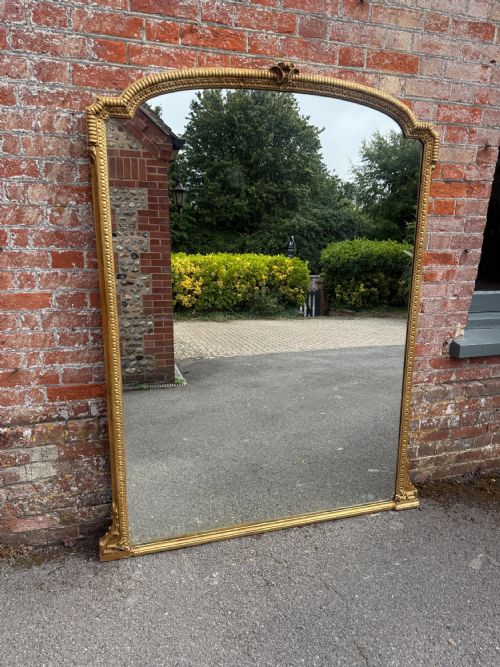
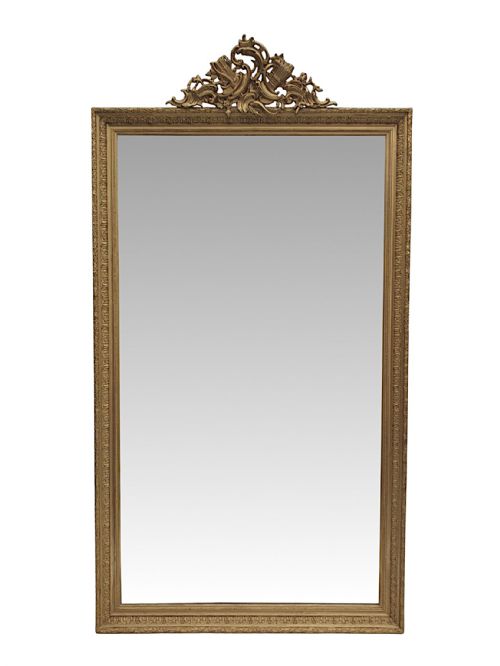
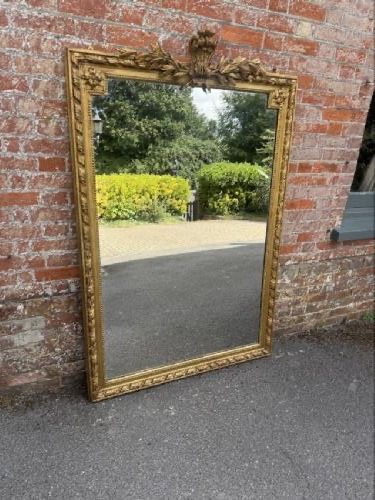
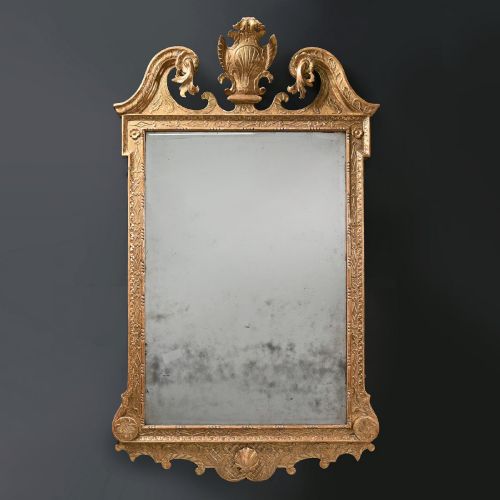
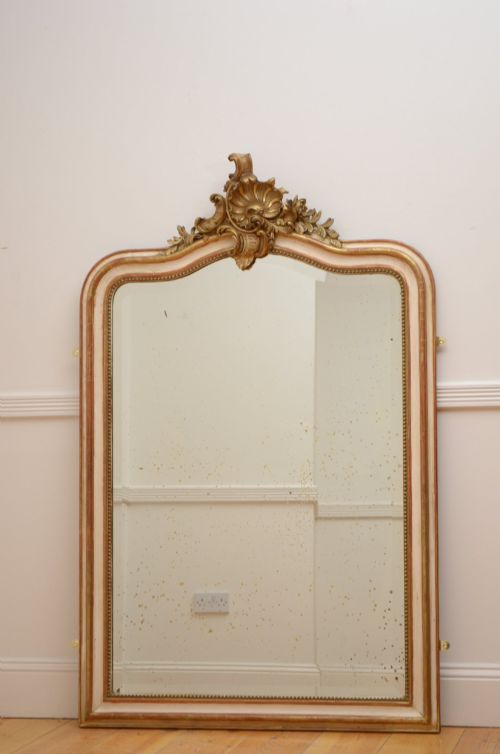

Gilded Gesso Overmantel Mirror
A gilded gesso overmantel mirror brings reflective scale and bright decorative presence to a room, hung traditionally above a fireplace or mounted low as a leaner.
Gilded Gesso Overmantel Mirror
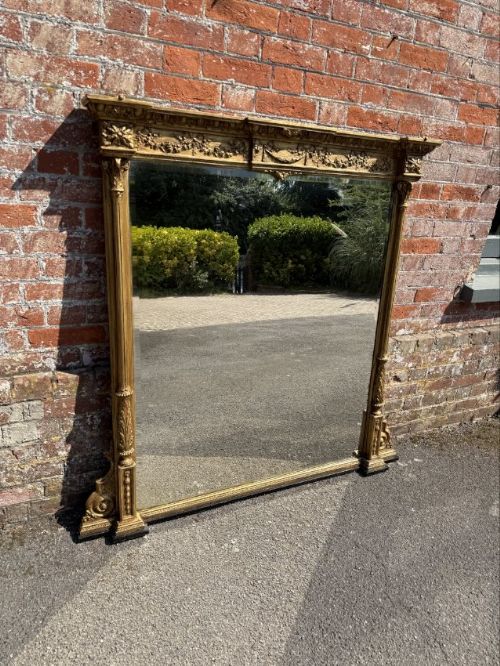
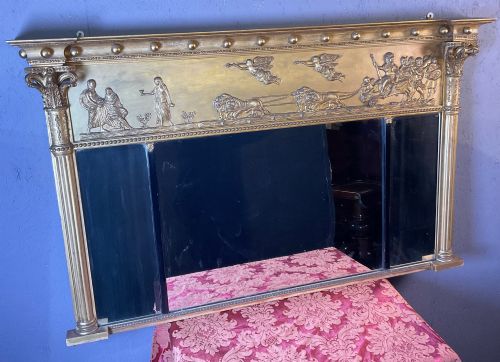
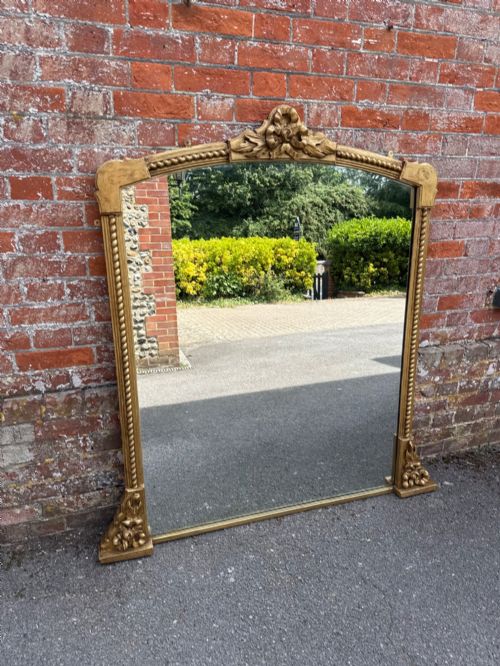
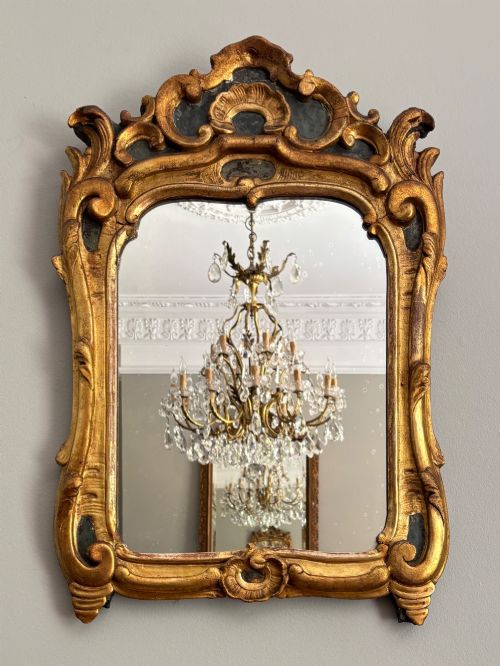
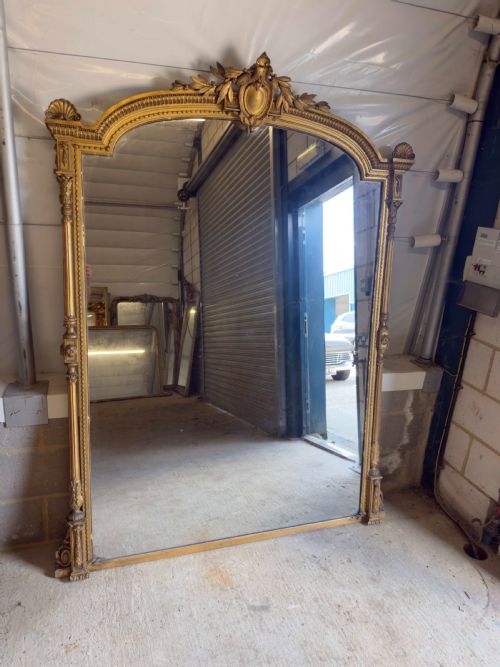
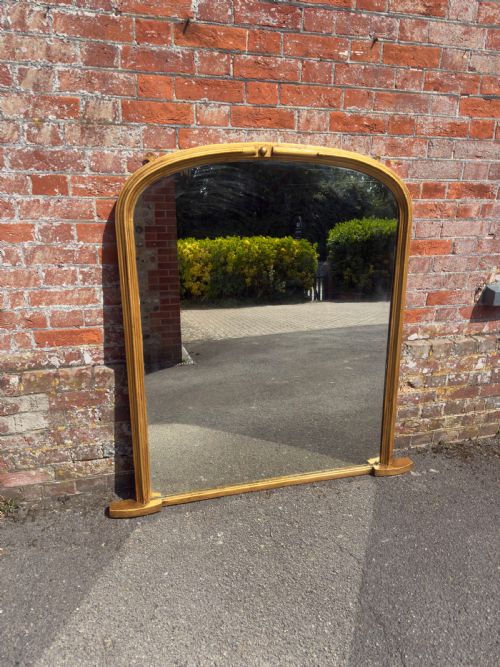
A gilded gesso overmantel mirror is a large reflective piece designed historically to sit above a mantelpiece, reflecting light around formal reception rooms. These objects span periods from the eighteenth century through the Victorian era, reflecting stylistic shifts from George II symmetry to exuberant Rococo Revival curves.
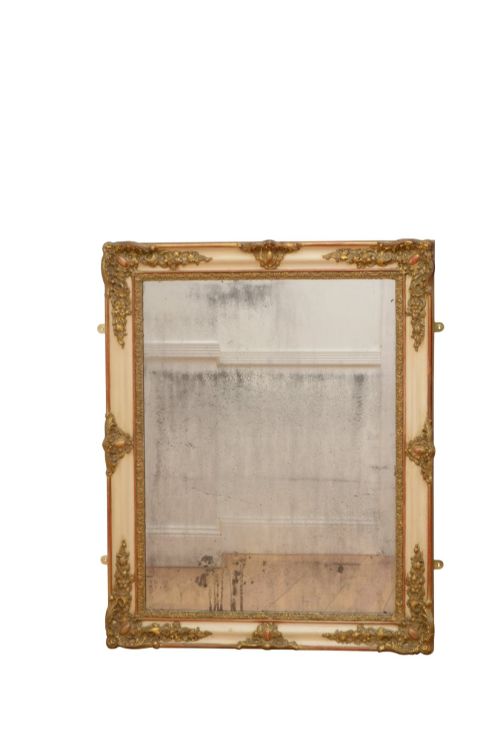
The most common form encountered in these listings is the nineteenth century English overmantel mirror, frequently featuring an arched or shaped top within a substantial gilded wooden frame. Alongside these English pieces appear French chateau and Rococo examples, displaying ornate moulded details and painted accents alongside traditional gold leaf.
How they were made
The foundation of these pieces begins with carved wood, providing a sturdy structural carcass shaped into arches, rectangles, or ovals. Over this wooden substrate, craftsmen applied layers of gesso, a dense mixture of chalk and binder that could be smoothed, engraved, or built up into high relief ornamentation.
Gold leaf or liquid gilt was then meticulously applied over the prepared gesso surface to create a brilliant metallic finish that catches and reflects ambient room light. Mirror glass of the period was set within these frames, often retaining original qualities such as subtle foxing or hand-bevelled edges.
Current listings feature pieces spanning the eighteenth century through to the Victorian era, constructed primarily from carved wood, gesso, and gold leaf.
What varies in quality
The depth and crispness of the carved gesso relief separate standard decorative pieces from exceptional examples, as skilled modellers achieved sharper scrolls and more fluid floral motifs. Superior items maintain integrity in the underlying wooden framework and preserve the original gilding without heavy modern repainting.
Proportion and scale dictate the visual impact of an overmantel, with finer items demonstrating balanced architectural harmony suited to grand chimney breasts. The preservation of original mirror glass and backing boards also contributes significantly to the historical integrity of the piece.
The Gilded Gesso Overmantel Mirror Glossary
- Gesso
- A prepared mixture of chalk, gypsum, and glue applied to wood frames as a smooth base for gilding or painting. It allows craftsmen to carve intricate decorative details directly onto the surface before applying gold leaf.
- Giltwood
- Timber that has been coated with a thin layer of gold leaf or metallic powder for decorative effect. It differs from solid gold by offering lightweight strength combined with a rich reflective surface.
- Rococo Revival
- A nineteenth century design style characterised by asymmetrical scrolls, shell motifs, and naturalistic curves drawn from earlier eighteenth century French aesthetics. This style heavily influenced ornate mirror frame decoration.
- Pier Mirror
- A tall, narrow mirror designed specifically to hang on the wall space between two windows, often placed above a pier table. They share similar construction techniques with overmantel mirrors.
Gilded Gesso Overmantel Mirror: Frequently Asked Questions
How do I hang a heavy overmantel mirror safely?
These mirrors carry substantial weight from their wooden carcasses and thick gesso ornamentation, requiring secure attachment directly into wall studs or masonry. Professional fixings and heavy duty brackets distributed across the frame structure ensure stable suspension above a fireplace.
Leaner versions placed on the floor still require discreet wall anchors to prevent accidental tipping. Consulting a professional installer ensures the weight is supported safely without damaging historic plaster.
Can these mirrors be used in modern interiors?
The scale and reflective surface of a gilded gesso overmantel mirror make it a striking focal point in contemporary living spaces, dining rooms, or hallways. Placing one opposite a window instantly maximises natural light and creates an illusion of expanded room depth.
Their ornate frames provide a deliberate contrast against minimalist walls or clean architectural lines. They function equally well mounted above a fireplace or simply rested against a wall as a floor mirror.
How do I clean antique gilt surfaces?
Dusting antique giltwood requires a very soft, dry brush or feather duster to remove surface particles without abrading the delicate gold leaf layer. Moisture and modern chemical cleaning agents must be avoided entirely, as they dissolve historic gesso and gilding.
Mirror glass can be cleaned sparingly using a mild glass cleaner applied to a cloth rather than sprayed directly onto the glass. This prevents liquid from seeping behind the plate and damaging the silvered backing or the inner frame rabbet.
What defines the Victorian Neoclassical style?
Victorian Neoclassical design draws inspiration from classical Greek and Roman architecture, emphasising symmetry, restrained proportion, and orderly geometric motifs. Mirrors from this tradition often feature column frames, bead and reel mouldings, and formal architectural pediments.
This aesthetic offers a more disciplined alternative to the flowing asymmetry of Rococo Revival pieces. It reflects the mid nineteenth century appetite for classical erudition applied to domestic home furnishings.