
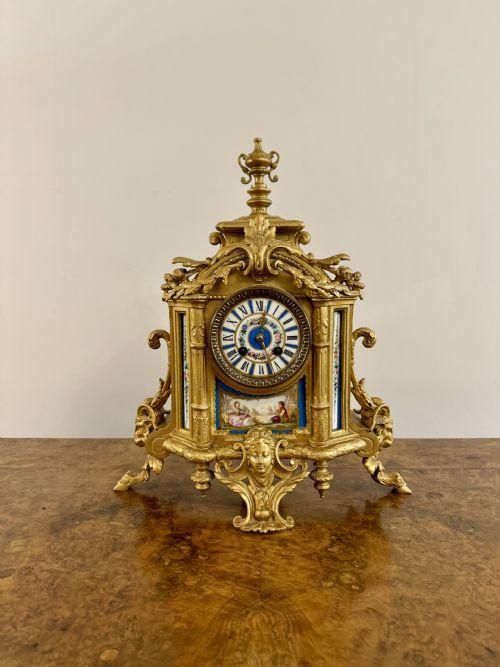


Gilded French Shelf Clock
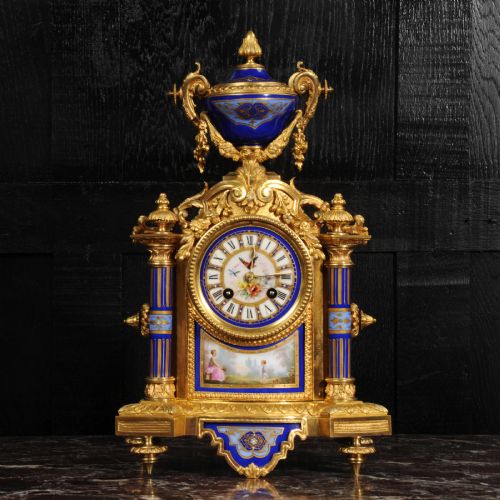
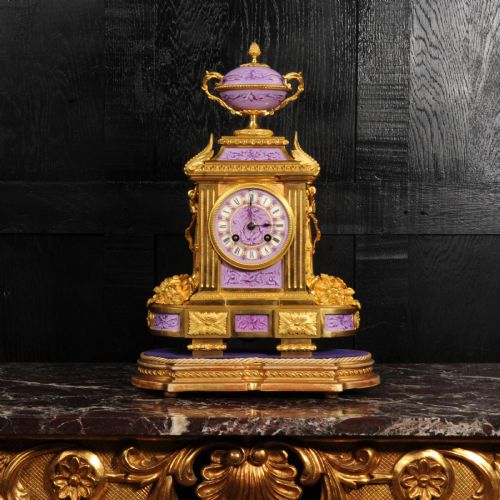
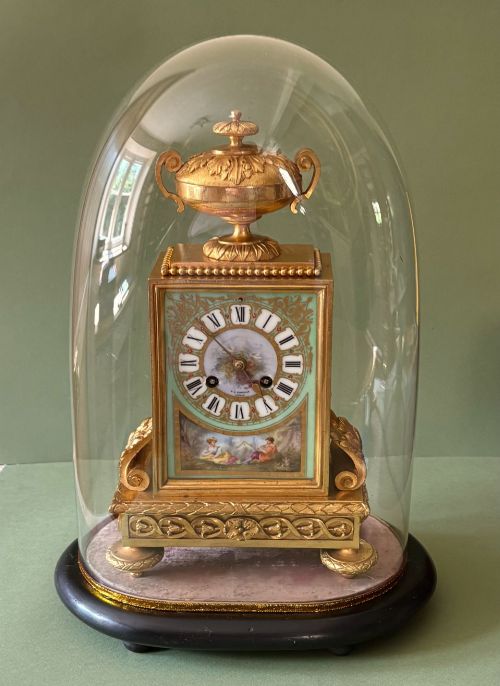
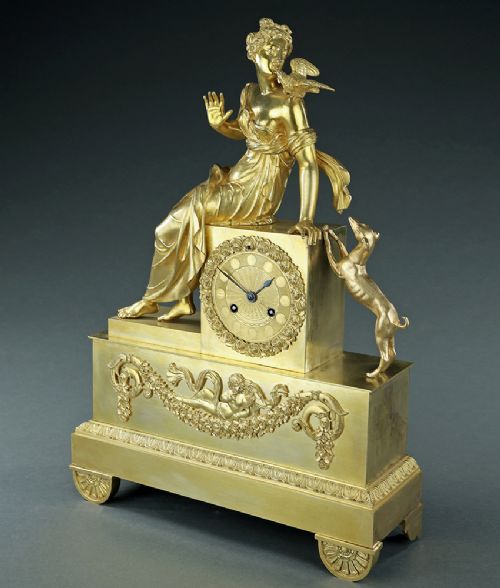
A gilded French shelf clock brings heavy cast bronze, porcelain panels and glass into the room with unapologetic nineteenth-century presence.
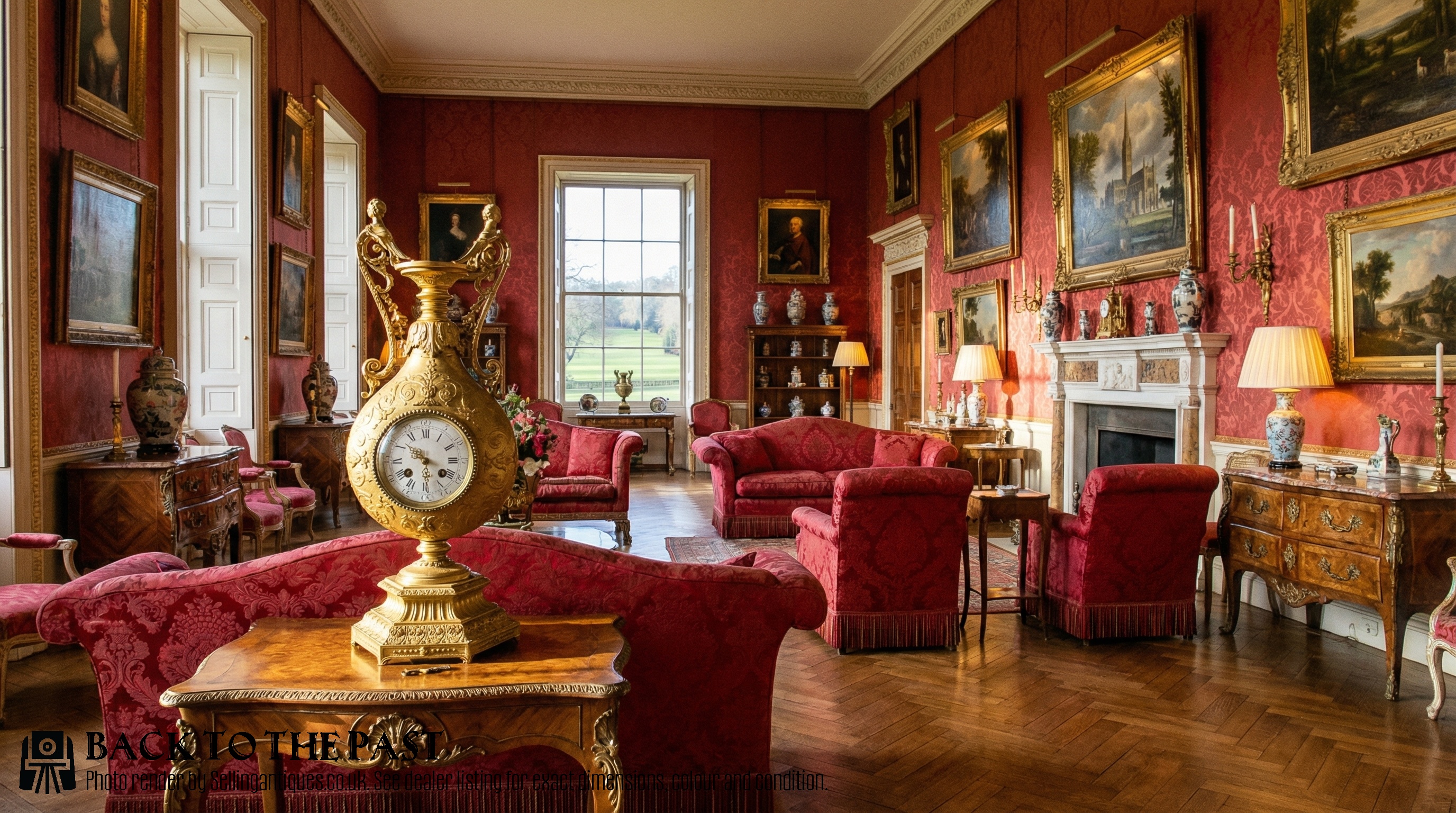
Gilded French Shelf Clock
A gilded French shelf clock is a decorative timepiece designed for domestic mantels and brackets, combining cast metal cases with enamel dials and mechanical movements. When you search for this phrase, you encounter heavy nineteenth-century works shaped by classical revival and rococo tastes.
The objects seen here date predominantly from the mid to late nineteenth century, spanning eras from the Victorian period through to eighteen ninety. Enamel dials, ceramic plaques and glazed panels appear regularly alongside cast bronze frames.
Most examples take the form of mantel clocks or four-glass bracket clocks driven by eight-day movements. These pieces originated in French workshops and incorporated styling derived from Louis the sixteenth and empire models.
How they were made
Maker's workshops cast bronze and brass into ornate frames, applying mercury gilding or modern electroplating to achieve the bright ormolu finish. Hand-painted porcelain panels depicting pastoral scenes or floral motifs were integrated directly into the metalwork.
Dials were formed from white enamel with painted roman numerals, protected behind bevelled glass panes fitted into cast brass bezels. Movements relied on brass gear trains and escapements, frequently designed to strike hours and halves on bells or gongs.
Listings feature nineteenth-century French pieces utilising ormolu, gilt bronze, marble, porcelain and four-glass cases.
What varies in quality
Quality rests in the crispness of the bronze chasing and the depth of the gilding applied to the cast metal case. Sharp, deeply undercut leaf scrolls and figures separate superior work from softer, shallower castings.
The integration of hand-painted Sèvres-style porcelain plaques and the weight of the marble or bronze architecture dictate the upper tier of these timepieces. Movement sophistication, such as repeating mechanisms and signed backplates by noted makers, further elevates the standard.
Japy Freres·Achille Brocot·Philippes Paris·Drocourt·Phillipe H Mourey
The Gilded French Shelf Clock Glossary
- Ormolu
- Gilded bronze produced by applying a mixture of gold and mercury to a bronze base, or through later electrogilding methods. This surface treatment gives the metal its characteristic golden sheen.
- Four-glass clock
- A mantel clock housed in a brass-framed case with glass panels on all four sides, allowing the movement to be viewed from multiple angles. These often feature mercury pendulums.
- Carriage clock
- A small, portable spring-driven timepiece with a carrying handle, originally designed for travel during the nineteenth century. They frequently include striking and repeating complications.
- Enamel dial
- A metal dial face coated with fused powdered glass and fired in a kiln to create a smooth, white surface. Numerals are painted onto this vitrified layer.
- Japy Frères
- A prominent French clockmaking firm operating during the nineteenth century, known for producing rough movements supplied to numerous assemblers and retailers.
Gilded French Shelf Clock: Frequently Asked Questions
How do I wind an antique French clock?
Use the proper double-ended key to turn the arbors located on the enamel dial face. Take care not to overwind the mainspring.
Wind both the time and strike trains evenly to maintain correct timing and keep the chime sequence synchronised.
What periods do these clocks cover?
The listings span the nineteenth century, with heavy representation from eighteen sixty to eighteen ninety. Victorian and late nineteenth-century interpretations dominate.
Stylistic influences reach back to earlier French reigns, including Louis the fourteenth and Louis the sixteenth designs.
How should I display my clock?
Place the piece on a stable, level mantelpiece or bracket to ensure the pendulum swings evenly. Avoid direct sunlight to protect painted porcelain and enamel.
Heavy marble and bronze pieces require sturdy support due to their substantial physical weight.
Are these clocks striking timepieces?
Many models feature eight-day movements that strike on the hour and half-hour using internal bells or coiled gongs. The strike train operates independently from the timekeeping gears.
Some carriage and specialised bracket clocks also include repeating mechanisms that sound the last hour on demand.