


Ornate Pendulum Mantel Clock
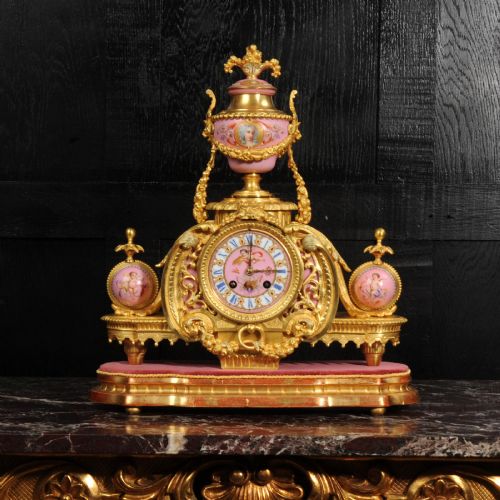
An ornate pendulum mantel clock sits heavy with cast gilt bronze and porcelain, bringing nineteenth-century French workshops straight to the hearth.
Ornate Pendulum Mantel Clock
An ornate pendulum mantel clock represents nineteenth-century French and Victorian horology, combining timekeeping with elaborate sculptural design. These pieces sit upon fireplaces or brackets, serving as ornamental centerpieces for domestic interiors.
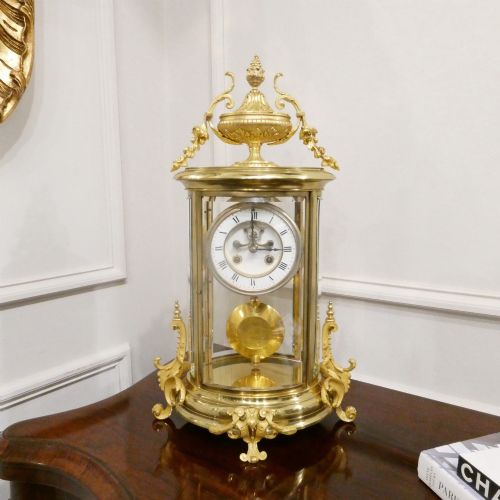
The selection here draws heavily from French makers working in revival styles, alongside Victorian interpretations in marble, brass, and ormolu. Expect architectural portico clocks, glass-cased crystal regulators, and heavily scrolled rococo forms.
Pendulum movements regulate these clocks, often striking the hours and half-hours through eight-day mechanisms. Enamel dials and painted porcelain panels frequently accompany the gilt metalwork.
How they were made
Foundry workers cast ormolu, gilt bronze, and solid brass into elaborate scrollwork and architectural mounts, then chased the metal surfaces by hand to sharpen the cast details. Cabinets combine these metals with native and exotic timbers, red marble, and white marble.
Clockmakers such as Samuel Marti, Japy Freres, and Achille Brocot supplied mechanical movements that fitted behind porcelain or enamel chapter rings. Glass panels enclosed delicate movements in crystal regulator models, exposing the swinging pendulum to view.
Mystery clocks hide their gear trains entirely, leaving the hands to float across glass dials as if by magic.
What varies in quality
The crispness of the bronze chasing and the weight of the cast metal distinguish superior pieces from standard production work. Deep, even gilding and finely painted porcelain plaques indicate workshops operating at a high level.
Movement quality rests in the maker's signature and the finish of the internal brass gears, where signed plates by known makers anchor the value of the clock.
Achille Brocot·Samuel Marti·Japy Freres·Henri Jacot
The Ornate Pendulum Mantel Clock Glossary
- Ormolu
- Gilded bronze produced by applying a mercury and gold amalgam to cast bronze and firing it. This technique creates a durable, golden surface seen on nineteenth-century French cases.
- Crystal regulator
- A clock housed in a glass case with bevelled panels held together by brass frames. This form lets light pass through the movement and displays the pendulum.
- Portico clock
- A clock design styled like a classical building with vertical columns supporting an entablature. The pendulum swings within the open space between the pillars.
- Boulle
- A marquetry technique using cut brass and tortoiseshell inlaid in decorative patterns. Named after French cabinetmaker André-Charles Boulle, it appears on nineteenth-century revival pieces.
- Japy Freres
- A prominent French clockmaking firm operating through the nineteenth century. Their stamped backplates appear on many movement mechanisms.
Ornate Pendulum Mantel Clock: Frequently Asked Questions
How do I wind the clock?
Use the matching key on the winding squares located on the dial face. Turn gently until resistance meets the spring.
Take care not to overwind the movement, as this can damage the internal springs.
Why does the clock run fast or slow?
Pendulum clocks rely on the precise height of the bob to regulate speed. Adjust the small nut beneath the pendulum up or down to correct the timing.
Ensure the clock sits on a level surface so the escapement ticks evenly.
How do I identify the period?
Examine the movement backplate for maker stamps and serial numbers. Stylistic cues like gilt bronze casting and marble plinths point to nineteenth-century production.
Revival styles often copy earlier Louis XIV or Louis XVI motifs while using nineteenth-century mechanical standards.
Where should I place a heavy marble clock?
Support the weight on a sturdy mantelpiece, shelf, or heavy furniture piece capable of holding dense stone and metal. Avoid placing the clock in areas subject to vibrations or direct sunlight.
Level the base securely to keep the pendulum swinging freely without catching on the case.