




Ornate Urn Table Clock
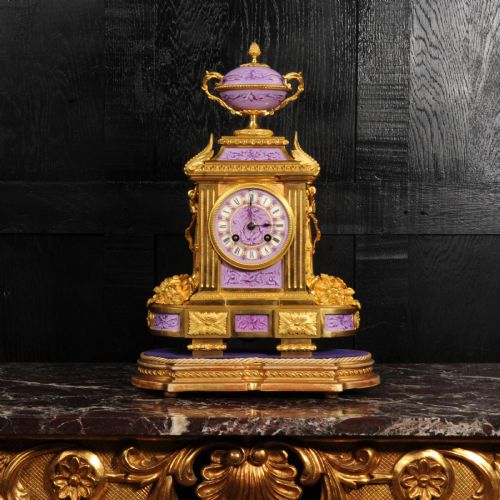
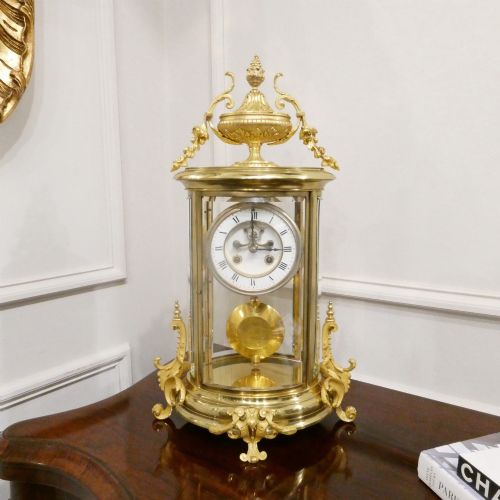
An ornate urn table clock brings undeniable French gravitas to a mantelpiece, combining gilt bronze and porcelain.
Ornate Urn Table Clock
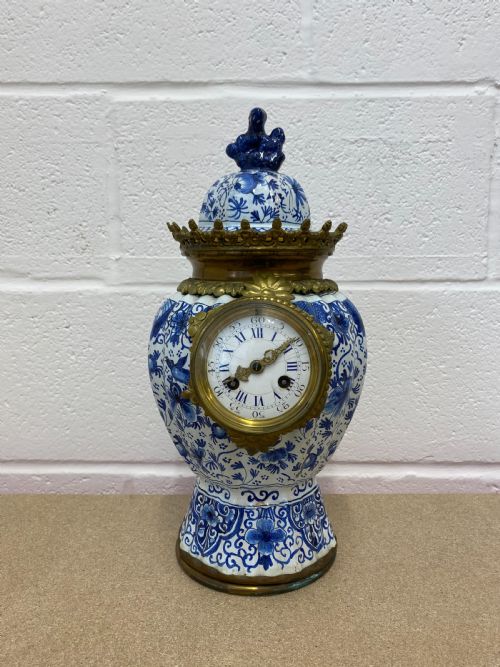
An ornate urn table clock is typically a nineteenth-century French mantel clock drawing on Louis XVI, Rococo, and Empire styles. These decorative timepieces frequently pair ormolu or gilt brass with porcelain elements, marble bases, or glass panels.
Buyers most commonly meet Victorian-era French examples featuring eight-day striking movements housed within architectural or urn-topped bodies. The selection spans simpler brass mantel pieces to elaborate clock garnitures complete with matching side ornaments.
How they were made
Movements within these table clocks depend on precision brass gearing, frequently engineered by prominent Parisian horologists to drive eight-day striking mechanisms. White marble plinths and glass panels are integrated to add weight, structure, and visual clarity to the heavier metal assemblies.
Listings span periods from the year 1800 through the late Victorian era, highlighting nineteenth-century French manufacturing.
What varies in quality
The refinement of the casting and hand-chasing on the ormolu or gilt bronze separates standard production from superior work. Crisp foliage, sharply defined figures, and deep fire-gilding denote higher artisan skill.
The quality of the porcelain dial painting and the architectural integrity of the marble or glass housing dictate the upper tier of these clocks. Complete clock garnitures with matching side pieces represent a more substantial level of original manufacture.
Achille Brocot·Samuel Marti
The Ornate Urn Table Clock Glossary
- Ormolu
- Gilded bronze produced by applying a mercury and gold amalgam to a bronze base and heating it. This technique creates a durable, warm metallic finish common on nineteenth-century French pieces.
- Garniture
- A set of matching ornamental objects designed to be displayed together on a mantelpiece. It typically comprises a central clock flanked by two matching side urns or vases.
- Portico clock
- A distinct architectural clock style featuring a freestanding structure supported by columns. These pieces often incorporate marble and gilt metal elements.
- Striking movement
- A clock mechanism that chimes the hours or half-hours on a bell or gong. Most quality period examples rely on eight-day spring-driven movements.
Ornate Urn Table Clock: Frequently Asked Questions
What is an ornate urn table clock?
An ornate urn table clock is a decorative nineteenth-century timepiece, usually of French origin, featuring sculptural mounts and often an urn-shaped finial. These clocks serve as both functional timekeepers and sculptural mantel centrepieces.
They combine materials such as ormolu, brass, porcelain, and marble within revivalist architectural styles like Louis XVI and the French Empire.
How do these clocks function?
These pieces generally run on eight-day mechanical movements powered by mainsprings, requiring manual winding with a key every week. They often include a striking train that chimes the hours on a small internal bell or gong.
Proper setup involves ensuring the clock sits level on a stable mantelpiece to keep the pendulum swinging evenly.
Where should I place an ornate urn table clock?
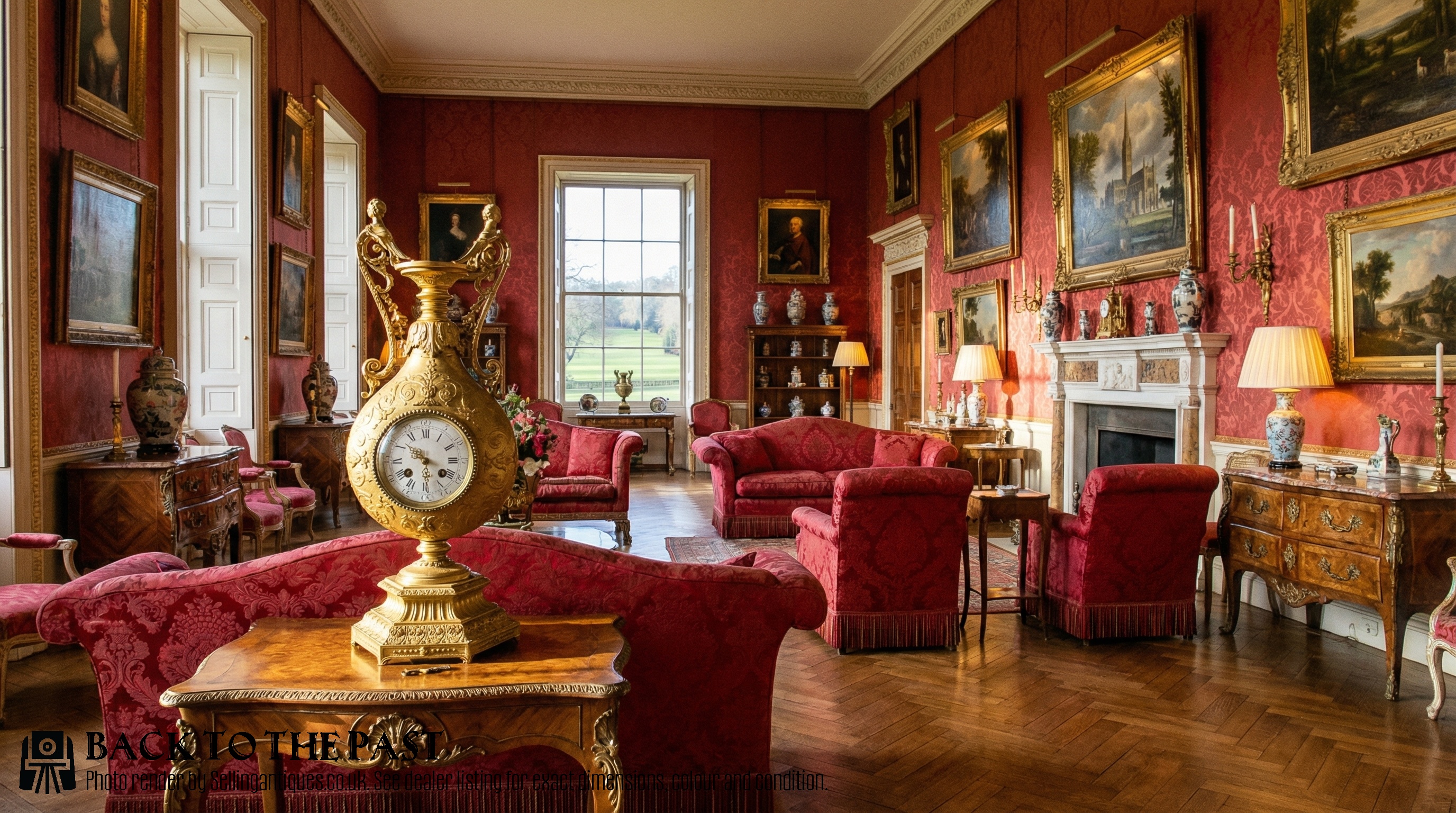
These clocks find their traditional home on a mantelpiece, sideboard, or deep console table where their gilt surfaces catch the light. Because many include delicate glass panels or marble plinths, they require a sturdy, vibration-free surface.
Keeping them away from direct sunlight and damp walls protects the delicate enamel dials and fire-gilded bronze finishes.
How do I identify the period of a clock?
Dating relies on stylistic markers such as neoclassical columns, Louis XVI urn motifs, or Second Empire proportions alongside the materials used. Brass and gilt bronze casting styles shifted across the nineteenth century from restrained classical lines to heavier, more flamboyant revivals.
Maker signatures stamped on the internal brass movement plates provide definitive chronological clues.