

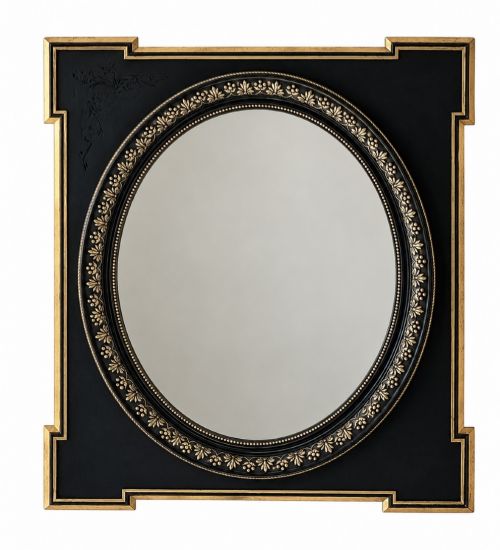
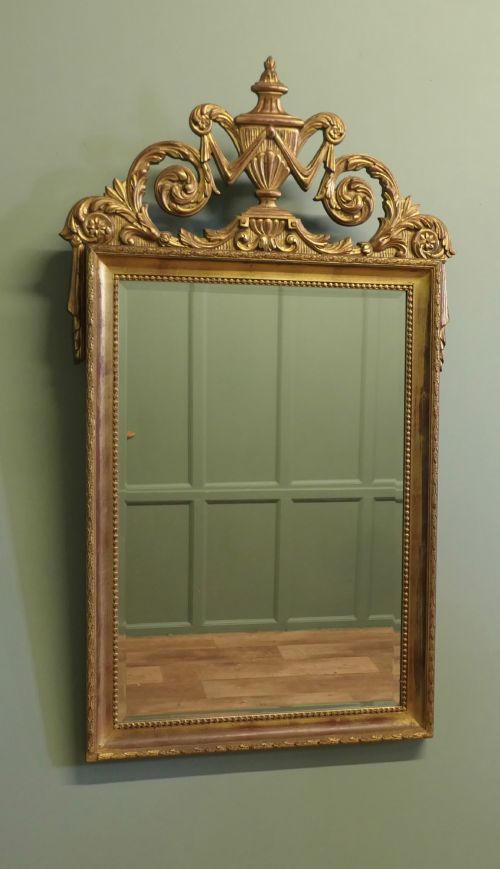
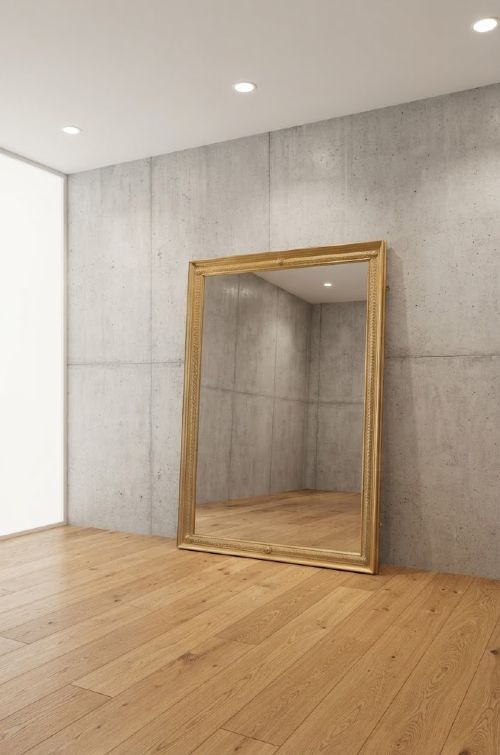
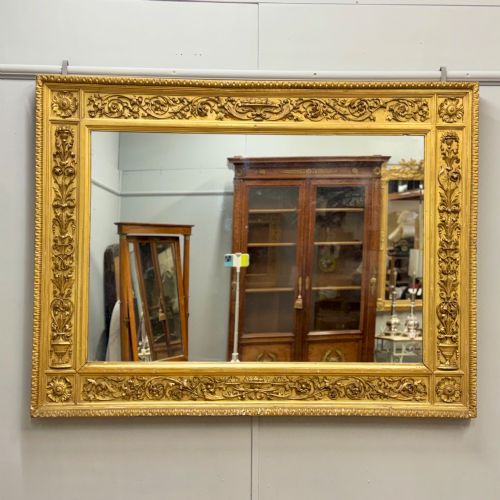
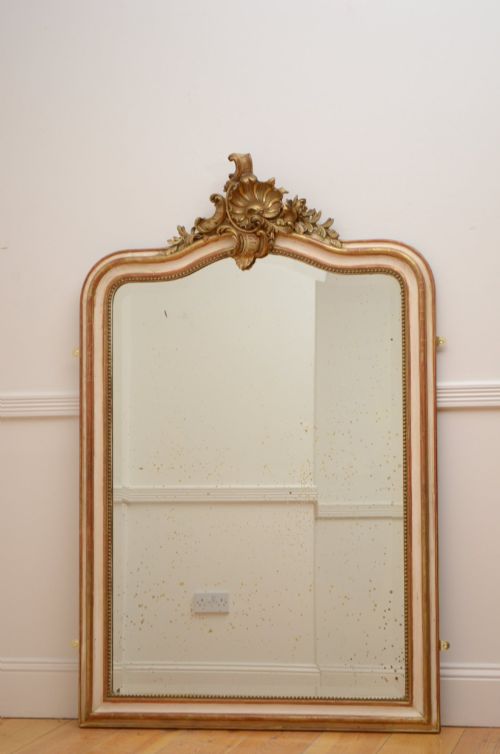
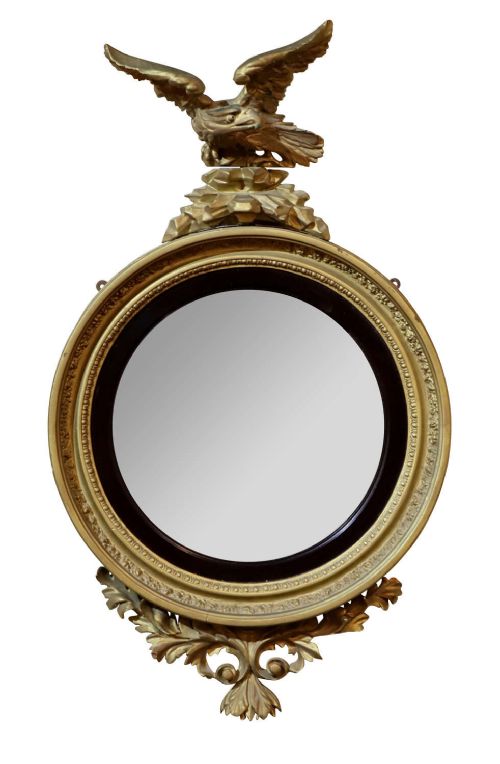
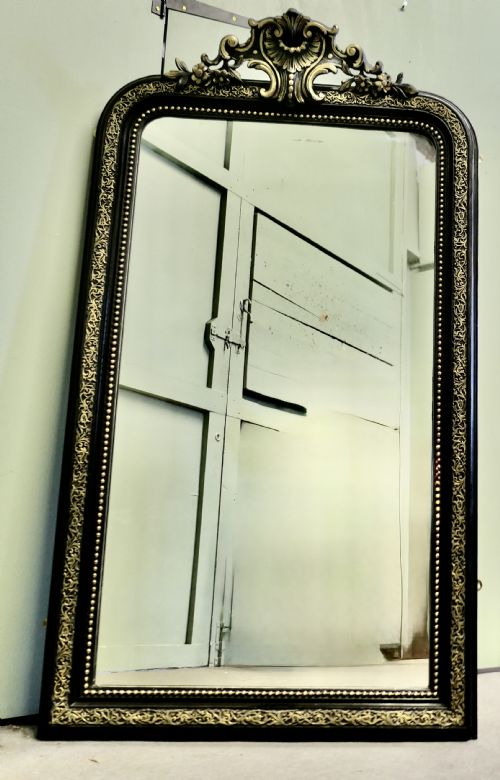


Gilded Empire Wall Mirror
These gilded empire wall mirrors bring classical symmetry and gleaming reflection into a room, prized for their bold architectural frames.
Gilded Empire Wall Mirror
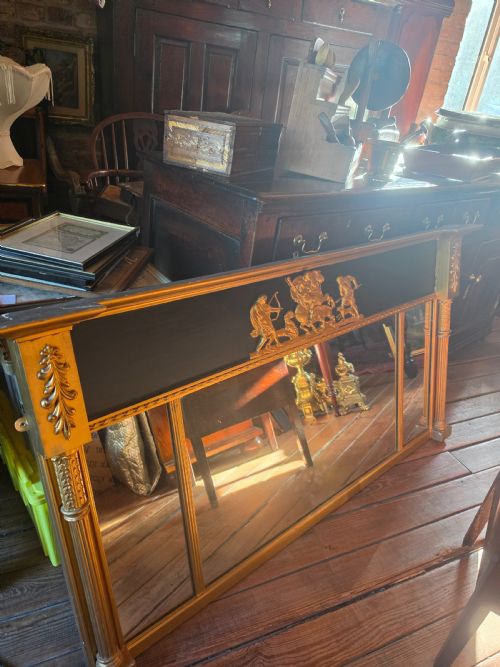
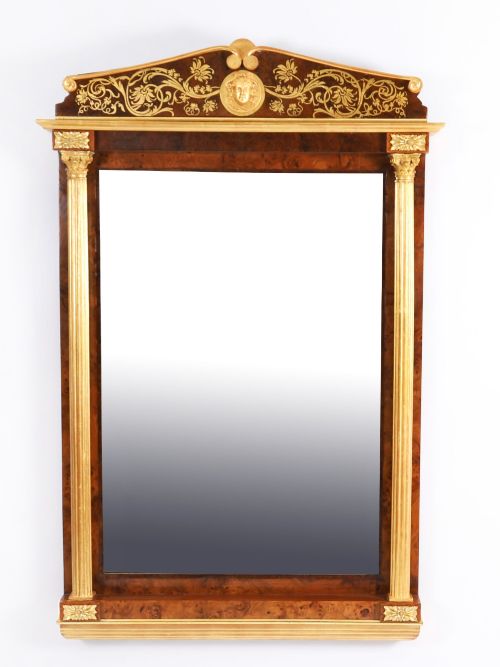
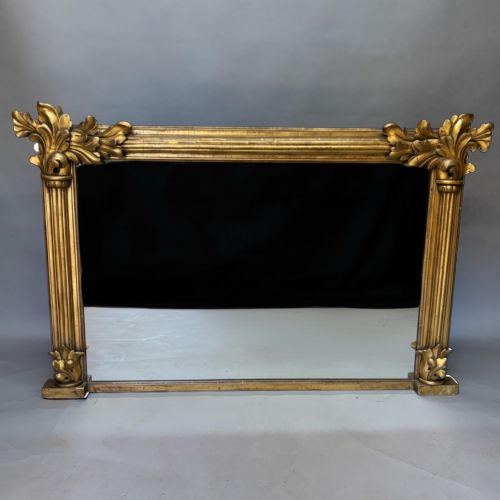
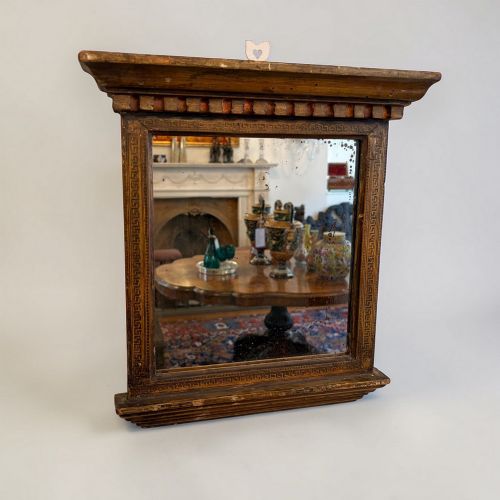
A gilded empire wall mirror is a commanding decorative object defined by neoclassical motifs, architectural columns, and classical proportion. When you search for a gilded empire wall mirror, you encounter tall pier mirrors, wide overmantel pieces, and circular convex forms designed to open up a room.
The pieces listed here span the nineteenth century, including Regency, French Empire, and Napoleon III styles, alongside later revivals from the twentieth century. French and Swedish origins appear frequently, bringing distinct regional interpretations of classical design to the form.
Makers fashioned these mirrors to anchor principal rooms, often placing them above mantelpieces or between windows to maximise natural light. The selection ranges from plain moulded frames to elaborate creations featuring eagle surmounts and painted panels.
Materials and construction
Craftsmen built the underlying structures from timber such as mahogany, ebonised wood, and painted wood, preparing the surfaces with layers of gesso to receive gilding. Gold leaf was then applied meticulously by hand to achieve a brilliant, reflective metallic finish.
Original plates of mirrored glass, sometimes split or convex, were set within these frames, occasionally accompanied by oil paint panels depicting classical scenes. Decorative relief elements like Bacchus and cherubs or Egyptian revival columns were carved directly or moulded in gesso.
Gilded Empire Wall Mirror Retail Price Guide 2026
Typical asking prices for gilded empire wall mirror among the pieces listed under this phrase on Sellingantiques today, from the lower quarter to the upper quarter. They describe what is for sale here now, not the wider market.
Several mirrors gaze out with watchful painted cherubs and perched eagles guarding the glass.
Distinctions in quality
The fineness of the carved or moulded relief work sets superior examples apart, where details such as classical figures and columns remain crisp and deeply defined. High quality manifests in the depth and purity of the gold leaf application over well-prepared gesso grounds.
The integrity of the timber frame and the character of the glass plate also dictate value, with older bevelled or convex plates showing authentic age. The presence of painted panels or specialised elements like eagle surmounts elevates the decorative ambition of the piece.
The Gilded Empire Wall Mirror Glossary
- Giltwood
- Wood that has been coated with gold leaf or gold paint. This technique provides the rich, luminous surface characteristic of classical mirrors.
- Gesso
- A plaster-like mixture applied to wood frames to create a smooth surface for gilding. It allows craftsmen to carve intricate relief details before applying gold leaf.
- Pier mirror
- A tall mirror designed specifically to hang on the wall space between two windows. These pieces often feature extended vertical proportions to reflect maximum light.
- Overmantel mirror
- A wide mirror intended to be hung directly above a fireplace mantelpiece. They frequently span the length of the hearth and shape the room's focal point.
- Convex mirror
- A round mirror with a bulging, curved glass surface that provides a wide-angle reflection of the interior. Early nineteenth-century examples often incorporate eagle surmounts.
Gilded Empire Wall Mirror: Frequently Asked Questions
Where should I hang a pier mirror?
Pier mirrors were traditionally designed to hang on the narrow wall space between two windows. Placing one in this position allows it to bounce natural light deep into the room.
Alternatively, they suit narrow hallways or spaces where a tall, vertical emphasis helps balance high ceilings and architectural proportions.
How do I identify a Regency mirror?
Regency mirrors date from the early nineteenth century and typically display crisp neoclassical motifs such as classical columns, ebonised details, and gilded surfaces. Look for architectural restraint combined with bold decorative elements.
Convex forms featuring eagle surmounts also point toward this period, reflecting the taste for dramatic, symbolic ornamentation.
How do I care for antique giltwood?
Antique giltwood requires gentle maintenance to protect the delicate gold leaf and gesso layers from damage. Dust the surface regularly with a soft, dry brush without applying liquid cleaners.
Keep the mirror away from direct sunlight, excessive moisture, and fluctuating temperatures to preserve both the timber substrate and the metallic finish.