

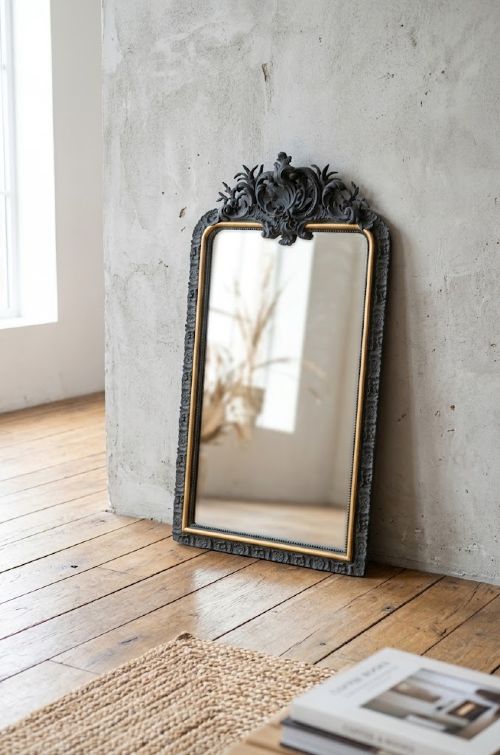
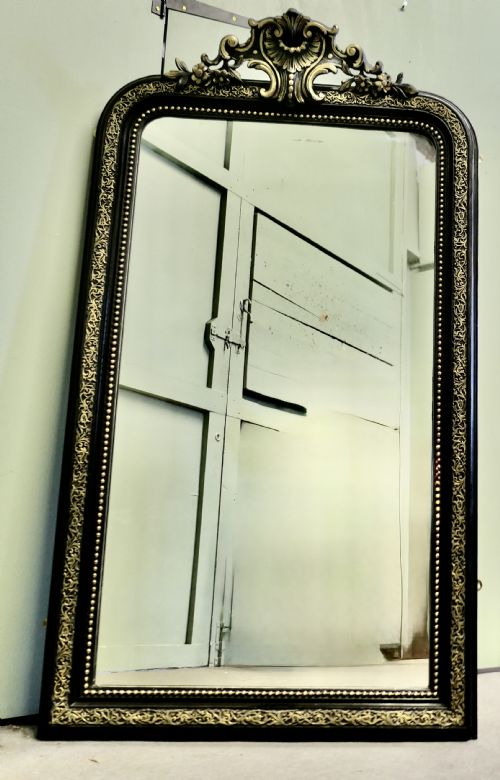


French Empire Pier Glass
These French Empire pier glass pieces bring commanding neoclassical presence to a room, offering tall reflective verticality suited to grand wall spaces.
French Empire Pier Glass
A French Empire pier glass is a tall vertical mirror designed specifically to hang on the narrow wall space, or pier, between two windows. Buyers searching for a French Empire pier glass seek these grand architectural looking glasses to amplify light and add formal symmetry to a room.
The pieces listed here span the nineteenth century, including examples from the original nineteenth century period alongside later nineteenth century revivals and Napoleon III variations. Forms range from substantial wall mirrors and tall dressing mirrors to related display cabinets sharing the same classical vocabulary.
Originating in France, these large mirrors often incorporate classical architectural elements such as columns, pilasters, and symmetrical proportions. They suit high ceilings and traditional reception rooms where their vertical emphasis draws the eye upward.
Materials and construction
Makers built these frames using solid timbers including mahogany, painted wood, and ebonised wood, providing a sturdy architectural core. Carved wooden elements and gesso applied to the structure received layers of gold leaf or giltwood finishes to achieve the characteristic metallic brilliance.
Ormolu mounts cast in bronze and fire gilt provide classical decorative accents against the dark woods and gilded surfaces. Traditional glass plates of the period provide the reflection, framed securely within these heavy, substantial wall structures.
French Empire Pier Glass Retail Price Guide 2026
Typical asking prices for french empire pier glass among the pieces listed under this phrase on Sellingantiques today, from the lower quarter to the upper quarter. They describe what is for sale here now, not the wider market.
Materials recorded across the selection include giltwood, gesso, mahogany, painted wood, ebonised wood, ormolu, and gold leaf.
Judging quality in pier glasses
Quality rests upon the crispness of the carved detail and the depth of the gilding on the gesso and giltwood frames. Superior pieces display finely chased ormolu mounts and well-proportioned architectural framing that integrates harmoniously with the primary glass plate.
The integrity of the timber and the retention of the original mirror plate and backing boards distinguish finer examples from later alterations. Heavier, substantial constructions with well-preserved surface finishes occupy the upper tier of these nineteenth century works.
The French Empire Pier Glass Glossary
- Pier glass
- A tall mirror designed to fit the narrow wall space between two windows. These mirrors were traditionally positioned above pier tables to maximise interior light.
- Giltwood
- Wood that has been covered with a thin layer of gold leaf. This finish defines the reflective warmth of many classical French mirrors.
- Ormolu
- Gilded bronze mounts used as decorative highlights on furniture and frames. The technique involves applying a mercury and gold amalgam to bronze.
- Gesso
- A plaster-like mixture applied to wood frames to create a smooth surface for gilding. It allows intricate relief ornamentation to be carved before leafing.
- Ebonised
- Wood treated to imitate ebony. This dark, polished finish creates strong contrast against gilt or ormolu mounts.
French Empire Pier Glass: Frequently Asked Questions
Where should I hang a pier glass?
These tall mirrors are traditionally hung on the narrow wall space between two windows to reflect natural light into the centre of the room.
They also work effectively above a fireplace or console table where their vertical proportions draw the eye upward.
How do I date a French Empire mirror?
Dating relies on examining the timber construction, the formulation of the gesso, and the manufacturing methods of the glass plate.
Nineteenth century originals often show distinct hand-finishing techniques and patination that distinguish them from later revivals.
Are these mirrors very heavy?
Most pieces combine dense hardwoods like mahogany with thick glass plates and heavy gilded frames, resulting in substantial weight.
Proper wall fixings and professional installation are essential to support their bulk safely.
What is the difference between Empire and Napoleon III styles?
Original Empire pieces reflect the strict neoclassical symmetry of the early nineteenth century under Napoleonic rule.
Napoleon III and revival pieces from later in the century often incorporate bolder eclecticism while retaining classical French motifs.