


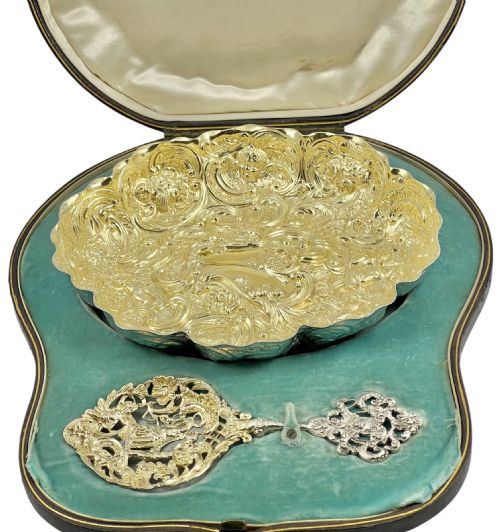

Gilded Dessert Dishes
Gilded dessert dishes bring the rich porcelain traditions of the eighteenth and nineteenth centuries straight to the table.
Gilded Dessert Dishes
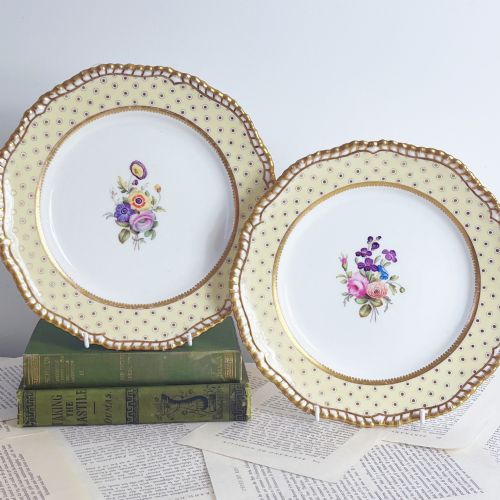
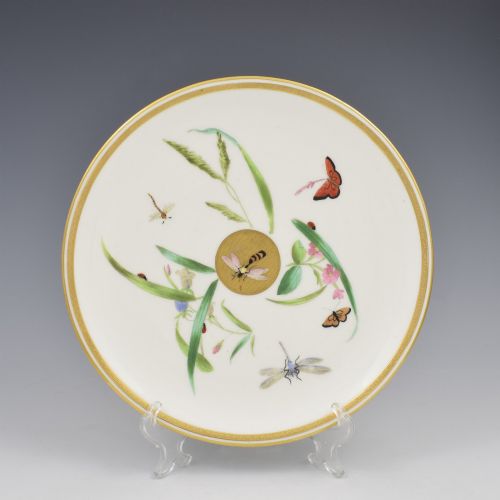
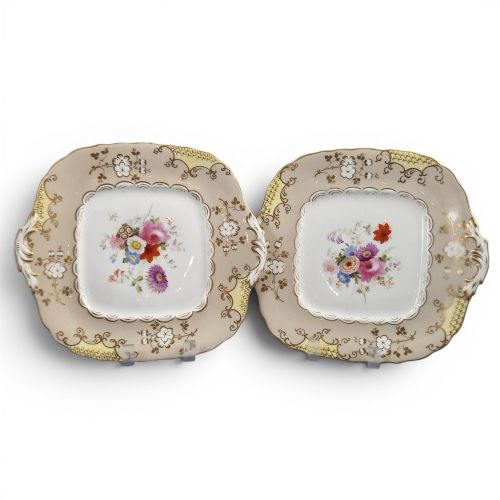
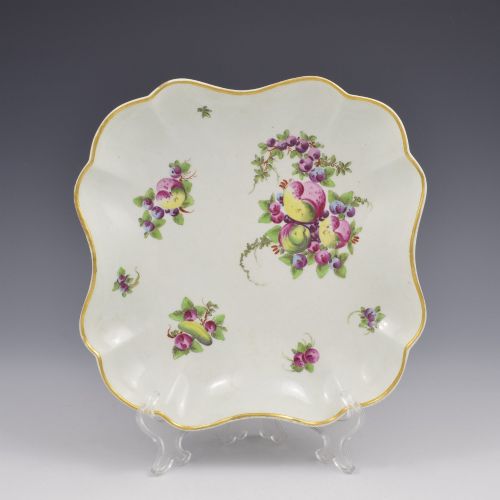
Gilded dessert dishes comprise plates, serving vessels, and shaped dishes intended for the final course of a formal meal. These pieces appear primarily in porcelain, bone china, and ironstone, originating from famous British and European factories across the Georgian, Regency, and Victorian periods.
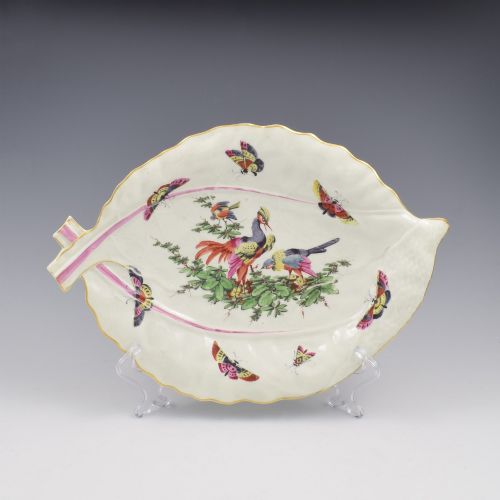
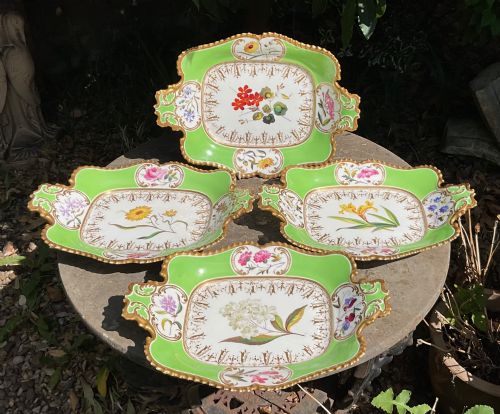
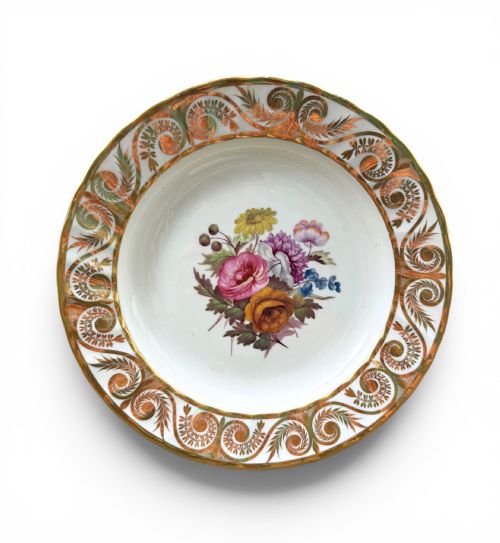
A buyer examining this selection encounters botanical studies, armorial crests, hand-painted fruit, and intricate Japanese styles set against gilt borders. The assortment spans single plates, matched pairs, and surviving portions of larger table services.
Materials and Manufacture
Potters shaped hard or soft-paste porcelain and bone china using moulds or the wheel, then applied underglaze details or hand-painted enamel scenes. Factories employed skilled artists to render botanical specimens, topographical views, and exotic birds onto the clay body.
The characteristic metallic finish relies on gold leaf or liquid gilding applied by hand around the rims and relief mouldings. Firing in kiln conditions fixed both the painted pigments and the metallic embellishments to the glazed surface.
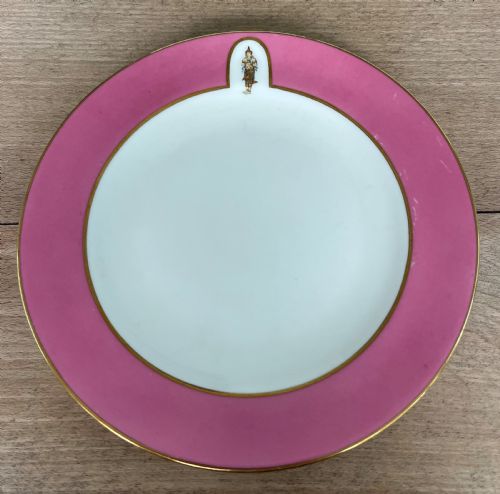
Several plates preserve the exact menu taste of the king of Siam and the eccentric Jabberwocky pattern.
Assessing Quality and Execution
Quality rests upon the skill of the hand-painted decoration and the precision of the moulding. Pieces featuring named botanical studies, armorial bearings, or detailed ornithological subjects by known factory artists occupy the upper tier of the range.
The handling of the gilding itself marks the distinction between standard factory output and superior work. Thickly applied, burnished gold leaf denotes high craftsmanship, whereas flat, rubbed paint indicates utilitarian production.
Spode·Dr Wall Worcester·Chamberlains Worcester·Derby·Minton·Coalport·Flight Barr and Barr·Rockingham·Wedgwood·Bloor Derby
The Gilded Dessert Dishes Glossary
- Gilding
- The application of gold leaf or powdered gold to the ceramic surface to create metallic borders and highlights. This technique defines the visual character of the category.
- Soft-Paste Porcelain
- An artificial porcelain composition fired at lower temperatures than hard-paste porcelain. It produces a warm, slightly translucent body common in eighteenth-century pieces.
- Armorial
- A ceramic decoration featuring a family coat of arms or crest. These bespoke commissions identify the original aristocratic or wealthy patrons of the table service.
- Ironstone
- A heavy, durable type of earthenware patented in the nineteenth century. It provides a sturdy alternative to porcelain for heavy service use.
- Kakiemon
- A Japanese style of enamelled porcelain decoration featuring asymmetric floral and bird motifs. European factories widely imitated this palette during the eighteenth century.
Gilded Dessert Dishes: Frequently Asked Questions
How were gilded dessert dishes used?
These vessels formed the final course of formal dining, holding sweetmeats, fruits, nuts, and pastries at the end of the meal.
Servants presented the dishes around the table to allow guests to select items after the savory courses had been cleared away.
Can I use these antique dishes for food?
Using nineteenth-century porcelain for dining remains possible, though hand-washing is essential to protect the delicate enamels and gold leaf.
Many collectors prefer to display them on walls or in cabinets to prevent accidental scratching of the historic glaze.
How do I identify a Regency period dish?
Regency pieces often display distinct neoclassical shapes, vibrant Minton apple green grounds, or elaborate armorial motifs.
Factory marks on the underside, combined with characteristic floral or topographical painting styles, help confirm the date of manufacture.
What is First Period Worcester?
First Period Worcester refers to porcelain produced at the original Worcester factory during the eighteenth century under the direction of Dr Wall.
These pieces are celebrated for fine potting, delicate hand-painted birds or flowers, and distinctive square or crescent factory marks.