
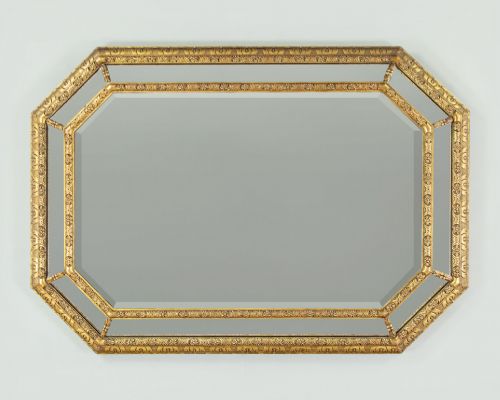


Gilded Cushion Frame Mirror
A gilded cushion frame mirror brings weight and luminous depth to a room through its sloping profile and gold leaf surface.
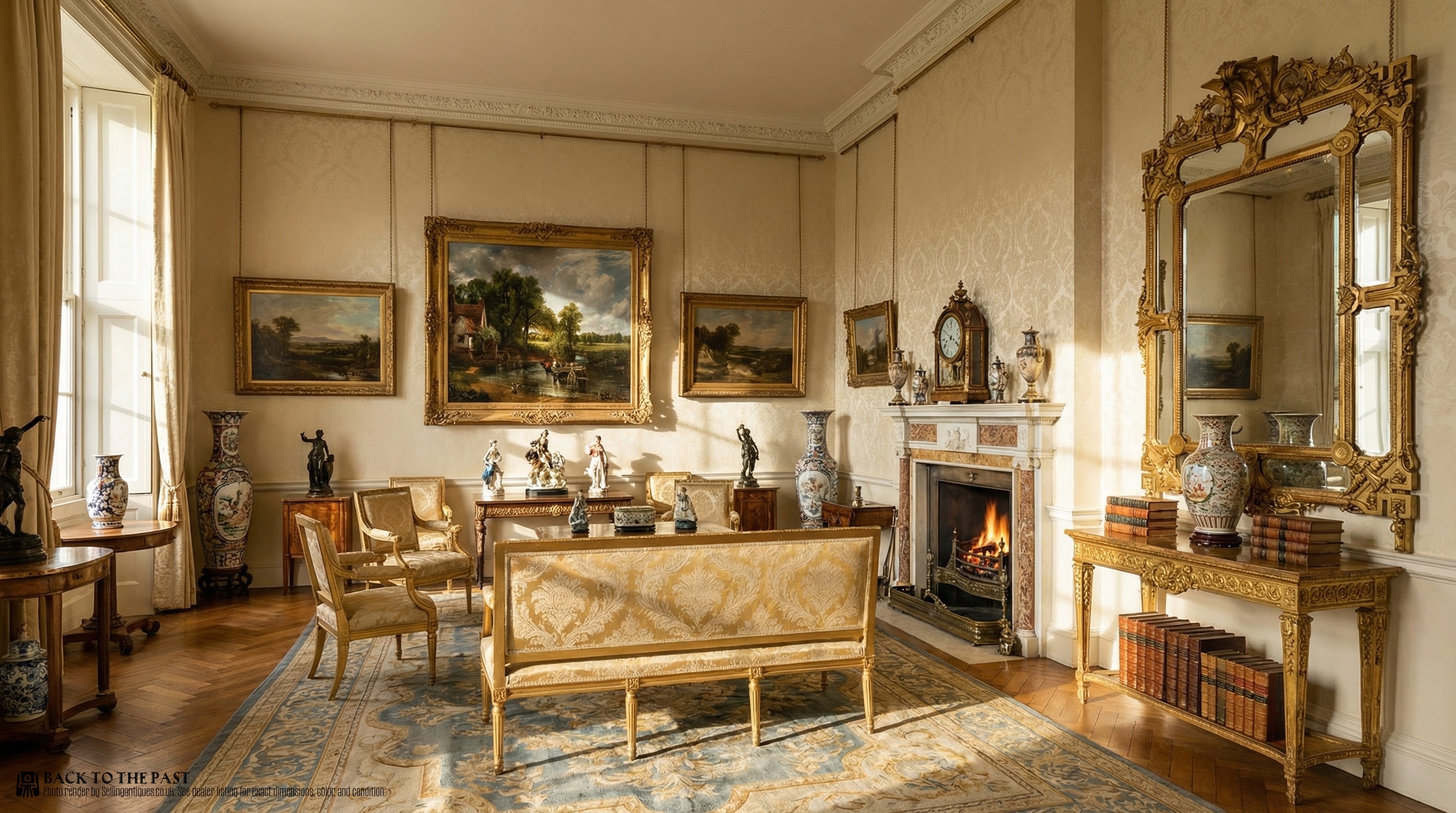
Gilded Cushion Frame Mirror
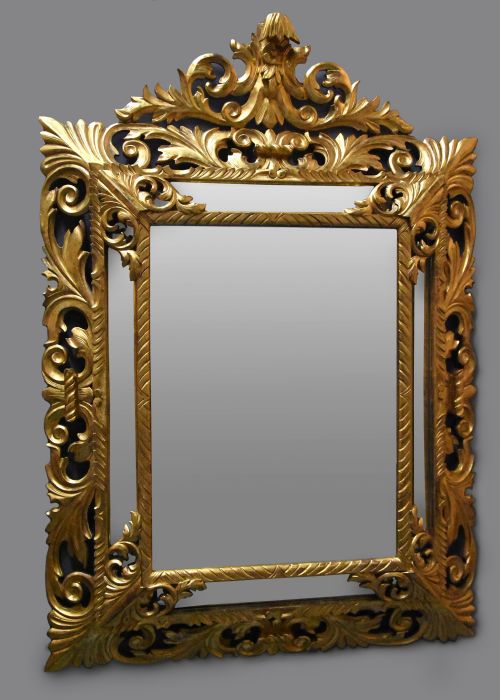
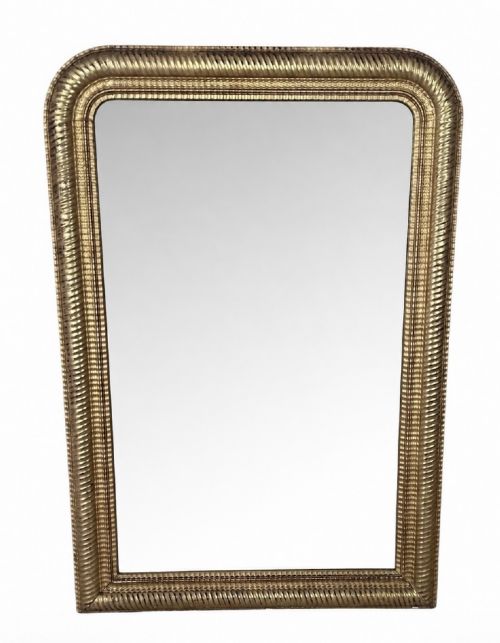
A gilded cushion frame mirror is defined by its rounded, ogee-shaped profile that curves outward or inward towards the glass, creating a distinct three-dimensional cushion effect. These wall and overmantel mirrors appear across nineteenth-century styles, including French Louis Philippe and Italian Baroque Revival designs.
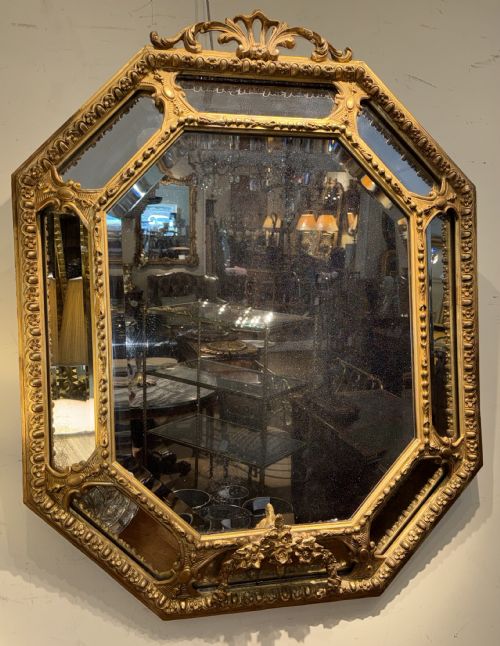
The version most commonly met on this page is the nineteenth-century French or Italian wall mirror, often finished in bright or parcel giltwood. Pieces range from neat, modest dimensions to large decorative formats featuring carved ornaments, bevelled glass, or mercury plates.
How they were made
Carvers shaped wooden foundations from timber such as walnut or general wood, applying layers of gesso to build up the smooth contours required for the cushion profile. Artisans then laid gold leaf over the prepared surfaces to achieve the characteristic metallic sheen.
Mirrors utilised traditional glass techniques, including hand-bevelled plates and older mercury glass with characteristic clouding and depth. Frames were frequently enriched with carved details, ripple moulding, or ebonised accents.
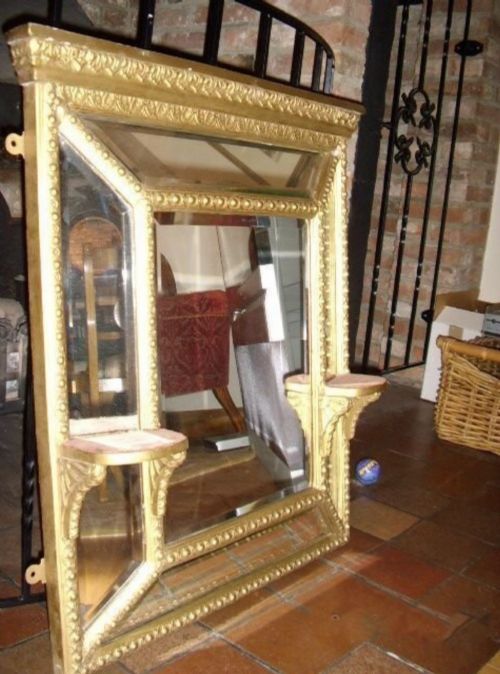
Some nineteenth-century mirrors hide small ornament shelves behind their sloping frames, perfect for displaying tiny treasures.
What varies in quality
Quality rests in the crispness of the carving and the depth of the gesso preparation beneath the gold leaf. Superior examples display harmonious proportions across the sloping cushion frame and retain their original gilding without heavy modern intervention.
The character of the glass plate contributes significantly to the standing of a piece, with bevelled edges and original mercury silvering offering greater visual texture than plain modern replacements.
The Gilded Cushion Frame Mirror Glossary
- Giltwood
- Wood that has been coated with gold leaf or gold paint. This finish creates the bright reflective surface seen on traditional frames.
- Gesso
- A plaster-like mixture applied to wood frames to create a smooth surface for gilding and carving. It allows for intricate relief details.
- Mercury glass
- A type of double-walled glass blown in the nineteenth century with a silver-mercury solution sealed inside. It produces a mottled, deep reflection.
- Louis Philippe
- A French style from the mid-nineteenth century characterised by understated curves and restrained classical ornament. Mirrors from this period often feature rounded upper corners.
- Ripple moulding
- A decorative moulding pattern featuring small, wave-like undulations created by specialised woodworking machinery. It adds texture to the outer frame edge.
Gilded Cushion Frame Mirror: Frequently Asked Questions
How do I clean a gilded frame?
Dust the surface gently with a soft, dry brush to remove loose particles without disturbing the delicate gold leaf layer.
Avoid using water, liquid cleaners, or abrasive cloths, as moisture can lift the gesso and ruin the historic finish.
Where should I hang an overmantel mirror?
Mount the mirror securely above a fireplace mantel where its large reflective surface can bounce light around the reception room.
Ensure the wall fixings match the substantial weight of timber and glass construction found in these large nineteenth-century pieces.
What is mercury glass?
Mercury glass refers to double-walled blown glass objects silvered with a liquid mixture between the layers, though actual mercury was rarely used.
This technique produces a dark, misty reflection with characteristic spotting that distinguishes antique plates from modern float glass.
How do I identify a French Louis Philippe mirror?
Look for the characteristic rounded upper corners paired with a simple, elegant frame profile that lacks excessive ornamentation.
These pieces often date from the nineteenth century and rely on proportion and subtle cushion moulding for their decorative impact.