




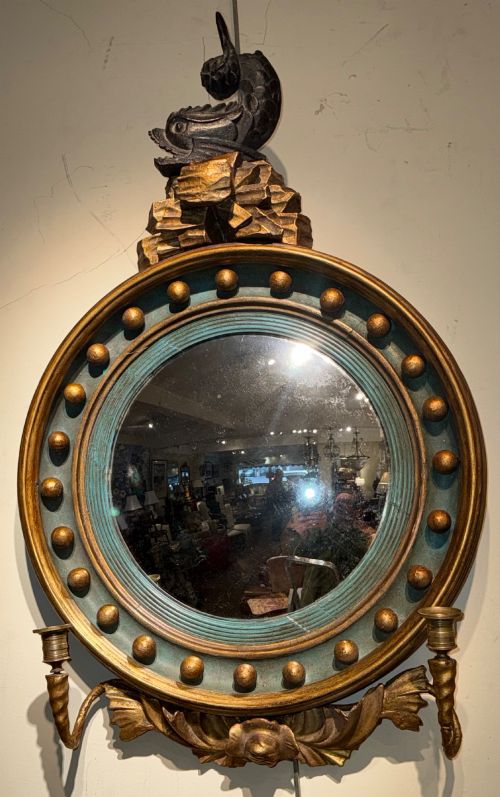


Gilded Convex Wall Mirror
A gilded convex wall mirror bends light across a room, creating a sweeping curved reflection that has drawn the eye since the Regency era.
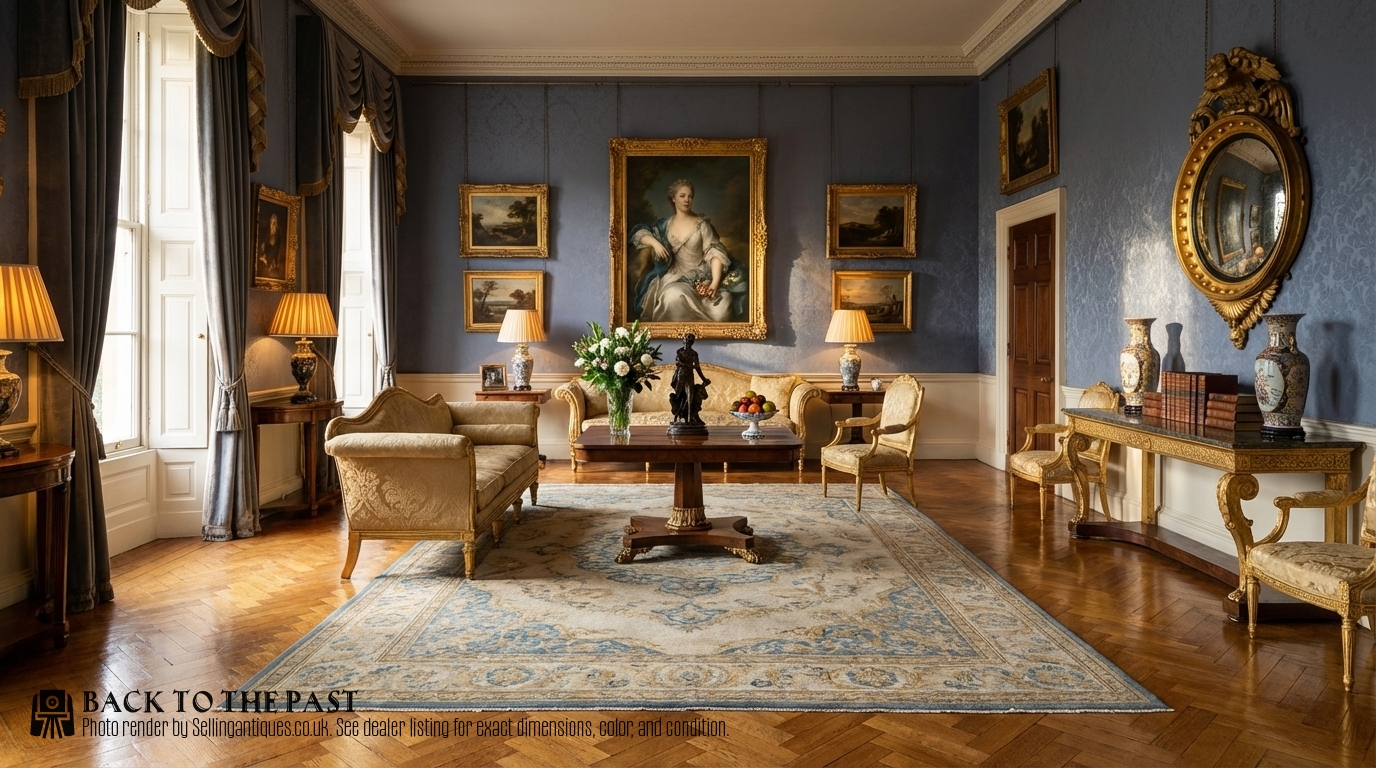
Gilded Convex Wall Mirror
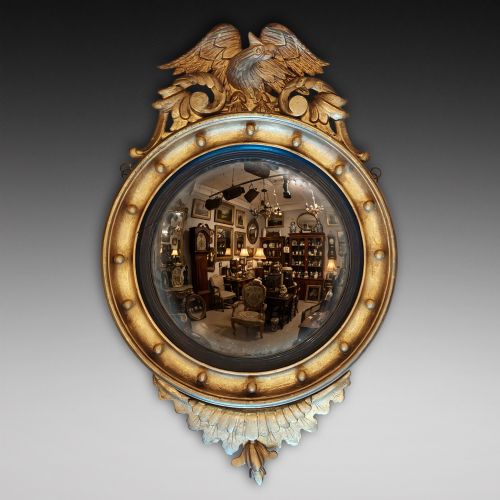
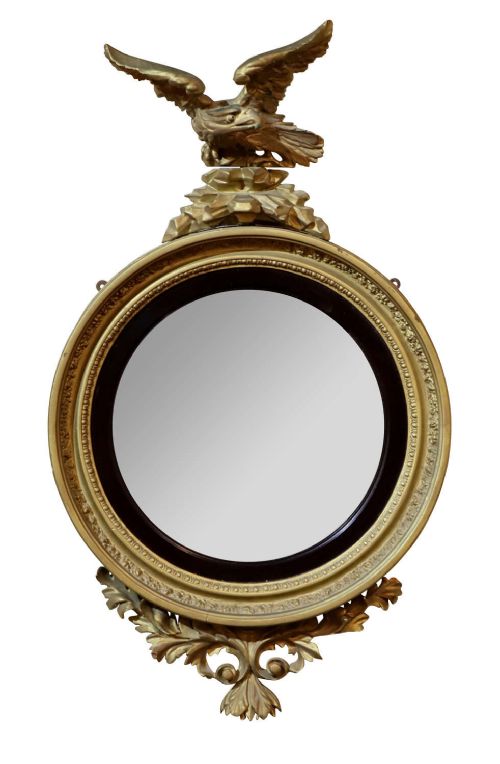
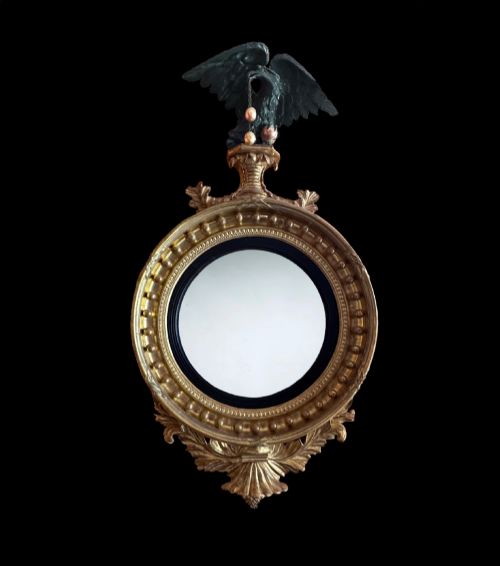
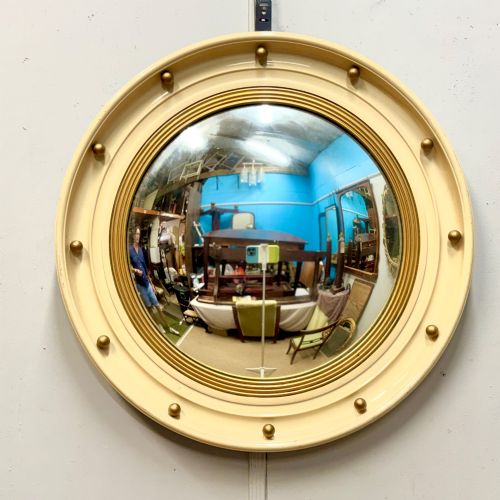
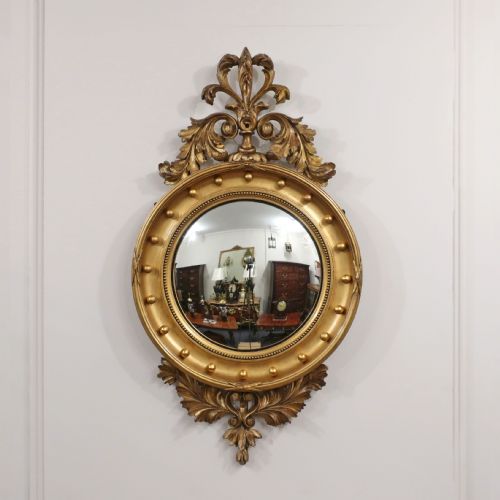
A gilded convex wall mirror provides a circular viewing surface that captures a wide-angle reflection of an entire interior space. When searching for a gilded convex wall mirror, buyers encounter round forms predominantly originating from the Regency period, alongside later 19th-century and early 20th-century revivals.
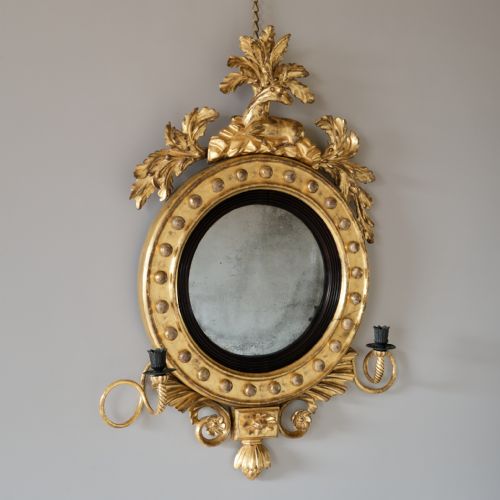
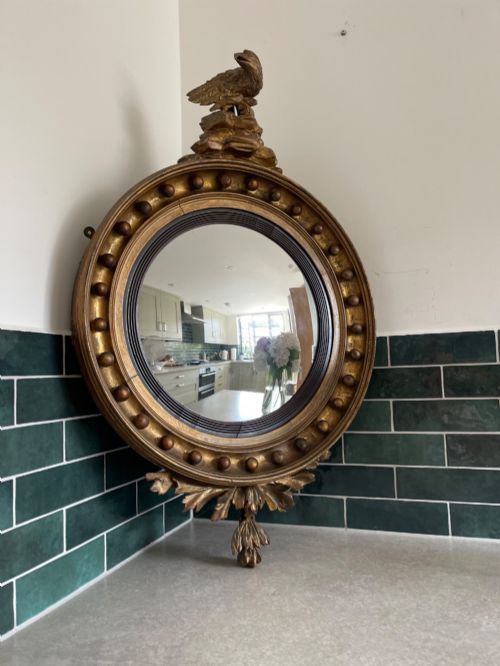
The dominant format on this page is the circular giltwood frame, often featuring distinctive decorative crests such as spread eagles or dragons. Examples range from small hall mirrors to grand scale wall pieces spanning several feet in diameter.
Materials and construction methods
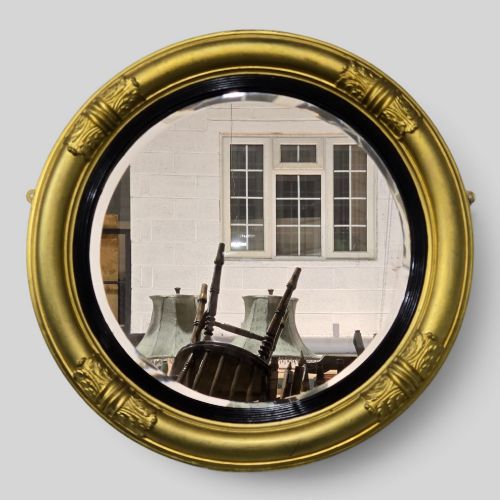
Makers fashioned these frames from wood and gesso, applying gold leaf to achieve a brilliant gilt finish that catches the ambient light. Certain pieces incorporate ebonised wood slips to frame the glass, while others utilise painted wood surfaces.
The defining optical component is the curved mirror glass itself, housed within a deep circular moulding. Structural hardware often includes brass elements for wall mounting and candle sconces on girandole variations.
Gilded Convex Wall Mirror Retail Price Guide 2026
Typical asking prices for gilded convex wall mirror among the pieces listed under this phrase on Sellingantiques today, from the lower quarter to the upper quarter. They describe what is for sale here now, not the wider market.
Periods represented span the Georgian, Regency, Victorian, and 20th-century eras, including French mid-century and chateau styles.
Judging the standard of execution
The distinction between ordinary and exceptional pieces rests upon the crispness of the gesso moulding and the depth of the gilding. Superior examples display finely sculpted crests, such as carved eagles with detailed plumage and proportioned wings.
The quality of the mirror glass and the integrity of the original wood frame dictate the overall presence of the object. Hand-applied giltwood and well-preserved surface patination separate period originals from later revival interpretations.
The Gilded Convex Wall Mirror Glossary
- Convex glass
- A curved glass plate that swells outward, projecting a spherical, wide-angle reflection of the surrounding room. This distinct optical property distinguishes these pieces from flat wall mirrors.
- Giltwood
- Timber coated with fine gold leaf applied over a prepared gesso ground. This traditional surface treatment provides a warm, reflective metallic sheen.
- Ebonised slip
- A dark, blackened inner moulding placed between the convex glass and the main gilt frame. It creates a sharp optical border that focuses the reflection.
- Girandole
- A wall mirror fitted with attached candle sconces or arms for illumination. The polished metal and glass surfaces multiply the flickering candle flame.
- Gesso
- A plaster-like mixture applied to wood frames to create a smooth surface for carving and gilding. Skilled artisans used it to build up crisp decorative relief details.
Gilded Convex Wall Mirror: Frequently Asked Questions
Where should I hang a convex mirror?
These mirrors excel in entrance halls, dining rooms, and principal living spaces where their wide-angle reflection can capture the entire breadth of the interior.
Because they concentrate light from across the room, placing them opposite a window or near a light source maximises their visual impact.
How do I date a convex mirror?
Dating relies on examining the construction of the wooden frame, the composition of the gesso, and the characteristics of the gilt surface. Regency examples often display specific eagle crests and delicate reeded bezels.
Later 19th-century revivals and 20th-century pieces tend to show different timber patination and variations in the depth of the carved ornamentation.
What is a butler's mirror?
A butler's mirror is a traditional variant of the round convex mirror format, often associated with domestic service areas or dining rooms during the 19th century.
These pieces typically feature simple circular frames designed to monitor activity across a large room with minimal distortion.
How do girandole mirrors function?
Girandole mirrors incorporate integrated candle sconces branching out from the sides of the main frame. The glowing candlelight reflects against the curved glass and gilded surface to brighten dark corners.
They served as both decorative wall art and practical lighting fixtures in period interiors.