
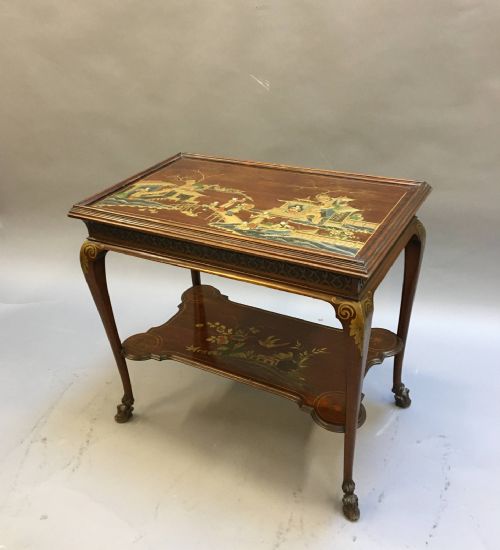


Gilded Chinoiserie Side Table
These gilded chinoiserie side table options bring lacquered surfaces and hand-painted motifs into a room, offering both decorative presence and daily utility.
Gilded Chinoiserie Side Table
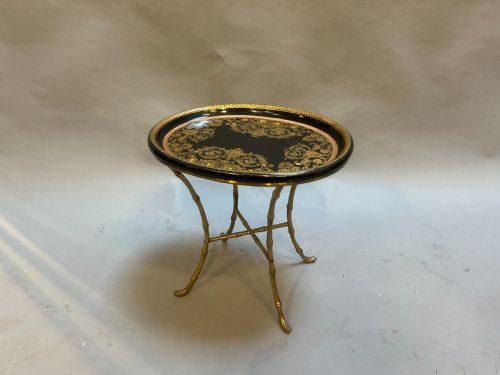
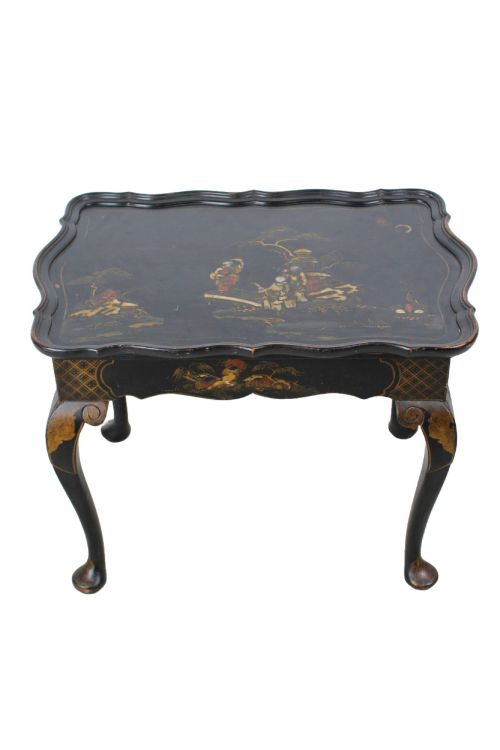
A gilded chinoiserie side table combines Asian-inspired decorative motifs with European furniture forms ranging from nests of four tables to occasional and coffee tables. These pieces arrive from various periods including the nineteenth century, the Edwardian era, and the early twentieth century.
Materials and construction
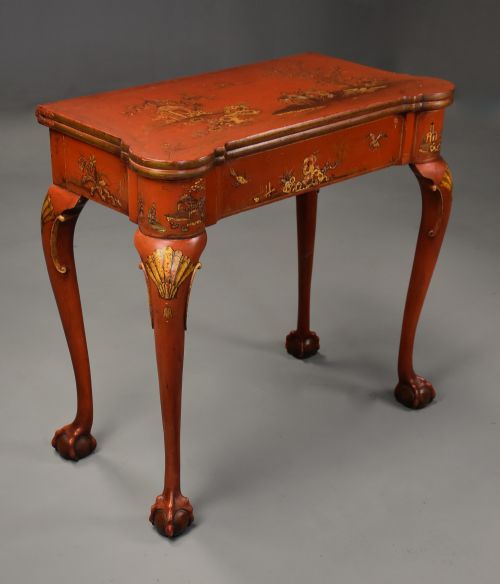
Craftsmen utilised wood, hardwood, and papier-mâché as the foundational substrates for these items. Surfaces received coats of black or red lacquer, creating a durable ground for subsequent artistic work.
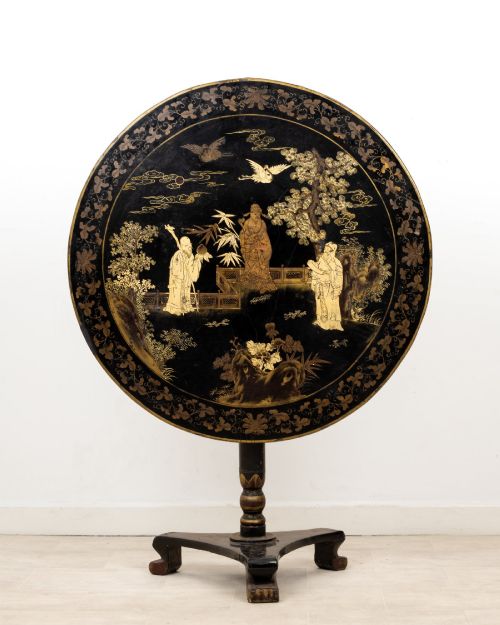
Gold leaf and gilding were applied by hand to highlight borders, figures, and architectural details. Artisans also employed painted decoration alongside traditional japanning techniques to complete the ornamental schemes.
Listings span the nineteenth century through the 1930s, featuring black and red lacquer alongside papier-mâché.
Distinctions in quality
Quality rests upon the depth of the lacquer finish and the precision of the hand-painted decoration across the surface. Finer examples display intricate narrative scenes and careful application of gold leaf rather than simplified stencilling.
The structural integrity of the underlying wood or papier-mâché, particularly in nesting sets and tilt-top mechanisms, separates standard production from superior craftsmanship.
The Gilded Chinoiserie Side Table Glossary
- Chinoiserie
- European decorative style reflecting Chinese artistic influences. It appears frequently in nineteenth and early twentieth century furniture.
- Japanning
- European imitation of East Asian lacquerwork. This technique uses heat-dried varnishes to build a hard, glossy surface.
- Demi-lune
- A half-moon shaped furniture form. These tables often stand flat against a wall as console or side pieces.
- Tilt-top
- A table top hinged to tilt vertically when not in use. This mechanism saved space in historic interiors.
Gilded Chinoiserie Side Table: Frequently Asked Questions
How do I style a chinoiserie table?
Place the table where its lacquered surface and gilded details receive adequate light, allowing the hand-painted motifs to stand out against surrounding furnishings.
Keep surrounding decor simple to let the intricate patterns and rich colours of the lacquer remain the focal point of the space.
Are these tables sturdy enough for daily use?
Most occasional and coffee table formats are built from hardwoods or structured papier-mâché designed to support everyday items like lamps and books.
Nesting sets and card tables offer functional versatility while maintaining the structural strength needed for regular household activities.
How do I clean a lacquered table?
Dust the surface gently with a soft, dry cloth to prevent scratching the delicate gold leaf and lacquer layers. Avoid chemical cleaning agents and excessive moisture.
Protect the finish from direct sunlight and heat sources to preserve the integrity of the antique materials over time.
What is the difference between japanning and lacquer?
Japanning is a European technique developed to emulate Asian lacquer using resin varnishes and heat curing. True lacquer relies on the sap of specific trees native to Asia.
Both methods produce a glossy, durable finish that accepts gold leaf and hand-painted chinoiserie decoration effectively.