

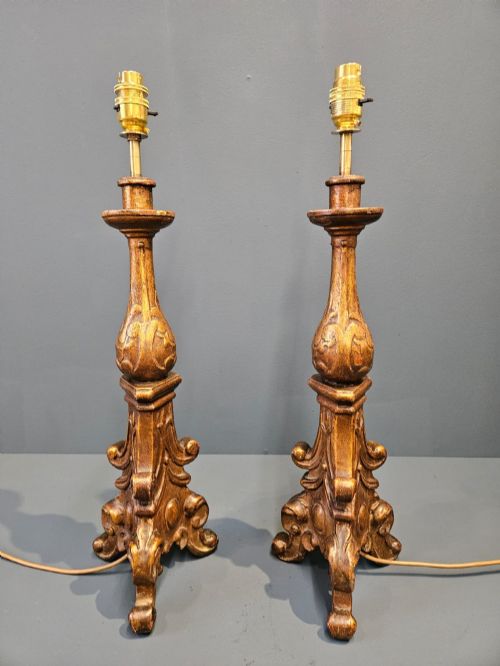


Gilded Carved Lamp Table
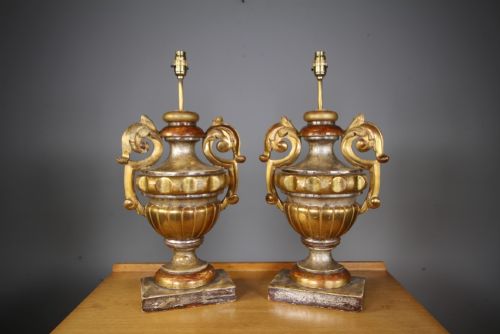
These gilded carved lamp table examples bring a refined classical presence to a room, offering both sculptural form and functional illumination.
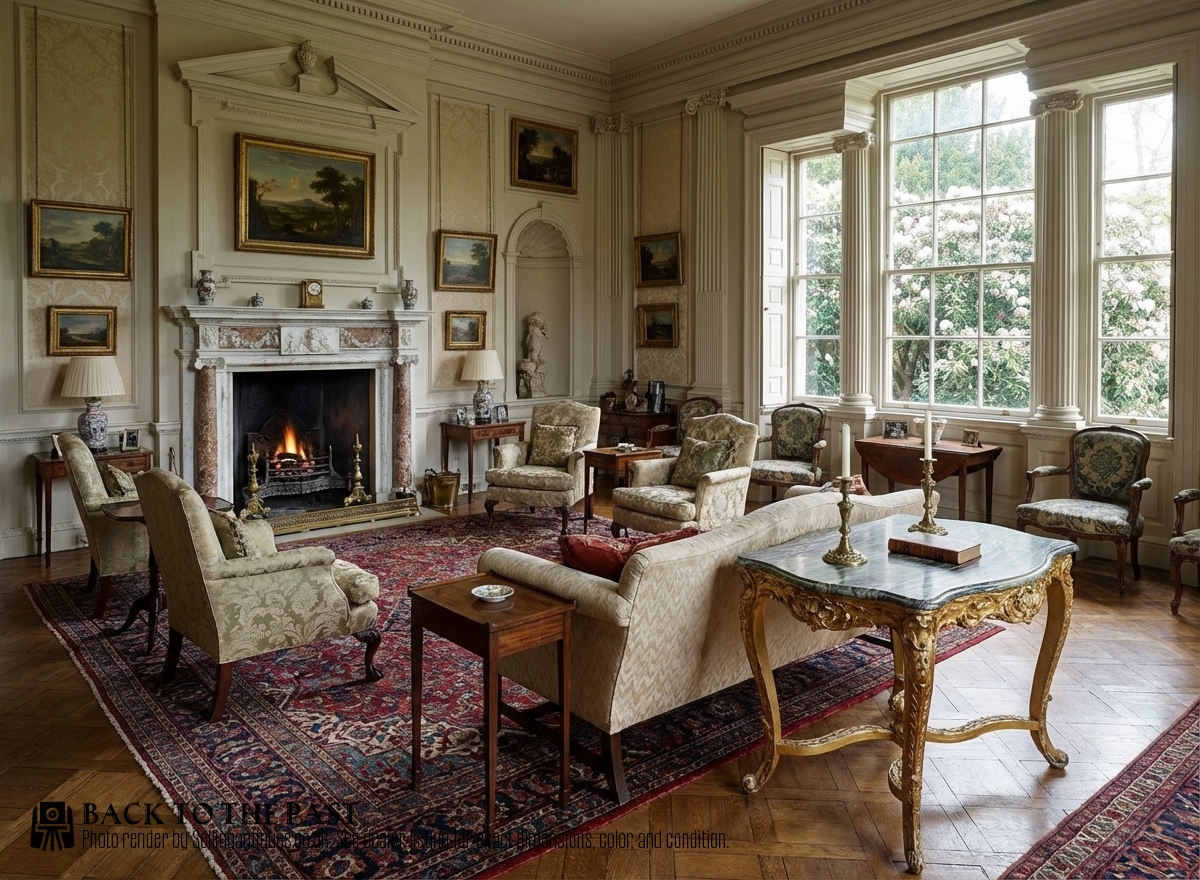
Gilded Carved Lamp Table
A gilded carved lamp table search brings together ornamental small tables and converted lighting stands designed with gilded surfaces. The pieces you encounter most often span the nineteenth century and the early twentieth century, drawing on French, Italian, and English design traditions.
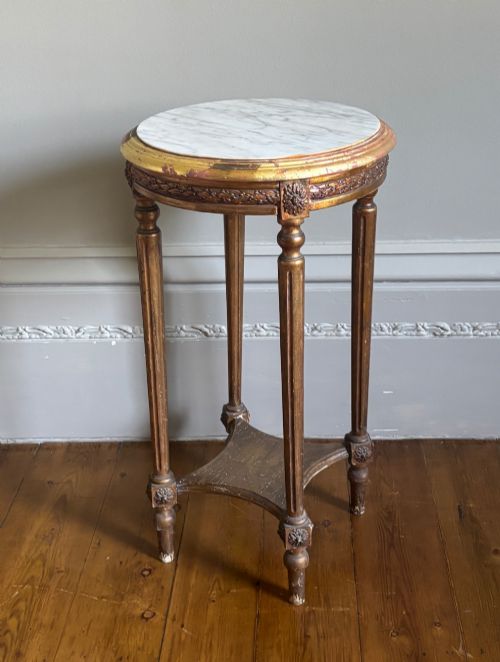
Forms range from occasional tables and side tables topped with marble to tall lamp bases and converted pricket candlesticks. Continental workshops produced many of the ornate giltwood and gesso pieces seen here, alongside occasional tables featuring parcel gilt highlights.
Buyers select these items to anchor a seating area or to introduce a reflective metallic accent into a traditional interior. The selection balances small furniture with lighting supports, uniting them through carved wooden frames and gold leaf finishes.
Materials and Construction
Carvers shaped pine, hardwoods, and composite frames before applying layers of gesso to smooth the surface for gilding. Artisans then laid gold leaf or metal leaf over the base preparation, occasionally burnishing sections to create a varied lustre.
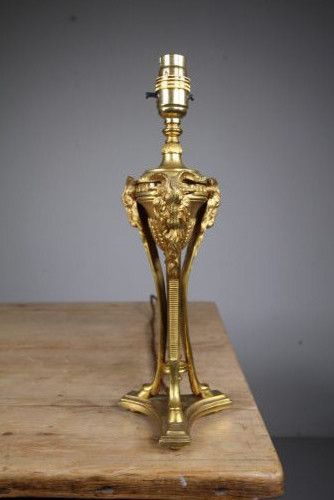
Marble frequently forms the inset tops of side and occasional tables, contrasting with the carved and gilded wooden bases beneath. Ormolu, brass, and gilt bronze appear on mounts and certain lamp bases, introducing heavier metal elements to the construction.
Listings feature items from the eighteenth century through to the 1930s, encompassing Regency, Victorian, and Neoclassical styles.
Assessing Quality
The crispness of the hand-carved detail distinguishes finer examples from simpler production. Deeply undercut foliage, scrolls, and figural elements demonstrate greater artisan skill than shallow or moulded ornament.
The integrity and depth of the original gilding dictate the visual impact of the piece. Surviving gold leaf surfaces that show natural ageing without heavy modern repainting hold significantly more character and historical merit.
Whytock and Reid
The Gilded Carved Lamp Table Glossary
- Giltwood
- Wood that has been coated with gold leaf or powder. This finish is typical of decorative furniture and lamp bases from the eighteenth and nineteenth centuries.
- Gesso
- A plaster mixture applied to wood surfaces as a base for gilding. It provides a smooth white ground that carvers could shape before applying gold leaf.
- Ormolu
- Gilded bronze or brass applied to furniture and lighting. The technique was widely used in French and English decorative arts.
- Pricket stick
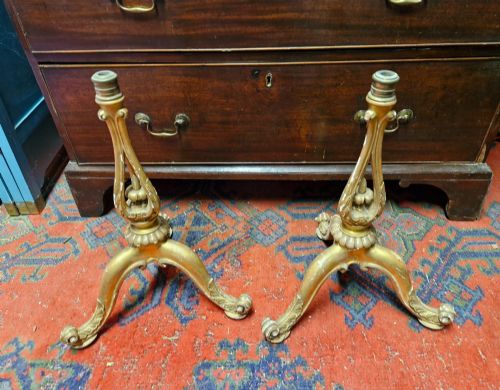
- A candlestick featuring a central spike designed to hold a candle. Many surviving examples from the nineteenth century have since been converted into lamp bases.
- Parcel gilt
- A decoration method where only specific parts of an object are gilded, leaving painted or natural wood exposed elsewhere.
Gilded Carved Lamp Table: Frequently Asked Questions
How do I identify a converted candlestick lamp?
Converted candlesticks often retain a central metal spike or drip pan from their original function as lighting before being wired for electricity.
Closely inspect the top fitting where modern electrical components meet the older wooden or bronze stem to spot the adaptation.
Are marble tops original to these tables?
Many nineteenth-century occasional and side tables were designed with fitted marble slabs to provide a durable and luxurious surface.
Check the fit and the edge moulding to ensure the stone corresponds to the period of the wooden base.
What is the difference between giltwood and painted gilt?
Giltwood involves applying actual gold leaf over a prepared gesso and bole ground on a carved wooden body.
Painted or parcel gilt surfaces typically utilise metallic paint or gold powder applied selectively over a painted base coat.