





Gilded Bronze Mantel Candelabra
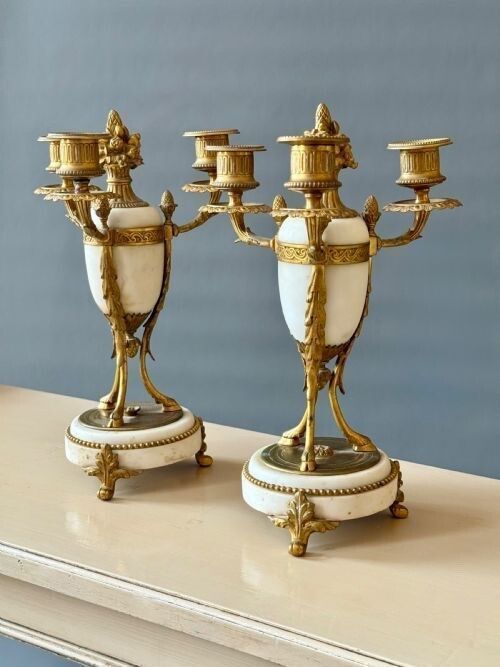
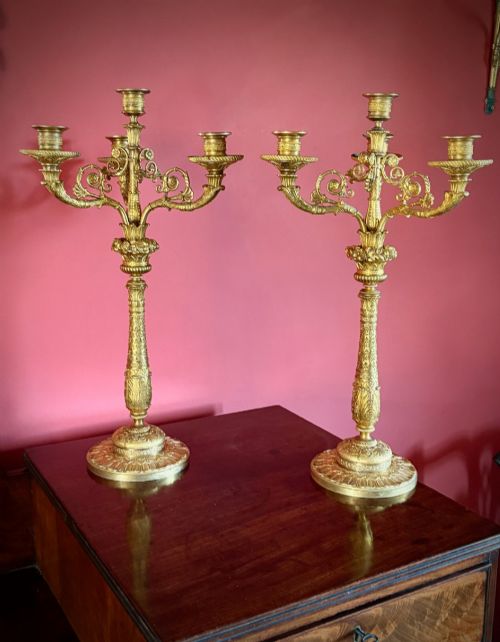
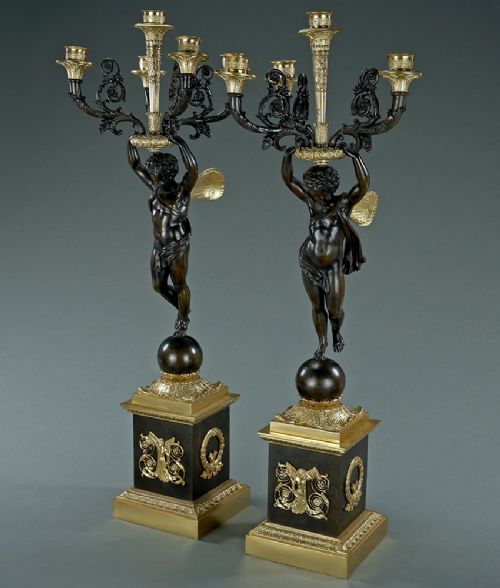
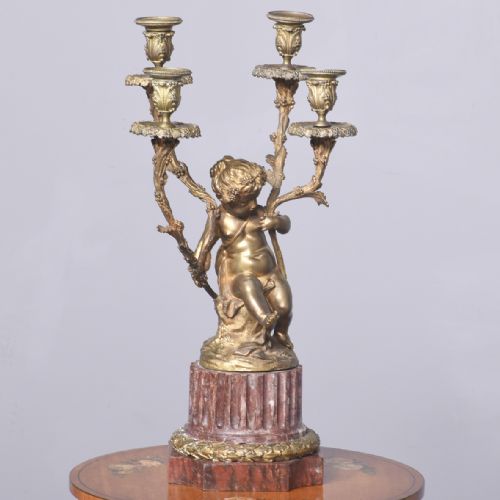
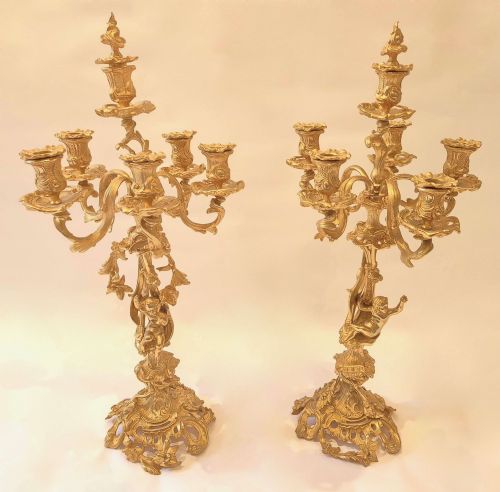
These gilded bronze mantel candelabra bring nineteenth-century French elegance to a mantelpiece, combining luminous metalwork with sculptural forms.
Gilded Bronze Mantel Candelabra
When you search for gilded bronze mantel candelabra, you find nineteenth-century decorative lighting and clock garnitures originating from France. These items include pairs of candelabra alongside larger clock sets that anchor a room with classical symmetry. Most examples belong to the Victorian era and the late nineteenth century, spanning distinct revival styles.
How they were made
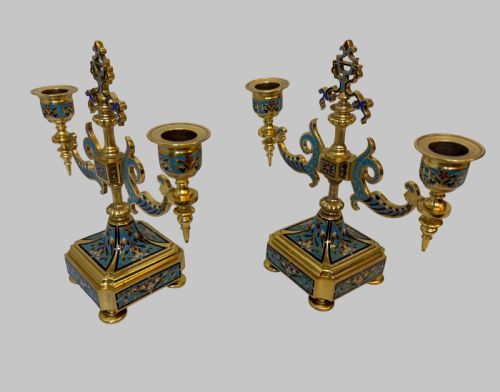
Maker workshops constructed these candelabra primarily using bronze, gilt bronze, and ormolu, often paired with contrasting materials like marble, porcelain, and enamel. Artisans cast the bronze components before applying mercury gilding or surface ormolu treatments to achieve a brilliant metallic sheen. Additional decorative details frequently involve champlevé enamel work and patinated bronze finishes.
Many of the surviving nineteenth-century sets demonstrate meticulous metal-chasing techniques that define the foliage, scrollwork, and figurative motifs of the period. The combination of fire-gilt surfaces with polished stone bases required specialised foundry skills. These manufacturing methods ensured that the decorative lustre endured across generations.
Gilded Bronze Mantel Candelabra Retail Price Guide 2026
Typical asking prices for gilded bronze mantel candelabra among the pieces listed under this phrase on Sellingantiques today, from the lower quarter to the upper quarter. They describe what is for sale here now, not the wider market.
Listings for gilded bronze mantel candelabra span the Victorian period and the late nineteenth century, frequently incorporating marble and porcelain elements.
What varies in quality
The distinction between standard production and the finest work lies in the crispness of the bronze casting and the depth of the metal chasing. Superior examples display sharply defined ornamentation where every leaf and scroll retains its original sculptural intent. Lesser pieces often exhibit softer surface details and shallower relief work resulting from worn or secondary moulds.
Quality also depends on the preservation of the original mercury gilding and the harmony of integrated materials like marble and enamel. Finer sets maintain a consistent brilliance across all matching components of a garniture without mismatched elements. The structural weight and rigidity of the arms and nozzles further indicate the standard of nineteenth-century workshop production.
Deniere Paris·Japy Freres
The Gilded Bronze Mantel Candelabra Glossary
- Ormolu
- A technique of applying finely ground high-carat gold to a bronze object using a mercury amalgamation process. This method produces a durable and luminous golden finish characteristic of nineteenth-century French decorative arts.
- Garniture
- A set of matching ornamental objects designed to be displayed together on a mantelpiece or sideboard. Typically comprises a central clock flanked by two matching candelabra or vases.
- Champlevé
- An enamelling technique where troughs or cells are hollowed out of the metal surface and filled with vitreous enamel powder before firing. The resulting design sits flush with the surrounding metal borders.
- Patinated bronze
- Bronze that has been treated with chemical solutions to produce a controlled surface colour or dark tone. This finish often contrasts sharply with bright ormolu mountings.
- Louis XVI Revival
- A nineteenth-century decorative style inspired by the neoclassical symmetry and rectilinear forms of the eighteenth-century French court. Incorporates classical motifs such as urns, swags, and fluted columns.
Gilded Bronze Mantel Candelabra: Frequently Asked Questions
What is a clock garniture?
A clock garniture is a matched decorative set designed for display on a mantelpiece. It consists of a central clock accompanied by matching side pieces such as candelabra or urns.
These sets were manufactured in nineteenth-century France to create visual symmetry and balance within formal reception rooms.
How do I clean gilt bronze?
Gilt bronze and ormolu require gentle dusting with a soft brush or a dry microfiber cloth. Avoid commercial metal cleaners and abrasive liquids, which can strip away the delicate gold layer.
Professional conservation advice is recommended if deeper cleaning is required to remove accumulated dust or grime.
Are these candelabra wired for electricity?
Most nineteenth-century candelabra were originally produced for candles and retain their original sockets and wax pans. Some examples have been adapted for electrical use over time.
Buyers should examine the specific listing details to determine the current wiring status of each piece.
How do I distinguish Empire style?
Empire style pieces draw inspiration from ancient Roman, Greek, and Egyptian motifs. They feature strong geometric lines, military trophies, sphinxes, and classical laurel wreaths.
This aesthetic dominated French design during the early nineteenth century and saw subsequent revivals later in the Victorian period.
What materials accompany the bronze?
These decorative objects frequently incorporate contrasting elements such as white or coloured marble bases and hand-painted porcelain plaques. Enamel work and patinated dark bronze are also common.
These mixed media combinations added texture and visual variety to nineteenth-century mantel displays.