

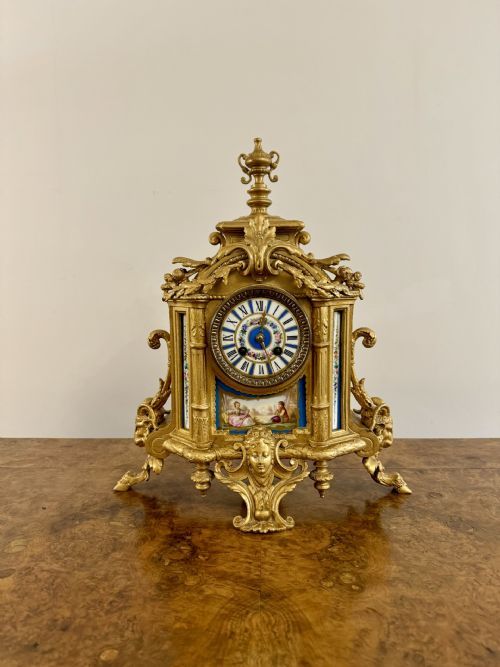


Gilded Brass Porcelain Clock
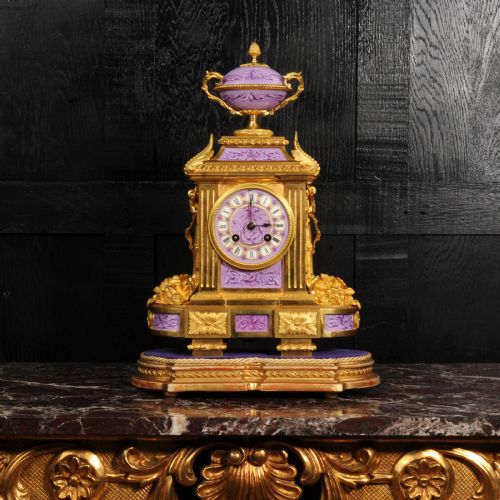
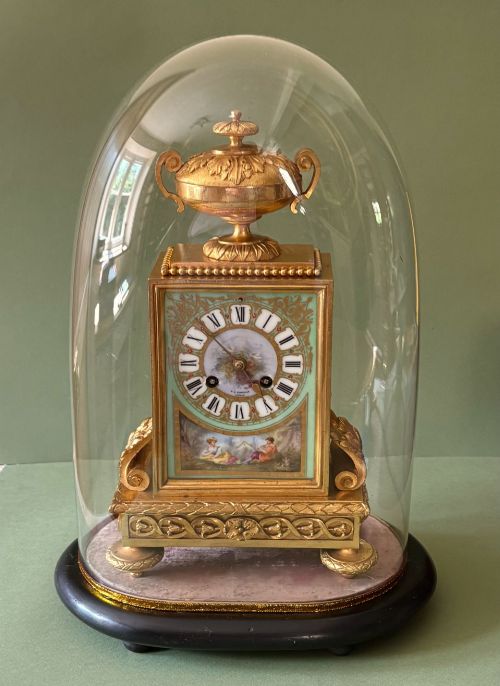
These gilded brass porcelain clocks combine heavy cast bronze mounts with painted ceramic panels to anchor a traditional mantelpiece.
Gilded Brass Porcelain Clock
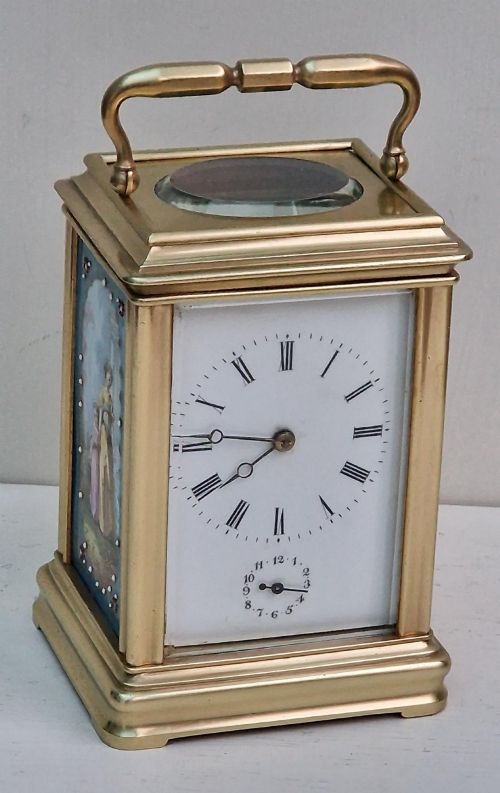
A gilded brass porcelain clock brings together metalwork and ceramic painting in a single domestic timepiece. These items appear chiefly as mantel clocks, alongside related garniture sets and occasional carriage clocks designed for smaller spaces.
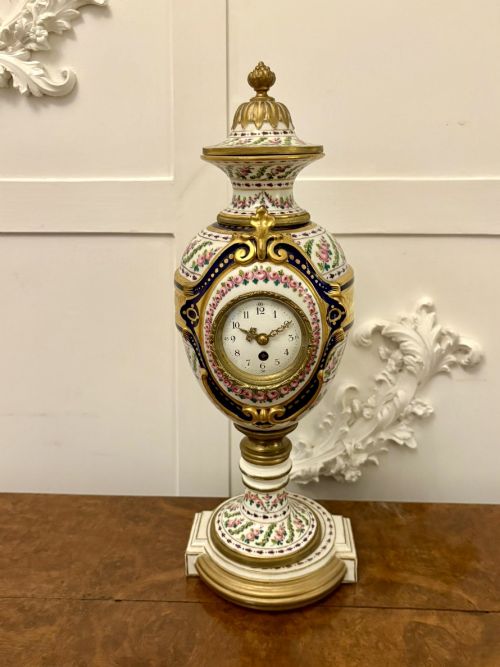
Most examples hail from nineteenth-century French workshops, spanning styles from Rococo Revival and Second Empire to Louis XVI Revival and the Belle Epoque. Collectors encounter them mounted with hand-painted ceramic plaques or shaped as porcelain vases adapted to house a movement.
What varies in quality
The distinction between ordinary and exceptional pieces lies in the crispness of the bronze chasing and the delicacy of the porcelain painting. Finely cast ormolu exhibits sharp relief and deep gilding, while superior ceramic inserts display detailed hand-painted figures rather than transfer printing.
Makers' signatures and established Parisian foundry marks elevate an object significantly. The integration between the ceramic body and the metal mount dictates the overall visual harmony, separating standard production items from masterworks.
Gilded Brass Porcelain Clock Retail Price Guide 2026
Typical asking prices for gilded brass porcelain clock among the pieces listed under this phrase on Sellingantiques today, from the lower quarter to the upper quarter. They describe what is for sale here now, not the wider market.
Listings feature items from the 1850s to the 1910s, with Victorian and nineteenth-century French pieces predominating.
Achille Brocot·Vincenti of Paris·JP Delettrez·Miroy Frères·P.H Mourey
The Gilded Brass Porcelain Clock Glossary
- Ormolu
- A technique of applying finely ground high-carat gold to an amalgamated bronze object, creating a rich golden surface finish. This treatment defines the visual appeal of many nineteenth-century French mantel clocks.
- Garniture set
- A decorative grouping consisting of a central clock flanked by matching side ornaments such as urns or vases. These sets create a balanced arrangement when placed on a mantelpiece.
- Crystal regulator
- A timepiece housed within a glazed brass or gilt metal framework that allows a view of the movement from multiple angles. This form became popular during the later nineteenth century.
- Cartouche
- A small ceramic plaque or enamel plate marking individual hours on a clock dial. They appear inset into larger metal dials to provide clear legibility.
- Second Empire
- A French design period associated with opulent ornamentation and revivals of earlier Louis styles. Objects from this era often mix heavy ormolu mounts with brightly painted porcelain.
Gilded Brass Porcelain Clock: Frequently Asked Questions
How do I wind a French mantel clock?
Most mechanical movements require a key to tension the springs via dedicated winding holes on the dial face. Care must be taken not to over-wind the mechanism to ensure consistent timekeeping.
Eighty-day or eight-day striking movements typically demand weekly attention. Setting the time involves moving the minute hand gently in a clockwise direction.
Where should I place a heavy ormolu clock?
These pieces require a sturdy, level surface such as a mantelpiece, sideboard, or pier table capable of supporting substantial bronze and ceramic weight. Direct sunlight and damp environments should be avoided to protect the gilding and delicate enamel.
Ensuring the clock sits level prevents the pendulum from stalling. Placing it away from heavy vibrations keeps the internal beat steady.
What is a garniture set?
A garniture set pairs a central mantel clock with matching decorative side pieces, traditionally two urns, vases, or candelabra. These matched elements create a symmetrical display across a fireplace or console.
Originating in grand nineteenth-century salons, the pieces share identical metal mounts and porcelain painting styles. They are designed to be viewed together as a single decorative ensemble.
How do I identify a Sèvres-style panel?
Sèvres-style panels feature hand-painted pastoral scenes, portraits, or floral arrangements set against deep blue or turquoise ceramic grounds, often framed by gilded borders. These plaques imitate the fine porcelain produced by the royal French factory.
While some bear authentic factory marks, many nineteenth-century pieces employ the style as a hallmark of quality without being direct products of the Sèvres kiln.