


Ormolu Porcelain Table Clock
An ormolu porcelain table clock brings the glittering, ornate aesthetic of nineteenth-century France straight onto the mantelpiece.
Ormolu Porcelain Table Clock
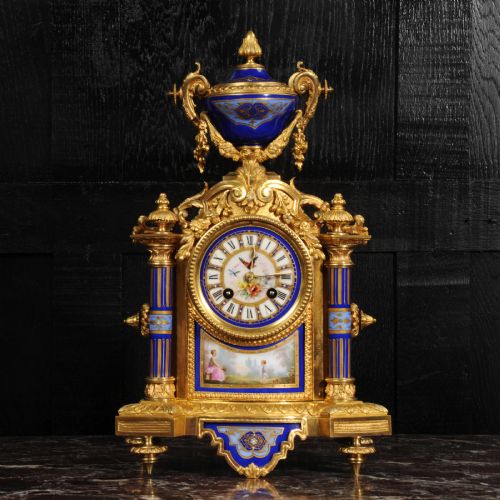
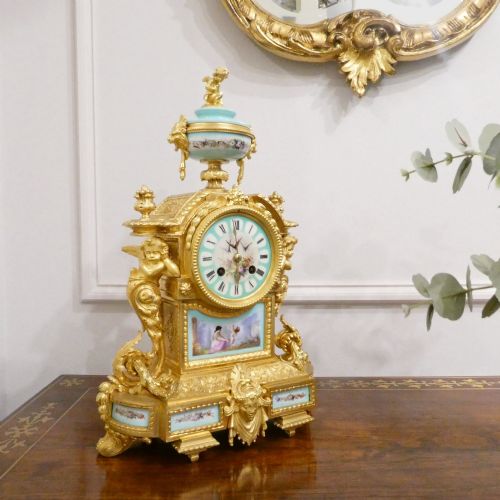
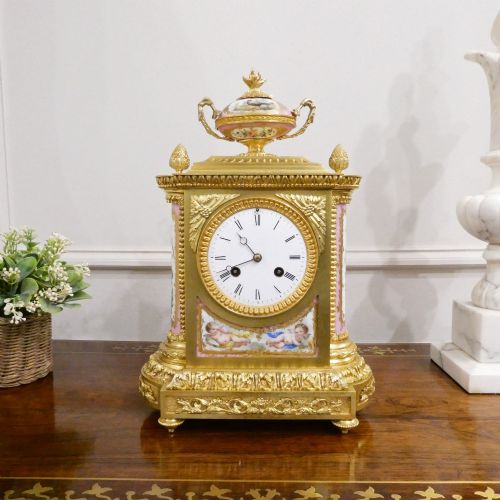
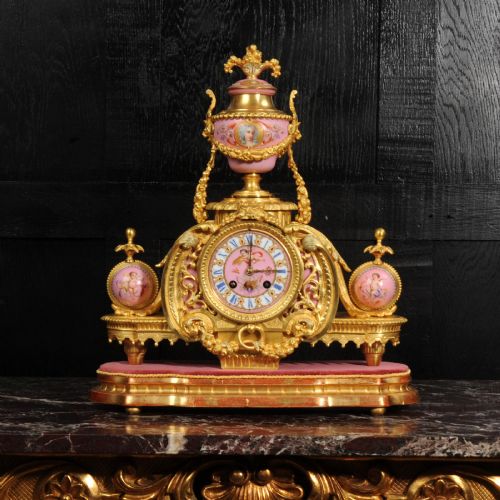
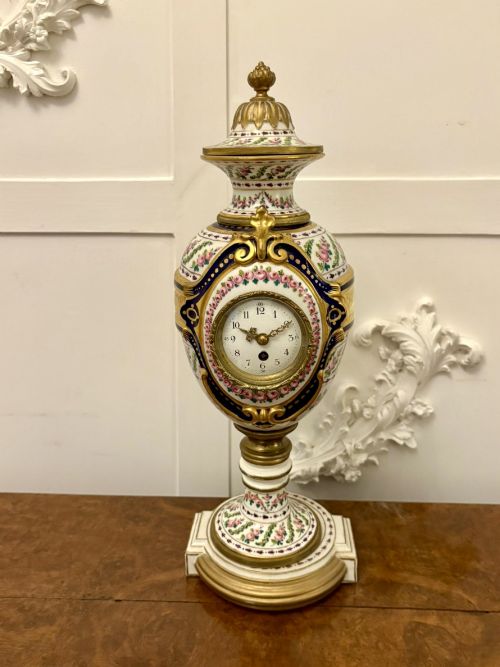
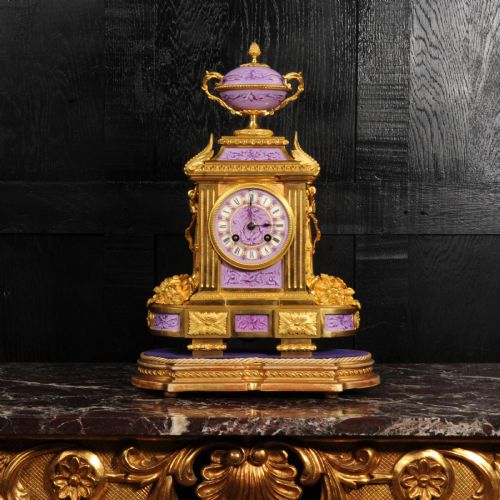
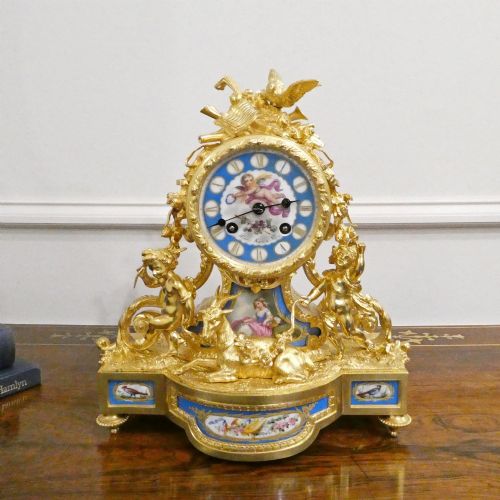
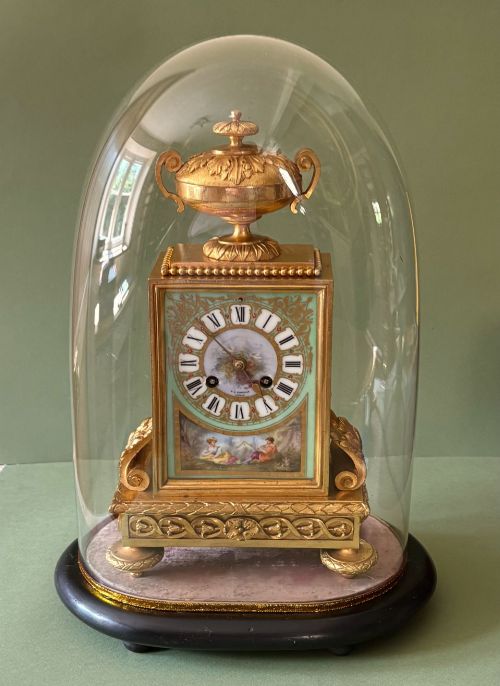
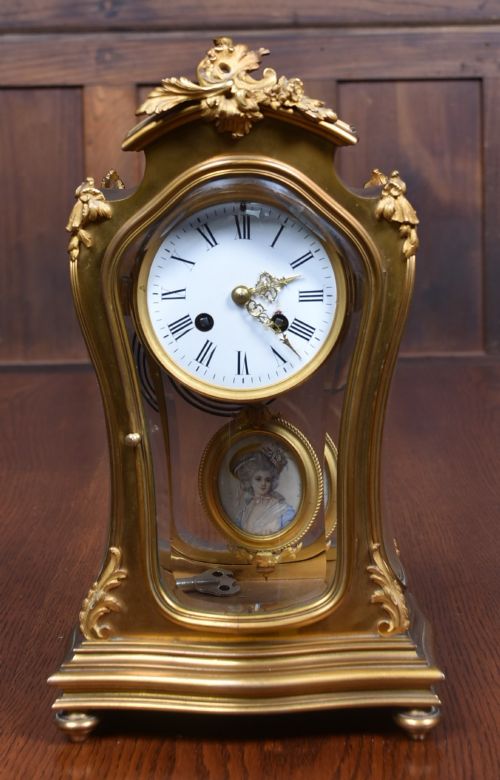
When searching for an ormolu porcelain table clock, a buyer is looking at nineteenth-century French horology, predominantly taking the form of mantel clocks from the Victorian era and Napoleon III periods. These decorative timepieces combine cast metal cases with hand-painted ceramic panels and dials, often drawing on French Rococo Revival and Louis XVI styles.
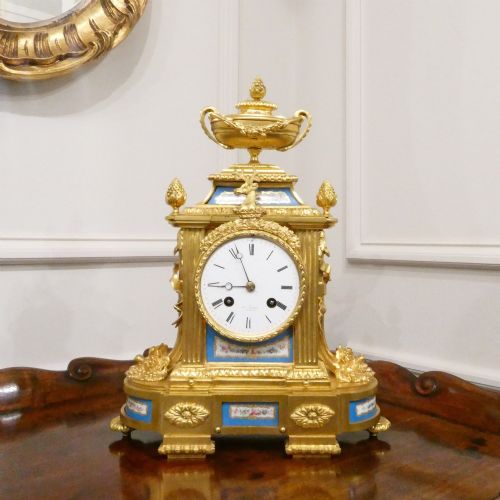
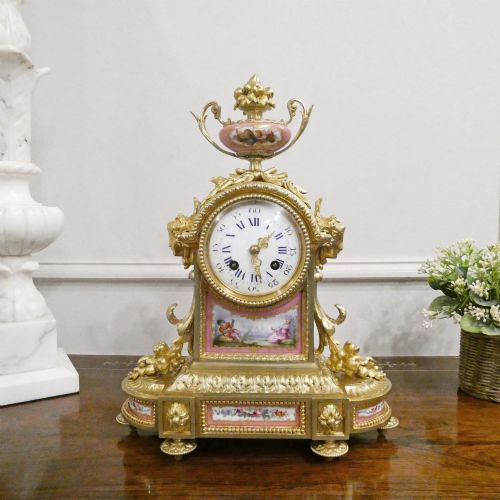
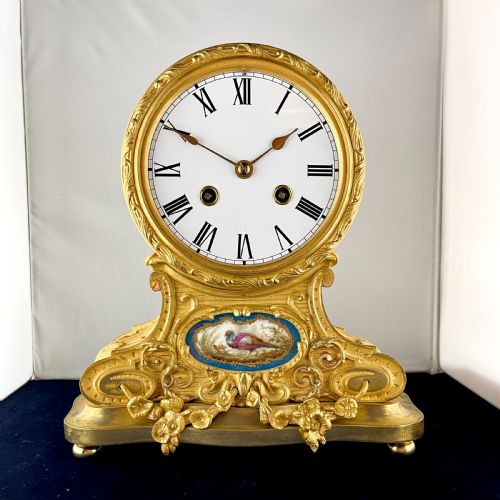
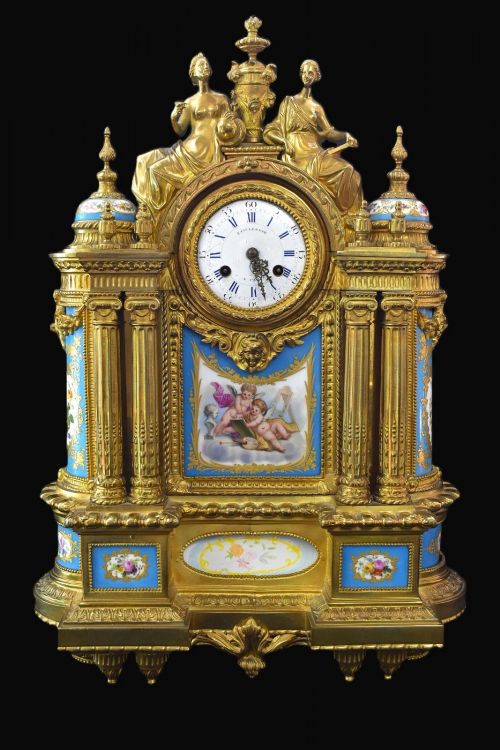
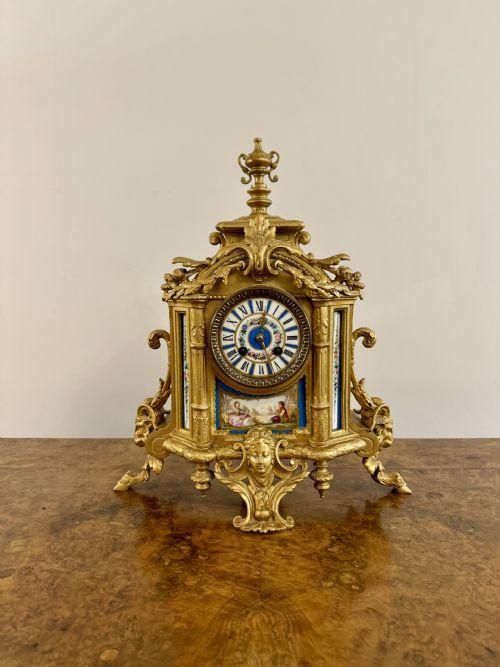
The most common versions met on this page are substantial gilt bronze or ormolu housings mounted with Sevres-style porcelain panels. Makers housed precision movements inside these elaborate frames, creating domestic objects that functioned as both timekeepers and sculptural ornaments for the home.
Materials and technique
The construction relies heavily on the marriage of cast metal and ceramic. Foundries shaped bronze, brass, and gilt metal into elaborate floral and architectural mounts, applying mercury gilt or electroplating to achieve the distinctive golden ormolu surface.
Porcelain components, frequently painted with pastoral scenes or portraits and highlighted with blue and gold, were fired separately before being fitted into the metal chassis. Enamel dials, often featuring delicate Arabic or Roman numerals, completed the visible face of the mechanical movement housed within.
Listings feature Victorian and nineteenth-century French pieces utilising materials such as ormolu, porcelain, marble, and gilt bronze across Louis XVI and Rococo Revival styles.
What varies in quality
The tier of a piece rests on the crispness of the bronze casting and the artistry of the painted porcelain. Superior examples display deeply chased ornamentation where every leaf and scroll is sharply defined by hand rather than left soft from the mould.
The refinement of the porcelain painting distinguishes higher-grade items, particularly where hand-painted details remain crisp and well-preserved. Maker attribution also plays a role, with clocks bearing signatures from known Parisian bronze-founders and horologists commanding greater regard.
Japy Freres·Jean-Baptiste Delettrez·Achille Brocot·Henry Marc·Etienne Lenoir·PH Mourey·Le Roy & Fils
The Ormolu Porcelain Table Clock Glossary
- Ormolu
- Gilded bronze, produced by applying a mercury and gold amalgam to a bronze base and heating it until the mercury vaporised, leaving a rich gold coating. Later Victorian pieces often utilised electroplating instead.
- Sevres
- A type of fine French porcelain associated with the royal factory, renowned for its rich coloured grounds and hand-painted decorative panels. Many nineteenth-century clocks incorporate panels inspired by this tradition.
- Rococo Revival
- A nineteenth-century design movement mimicking the asymmetrical scrolls, C-curves, and naturalistic flora of the eighteenth-century French Rococo period. It heavily influences the cast mounts of these clocks.
- Louis XVI Style
- A neoclassical design vocabulary defined by symmetry, straight architectural lines, urn motifs, and classical swags. It appears frequently in the formal architectural cases of these timepieces.
- Drumhead
- A clock case design where the movement is housed in a circular drum shape, often raised on a plinth or supported by decorative bracket bases.
Ormolu Porcelain Table Clock: Frequently Asked Questions
Where were ormolu porcelain table clocks placed?
These clocks typically stood on the mantelpiece above a fireplace, serving as the visual centrepiece of a room's decor. They were also displayed on credenzas, sideboards, and drawing-room tables where guests could admire the gilt mounts.
Because they were designed to be viewed from the front and sides, they commanded prominent positions in nineteenth-century parlours and salons. Their dual role as timekeepers and status symbols ensured they occupied the most public rooms of the house.
How do I wind an antique French mantel clock?
Winding requires a dedicated key inserted into the winding arbours on the porcelain or enamel dial. Most of these movements are eight-day mechanisms, meaning they require attention roughly once a week.
Care must be taken not to over-wind the mainsprings, stopping as soon as resistance is felt. Owners should also avoid moving the minute hand backwards past the hour, as this can disrupt the striking train.
What is the difference between ormolu and gilt bronze?
Ormolu is historically the traditional French term for gilt bronze, specifically denoting bronze that has been gilded using a mercury amalgam process. In nineteenth-century manufacturing, the terms often overlap as new plating technologies emerged.
Both descriptions refer to a metallic base treated to look like solid gold. The visual depth and warmth of the surface usually depend on the quality of the underlying metalwork and the thickness of the gold layer.
How do I identify a Louis XVI style clock?
Louis XVI style clocks are characterised by geometric symmetry, straight lines, and classical architectural motifs. Look for details like fluted columns, urn finials, laurel wreaths, and ribbon bows rather than flowing asymmetrical scrolls.
This aesthetic reflects the late eighteenth-century return to classical antiquity, which nineteenth-century revivalists enthusiastically copied during the Napoleon III and Victorian eras.