

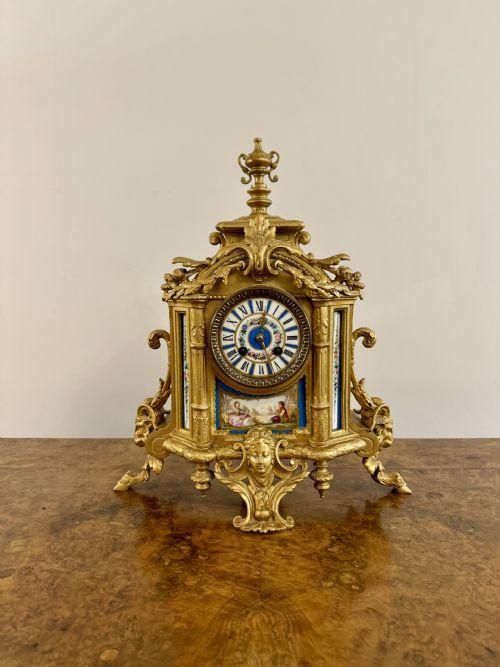


Victorian French Porcelain Clock
A victorian french porcelain clock brings together fine painted ceramic and gleaming metal work to anchor a mantelpiece with nineteenth century presence.
Victorian French Porcelain Clock
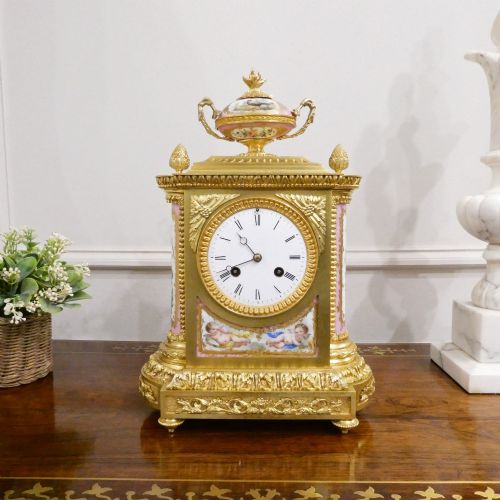
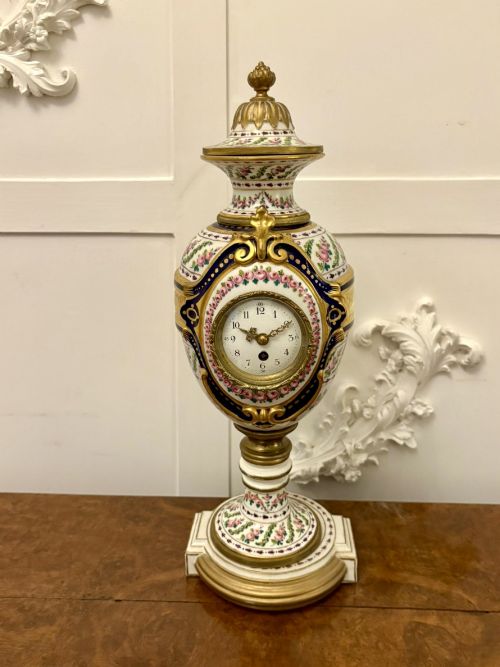
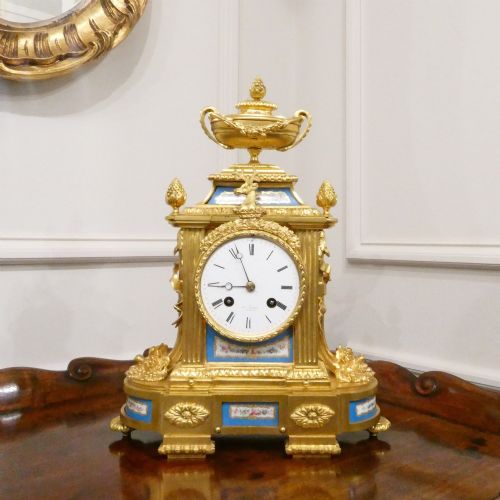
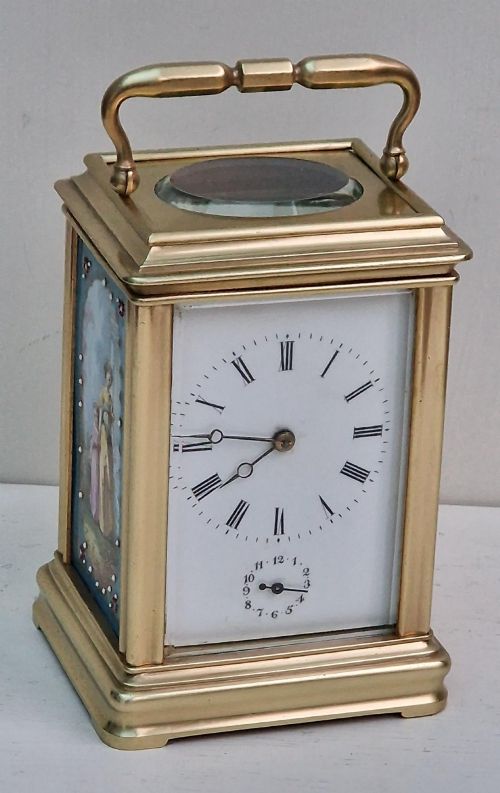
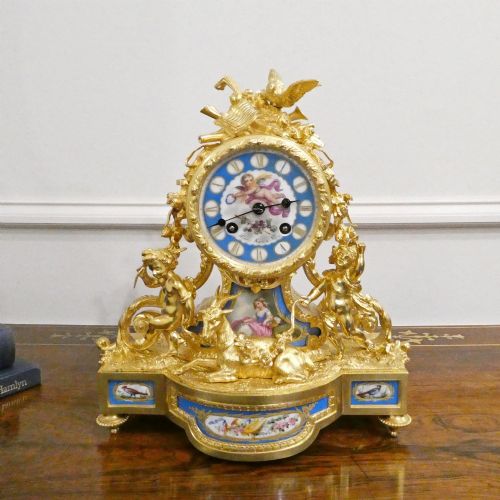
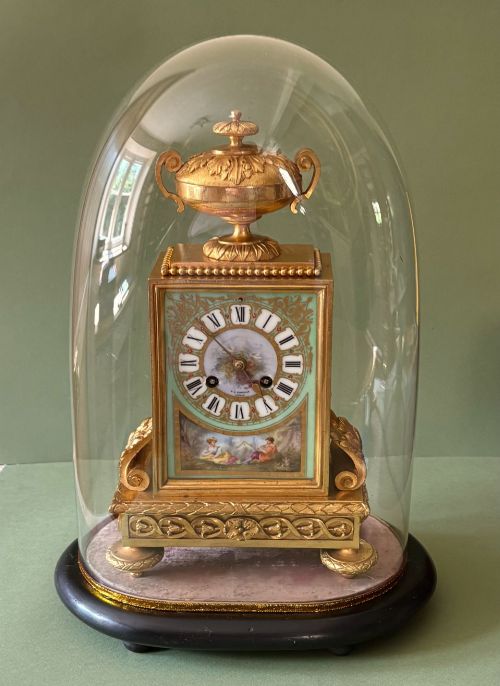
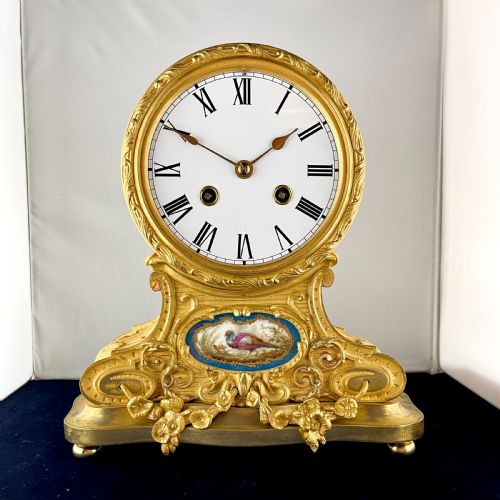
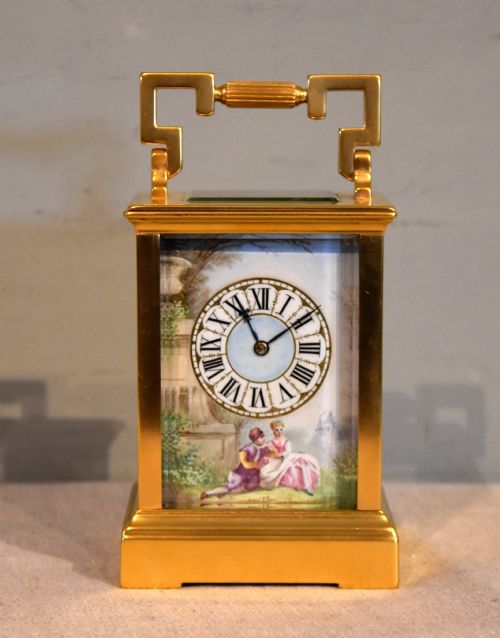
A victorian french porcelain clock typically takes the form of a substantial mantel clock, a three-piece clock garniture set complete with matching side urns, or a smaller glass-panelled carriage clock. These pieces span the nineteenth century, emerging from periods associated with Victorian taste, Napoleon III, and various nineteenth century revival styles.
The aesthetic draws heavily on French Rococo Revival and Louis XVI Revival designs, combining ornate metal casings with hand-painted porcelain panels or dials. Collectors encounter these objects both as single table-top timepieces and as grand garniture sets intended for a central salon position.
Materials and Technique
Maker workshops constructed the primary framework of a victorian french porcelain clock using cast gilt bronze, ormolu, or gilt metal, often combined with onyx, glass, and wood. These metallic structures provide the heavy, structural housing necessary to support delicate ceramic components.
Porcelain elements, frequently painted by hand or decorated with enamel and mounted as dials, urn bodies, or inset plaques, were integrated directly into the metal armature. Guilds and factories utilised precision mechanical movements, sometimes featuring eight-day mechanisms and repeater functions, fitted snugly behind these decorative ceramic faces.
Listings feature items spanning the nineteenth century, utilising porcelain, gilt bronze, ormolu, and glass across mantel clocks, carriage clocks, and garniture sets.
Craftsmanship and Distinction
Quality in a victorian french porcelain clock rests upon the crispness of the gilt metal cast and the artistry of the hand-painted porcelain panels. Superior examples exhibit finely detailed chasing in the bronze work alongside delicately rendered ceramic figures or floral motifs that remain bright and well-preserved.
The integration between the mechanical clockwork and the decorative case also defines distinction. Pieces bearing signatures from known Parisian makers or prestigious retailers often display a heavier, more refined build in both the movement and the exterior mountings.
Jean-Baptiste Delettrez·Henry Marc·PH Mourey·Drocourt·Le Roy Et Fils·Japy Freres
The Victorian French Porcelain Clock Glossary
- Garniture set
- A matching centrepiece clock flanked by two side ornaments such as urns or vases. These sets create a balanced decorative display on a mantelpiece.
- Ormolu
- Gilded bronze produced through a mercury amalgamation technique, yielding a rich golden finish on metal mounts. This material defines much of the nineteenth century French decorative arts.
- Carriage clock
- A portable spring-driven timepiece fitted with a carrying handle and glass panels. They were originally designed for travel during the Victorian era.
- Crystal regulator
- A clock housed within glass panels that reveal the internal mechanical movement. These pieces often feature porcelain dials and mercury-filled pendulum jars.
- Drumhead clock
- A timepiece featuring a circular clock case mounted atop a plinth or base. The shape resembles a traditional drum set on its side.
Victorian French Porcelain Clock: Frequently Asked Questions
What is a clock garniture set?
A clock garniture set consists of a central time-keeping piece accompanied by matching decorative side ornaments, such as urns or vases. These matching items were designed to sit together on a mantelpiece or cabinet to create a balanced aesthetic.
Such sets became prominent during the nineteenth century in France and Britain, offering a unified decorative scheme for formal living spaces.
How do I wind these clocks?
Most mechanical versions utilise a dedicated winding key inserted into small holes on the porcelain dial face. Turning the key tensions the internal mainspring, which powers the movement for a specific duration.
Careful handling is required during winding to avoid over-tensioning the spring, ensuring the historical movement continues to function smoothly.
Where should I place my clock?
These timepieces are traditionally positioned on a sturdy mantelpiece, sideboard, or console table where their weight and decorative metalwork can be safely supported. Placing them away from direct sunlight and damp environments helps protect the painted porcelain panels and gilt surfaces.
Level surfaces are particularly important for ensuring the pendulum swings correctly and keeps accurate time.
How do I identify the period?
Dating relies on observing the combination of revival styles, such as Louis XVI or Rococo motifs, alongside the specific type of metal casting and porcelain decoration. Maker signatures stamped on the internal clock movements provide definitive clues to the decade of production.
Stylistic shifts across the nineteenth century moved from restrained classical revivals toward more ornate and eclectic Victorian interpretations.