



Gilded Brass Horology Clock
These gilded brass horology clock pieces combine heavy metal cases with precise mechanical movements, offering a striking centrepiece for a mantel or desk.
Gilded Brass Horology Clock
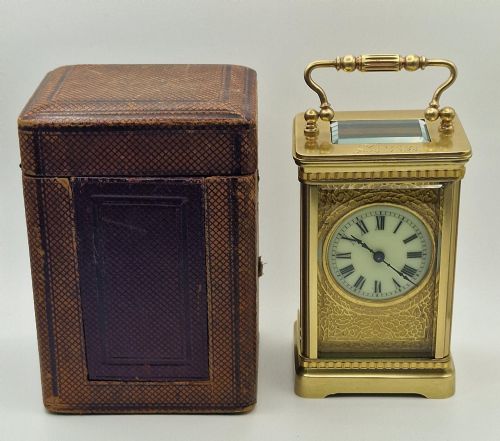
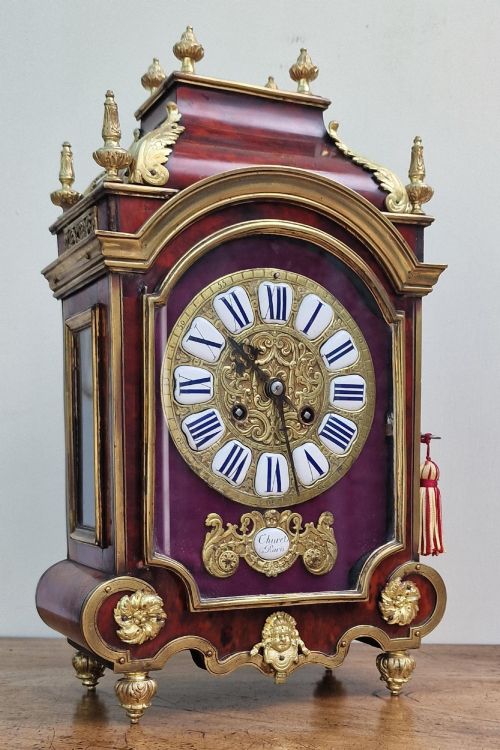
A gilded brass horology clock brings together domestic timekeeping and decorative metalwork across various historical periods. The selection here leans heavily towards French carriage clocks and mantel clocks from the nineteenth century.
Buyers will encounter portable carriage clocks housed in gorge or serpentine cases alongside larger mantel clocks decorated with enamel dials. Many examples hail from nineteenth-century France or Regency London, reflecting robust workshop production.
The assortment includes domestic pieces with specialised complications like repeaters, calendars, and alarms. These variations demonstrate the functional scope available within the current selection.
Materials and construction
Makers formed these structures using brass, gilt bronze, and ormolu, often applying fire gilding to create a durable golden surface. Glass panels protected delicate dials while allowing visibility into the internal gear trains.
Dials frequently incorporate white enamel with painted Roman numerals, sometimes accompanied by subsidiary dials for alarms or seconds. Cabinetmakers and metalworkers fitted these components into housing materials such as tortoiseshell, marble, slate, and ebony.
Gilded Brass Horology Clock Retail Price Guide 2026
Typical asking prices for gilded brass horology clock among the pieces listed under this phrase on Sellingantiques today, from the lower quarter to the upper quarter. They describe what is for sale here now, not the wider market.
Assessing the craftsmanship
Quality rests in the precision of the mechanical movement and the crispness of the cast metal decoration. Finer examples display hand-engraved cases, complex striking mechanisms, and signed dials from recognised workshops.
The retention of original gilding and undamaged enamel dials distinguishes superior pieces from heavily worn alternatives. Superior carriage and mantel clocks maintain their intricate escapements and original escape components.
Henry Jones·John Barwise·Paul Garnier·Drocourt·Japy Freres
The Gilded Brass Horology Clock Glossary
- Gorge case
- A stepped brass carriage clock case style with a flat top and glazed panels. This design became standard for high-end nineteenth-century portable timepieces.
- Fusee
- A conical pulley used in clock movements to equalize the driving force of the mainspring as it unwinds. It ensures more consistent timekeeping throughout the power reserve.
- Grande sonnerie
- A complex striking train that chimes the hours and quarters on the hour, and repeats the quarters on demand. Such movements represent advanced nineteenth-century watchmaking skill.
- Ormolu
- Finely chopped high-karat gold applied to a copper-alloy base using mercury amalgamation. The technique creates a rich golden finish found on nineteenth-century French clock cases.
- Carriage clock
- A portable spring-driven timepiece designed for travel, typically fitted with a carrying handle and a glass-panelled brass case. These originated in France during the nineteenth century.
Gilded Brass Horology Clock: Frequently Asked Questions
What is a carriage clock?
A carriage clock is a portable spring-driven timepiece fitted with a handle and glass panels, designed originally for travel during the nineteenth century.
These pieces typically sit in brass or gilt bronze cases and often feature striking mechanisms or alarms for use on the road.
How do repeaters work?
A repeating mechanism sounds the last elapsed hour and quarter-hour when the user presses a button on the case.
This function allowed owners to check the time in the dark without striking continuous hours.
What is a fusee movement?
A fusee uses a conical pulley and a chain to regulate the pull of the mainspring as it loses tension.
This ensures the clock receives steady power from full wind to empty, improving daily accuracy.
How should I clean the brass?
Gilt brass and ormolu surfaces require only a gentle dusting with a soft dry cloth to prevent accumulation of grime.
Harsh commercial metal polishes will strip away the historic gilding and permanently damage the finish.