


Gilded Blue Porcelain Basin
These gilded blue porcelain basin items combine vibrant cobalt glazes with rich metallic leaf across various washware and decorative forms.
Gilded Blue Porcelain Basin
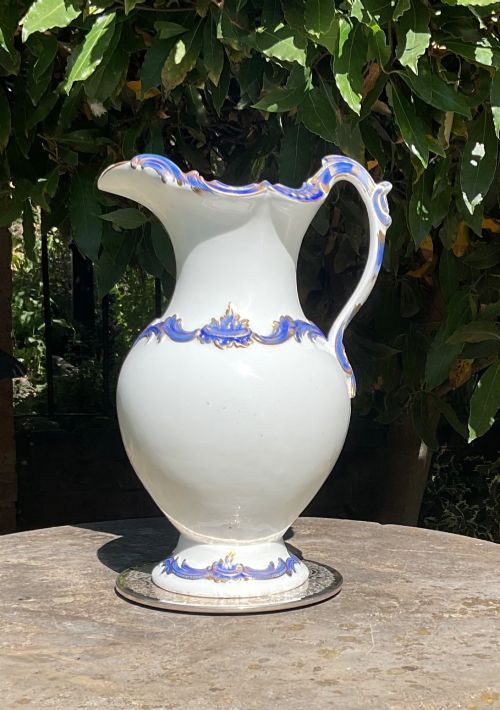
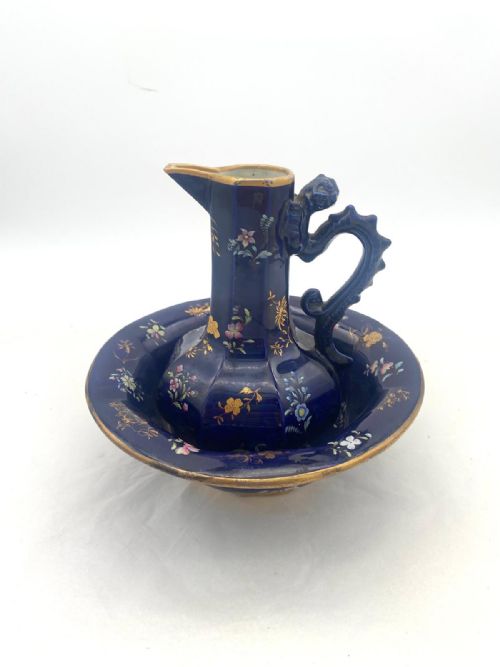
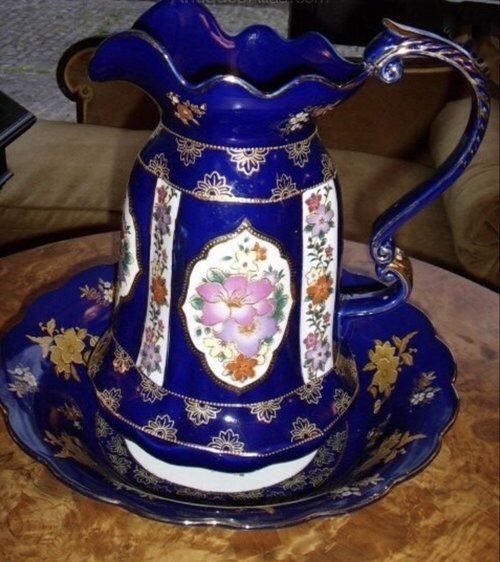
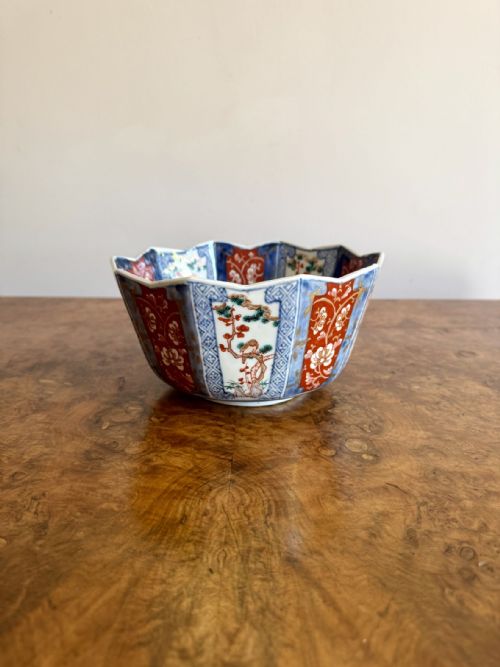
When you search for a gilded blue porcelain basin, you encounter an array of vessels spanning the nineteenth and twentieth centuries, including washstand sets, decorative bowls, and sugar bowls. The offerings range from Japanese Imari plates and bowls to British ironstone and bone china washware.
The most common versions on this page are complete jug and basin sets and decorative bowls from the Victorian and Edwardian eras, alongside Japanese Meiji period porcelain. Makers from Arita to Staffordshire produced these pieces utilising cobalt glaze, enamel, and gold leaf.
Forms vary from large octagonal water jugs and basins to tripod bowls and sucriers. Each piece displays a distinct combination of blue decoration and gilding, reflecting both European domestic utility and Asian export traditions.
How they were made
Potters shaped these items from porcelain, earthenware, bone china, and ironstone, applying cobalt blue pigments before firing to create deep underglaze colour. Artisans then added enamel highlights and gold leaf or gilt details, often returning the pieces to the kiln to fix the metallic elements.
Japanese workshops employed hand painted techniques on porcelain and Satsuma earthenware, incorporating intricate motifs alongside the Shimazu mon. British factories such as Masons, Doulton Burslem, and Wedgwood utilised specialised glazes and lustre finishes to achieve their distinctive blue and gilded surfaces.
Listings feature items in porcelain, bone china, earthenware, and ironstone, decorated with gold leaf, enamel, and cobalt blue glaze.
What varies in quality
The standard of a gilded blue porcelain basin depends on the precision of the hand painting and the crispness of the cobalt glaze against the white body. Pieces featuring intricate hand painted scenes or complex enamel work demonstrate greater artisan skill than standard transfer printed wares.
The preservation of the gold leaf and gilt detailing separates ordinary examples from superior ones, as surface rubbing diminishes the visual impact of the metallic decoration. The weight and refinement of the porcelain, bone china, or ironstone body also indicate the original manufacturing ambition.
Masons Ironstone·Doulton Burslem·Ridgway Porcelain·Wedgwood·Kinkozan Kyoto·Royal Crown Derby
The Gilded Blue Porcelain Basin Glossary
- Cobalt Blue
- A deep blue metallic oxide pigment used extensively under the glaze on porcelain and earthenware to produce rich blue decoration.
- Gilt
- A thin layer of gold applied to the surface of ceramics, enhancing the decorative appeal of the blue glaze underneath.
- Ironstone
- A heavy, durable type of earthenware patented in the nineteenth century, frequently used for large jugs and basins.
- Imari
- A style of Japanese export porcelain characterised by a palette of cobalt blue, iron red, and abundant gold.
- Lustre
- A type of ceramic glaze that imparts a metallic sheen, seen on specialised Wedgwood and Satsuma productions.
- Sucrier
- A small covered sugar bowl or box designed for tea service use, often matching larger ceramic sets.
Gilded Blue Porcelain Basin: Frequently Asked Questions
How were jug and basin sets used?
These sets stood on washstands in bedrooms before modern indoor plumbing became common, providing water for morning washing.
The large pitcher held the water, while the matching bowl caught it during use, often accompanied by smaller vessels for soap and miscellaneous items.
Can I use these decorative bowls daily?
Most antique bowls are best suited for display or careful decorative use rather than heavy daily service.
The delicate enamel and gold leaf applied over the glaze can wear down with frequent washing and handling.
How do I identify the period of a piece?
Makers marks stamped or painted on the underside provide the most reliable clue to a piece's origin and manufacturing date.
Stylistic elements like Japanese Imari motifs or Victorian floral transfers also help narrow down the era of production.
What is the difference between porcelain and ironstone?
Porcelain is a fine, translucent ceramic fired at high temperatures, whereas ironstone is a dense, opaque earthenware designed for durability.
Ironstone pieces generally feel heavier and thicker in the hand than fine porcelain washware or decorative bowls.