
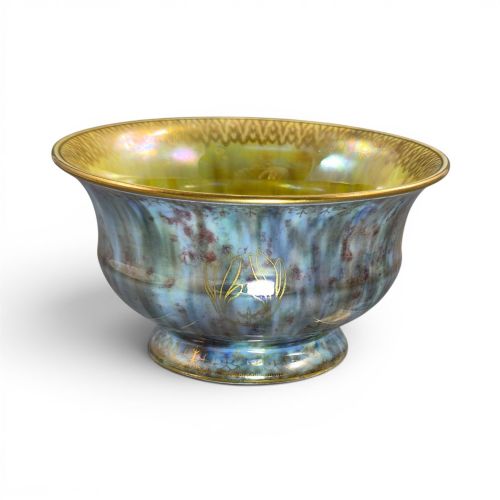


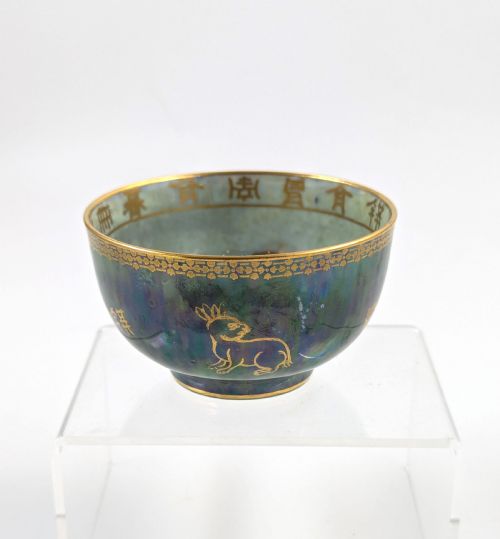

Gilt Iridescent Ceramic Bowl
These gilt iridescent ceramic bowl pieces combine lustrous metallic finishes with intricate designs from the Edwardian and Art Deco eras.
Gilt Iridescent Ceramic Bowl
A gilt iridescent ceramic bowl brings together rich metallic gilding and shimmering glaze effects across decorative bowls produced during the Edwardian period and the 1920s. Buyers searching for a gilt iridescent ceramic bowl encounter striking pieces that showcase complex mythological and natural motifs executed with remarkable artistry.
The selections found here span iconic forms such as octagonal bowls and melba cups, primarily originating from the 1910s and 1920s. Each gilt iridescent ceramic bowl demonstrates distinct artistic movements including Art Nouveau and Art Deco designs.
How they were made
These items utilise fine porcelain and bone china as foundations for complex glazing techniques. Potters applied specialised lustre glazes to create shifting light effects across the ceramic surface.
Artisans integrated gold leaf, gilt, and gold gilding to highlight specific design elements and borders. This combination of ceramic bodies and metallic applications demanded precise firing to achieve the characteristic iridescent finish.
Listings feature items from the Edwardian period, 1910, and 1920, utilising porcelain, bone china, lustre glaze, and gold leaf.
What varies in quality
The sophistication of the painted narrative and the complexity of the lustre glaze separate standard examples from exceptional ones. Detailed dragon, butterfly, and phoenix motifs executed with depth demonstrate superior artistic execution.
The precision of the gold gilding and the richness of the underlying iridescent glaze determine the visual impact of the piece. Well-preserved metallic applications and vibrant colour saturation reflect the highest standards of production.
Daisy Makeig Jones·Wedgwood
The Gilt Iridescent Ceramic Bowl Glossary
- Lustre Glaze
- A type of ceramic glaze containing metallic oxides that produce an iridescent, rainbow-like sheen upon firing. This technique creates the signature shimmering surface characteristic of these decorative bowls.
- Gilt
- A thin layer of gold applied to the surface of the ceramic. It provides metallic accents that contrast with the colourful glaze beneath.
- Bone China
- A type of soft-paste porcelain containing bone ash. It offers a bright white, translucent body suitable for detailed enamel and lustre decoration.
- Art Nouveau
- An international style of art and architecture most popular between 1890 and 1910. It is characterised by asymmetrical natural forms and sinuous lines.
Gilt Iridescent Ceramic Bowl: Frequently Asked Questions
How do I clean a gilt iridescent ceramic bowl?
Dust the surface gently with a soft, dry cloth to remove particles. Avoid using water, abrasives, or chemical cleaners that might damage the delicate lustre glaze and gold gilding.
Display the bowl away from direct sunlight to preserve the vibrant colours and metallic sheen over time.
What periods do these bowls come from?
The pieces available date primarily from the Edwardian era through the 1920s. This timeframe encompasses both late Art Nouveau sensibilities and early Art Deco design transitions.
Production during these decades relied on specialised kiln techniques that produced the distinct iridescent surfaces seen on the bowls.
How can I identify the design motifs?
Designs often feature mythical creatures and natural subjects such as dragons, phoenixes, butterflies, and hummingbirds. These subjects are typically rendered in rich colours enhanced by gold leaf accents.
Examining the complexity and placement of these motifs helps determine the specific style and artistic period of the piece.
Were these bowls used for dining?
These items function primarily as decorative vessels rather than practical tableware. Their intricate lustre glazes and delicate gold gilding are intended for display.
Collectors prize them for their artistic merit and the technical skill required to produce the shimmering metallic finishes.