
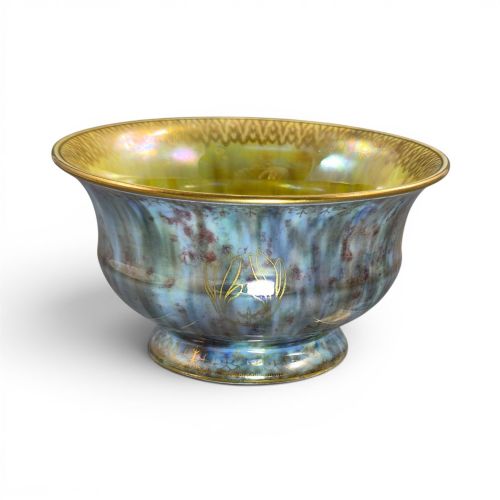
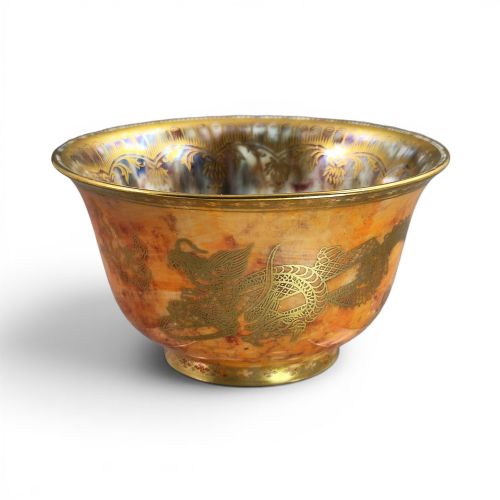


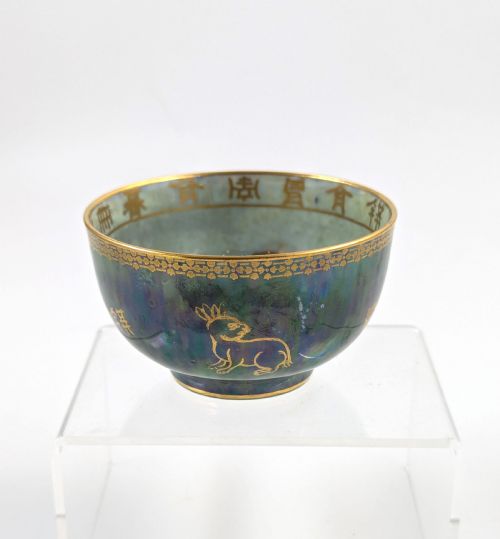


Wedgwood Dragon Lustre Bowl
A wedgwood dragon lustre bowl brings vibrant mythological motifs and iridescent glaze together, offering collectors a striking centrepiece rooted in early twentieth-century design.
Wedgwood Dragon Lustre Bowl
A wedgwood dragon lustre bowl combines fantastical serpent motifs with shimmering surfaces, capturing the imaginative spirit of the 1910 and 1920 periods. These pieces take various forms, including circular vessels, octagonal shapes, and miniature cups.
Edwardian examples set the standard for this form, predominantly featuring intricate dragon patterns designed by Daisy Makeig-Jones. Collectors encounter these vessels in colourways ranging from deep blues and greens to rich green lustre grounds.
Assessing Quality and Execution
The precision of the transfer and hand-painted gilt work dictates the visual impact of each piece. Finer examples display crisp detail in the dragon motifs and an even distribution of the iridescent glaze across the bowl surface.
Form complexity also influences the piece, with octagonal vessels and intricate Fairyland scenes representing a more ambitious output than standard circular designs. The depth and shimmer of the lustre glaze directly reflect the skill applied during firing.
The listings show pieces spanning the Art Nouveau and Art Deco styles, created predominantly around nineteen-fifteen and the nineteen-twenties.
Wedgwood
The Wedgwood Dragon Lustre Bowl Glossary
- Lustre Glaze
- A metallic ceramic finish that produces an iridescent, pearlescent sheen when fired. This technique creates the signature glowing surface on dragon bowls.
- Fairyland Lustre
- A specific decorative range developed at the pottery featuring fantastical subjects like dragons and celestial themes. These lines represent the pinnacle of early twentieth-century production.
- Bone China
- A hard-paste ceramic body incorporating bone ash, utilised for fine vessels. It provides a durable and bright white base for colourful glazes.
- Gilt
- A thin layer of gold applied to the ceramic surface to accent rims, motifs, and patterns. This material catches the light and frames the central lustre design.
Wedgwood Dragon Lustre Bowl: Frequently Asked Questions
What is a wedgwood dragon lustre bowl?
It is a decorative ceramic vessel finished with an iridescent glaze and featuring mythological serpent motifs.
These pieces were produced primarily during the Edwardian era and the 1920s, often showcasing intricate Fairyland designs.
How do I date my bowl?
Dating relies on matching the pattern numbers, backstamps, and stylistic elements to the early twentieth century.
Most recorded examples originate from around nineteen-fifteen to nineteen-twenty, linked to the designer Daisy Makeig-Jones.
How were these bowls used?
They served primarily as decorative table centrepieces or cabinet display items rather than functional tableware.
Their vibrant iridescent glazes were intended to catch light and showcase the artistic skill of the pottery.
How do I care for lustre bowls?
Keep them away from direct, harsh sunlight and clean them only with a soft, dry cloth.
Avoid using water, chemical cleaners, or abrasive materials that could damage the delicate gold leaf and lustre glaze.