




Art Deco Lustreware Bowl
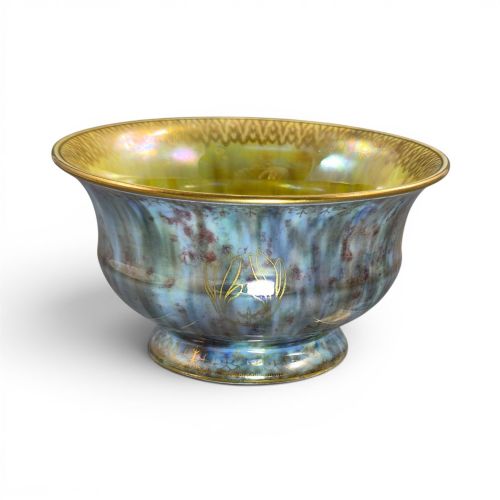
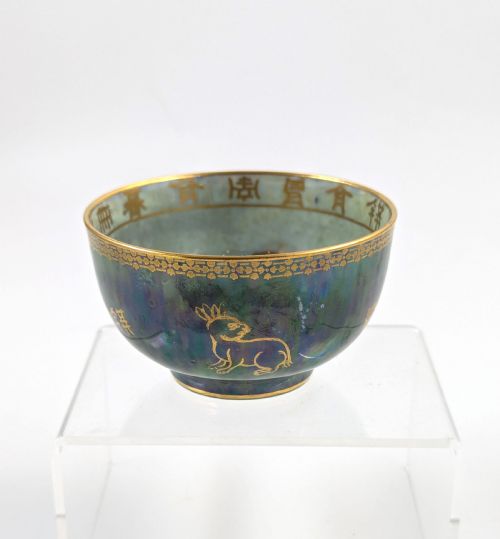
An art deco lustreware bowl catches the light with iridescent metallic glazes that shift colour across intricate mythological designs.
Art Deco Lustreware Bowl
An art deco lustreware bowl combines vibrant earthenware and porcelain bodies with shimmering metallic surface glazes developed in the early twentieth century. These decorative vessels range from deep circular forms to structured octagonal shapes adorned with complex orientalist and fantasy motifs. Most examples encountered here stem from the Edwardian era through the nineteen-thirties, reflecting the peak of British ceramic ornamentation.
Makers focused heavily on rich mythological iconography, populating the bowls with dragons, hummingbirds, tulips, and phoenixes rendered in vivid enamels. Collectors find both round bowls and faceted vessels designed primarily for display rather than domestic service. The iridescent finishes create a distinct optical depth that distinguishes these pieces from standard glazed ceramics of the period.
How they were made
Potters shaped these vessels from earthenware, porcelain, and bone china before applying intricate hand-painted designs beneath specialised metallic glaze formulations. Artisans built up the surface patterns using multiple kiln firings to fuse the metallic oxides with the underlying body. Gold leaf and gold gilding were frequently added to heighten the reflective qualities of the finished piece.
The application of lustre glaze required precise temperature control to achieve the characteristic rainbow sheen without spoiling the delicate painted motifs underneath. Skilled decorators combined solid mottled orange or green backdrops with meticulously detailed transfers and hand-painted gilt borders. This multi-step process ensured each bowl possessed a slightly individual surface texture and coloration.
Listings feature earthenware, porcelain, and bone china bodies finished with complex lustre glaze and gold gilding.
What varies in quality
The sophistication of the painted narrative and the complexity of the glaze determine the standing of an art deco lustreware bowl. Elaborate fantasy scenes featuring mythical beasts demand greater artistic execution than simpler mottled colour fields or standard floral patterns. The crispness of the gilt detailing and the vibrancy of the underlying iridescent sheen separate standard production from masterworks.
Structural variety also influences desirability, with faceted octagonal forms and heavily gilded rims offering a more architectural silhouette than standard circular bowls. The preservation of the delicate metallic surface without rubbing or dulling dictates how successfully the piece retains its intended visual impact.
Wedgwood·Daisy Makeig Jones·Maling
The Art Deco Lustreware Bowl Glossary
- Lustre Glaze
- A ceramic finish containing metallic salts that produce an iridescent, rainbow-like sheen when fired in a reduced oxygen kiln. This technique creates a reflective surface that shifts in appearance under different lighting conditions.
- Bone China
- A type of porcelain composed of bone ash, feldspar material, and kaolin, known for its high strength, opacity, and milky white body. It provides a smooth, refined base for delicate overglaze enamel painting.
- Earthenware
- Porous pottery fired at lower temperatures than stoneware or porcelain, requiring a glaze to become impermeable to liquids. It forms the robust structural body for many brightly coloured decorative vessels.
- Gilt
- A thin layer of gold applied to the surface of the ceramic to accent rims, handles, and internal pictorial borders. This decorative addition enhances the opulent visual weight of the piece.
- Porcelain
- A hard, fine-grained ceramic material fired at high temperatures to achieve a vitrified, non-porous body. It allows for thin, elegant vessel walls that ring when struck gently.
Art Deco Lustreware Bowl: Frequently Asked Questions
Can I use these bowls for serving food?
Most of these ceramic vessels were created purely for ornamental display rather than everyday culinary use.
The metallic lustre glazes and extensive gold leaf detailing are vulnerable to wear and potential chemical leaching if brought into contact with acidic foods.
How do I identify the period of a lustre bowl?
Examine the base for manufacturer stamps, registration numbers, and painted pattern codes that correspond to early twentieth-century production records.
The stylistic combination of angular art deco geometries or fantasy motifs paired with iridescent glazes typically points to production between nineteen-ten and nineteen-thirty.
Why do some bowls change colour in the light?
The iridescent effect stems from metallic oxides fired directly into the surface glaze, which refract light waves at varying angles.
This chemical interaction creates a shifting rainbow sheen that alters depending on the strength and angle of the ambient room lighting.