





Gilded Black Lacquer Tray
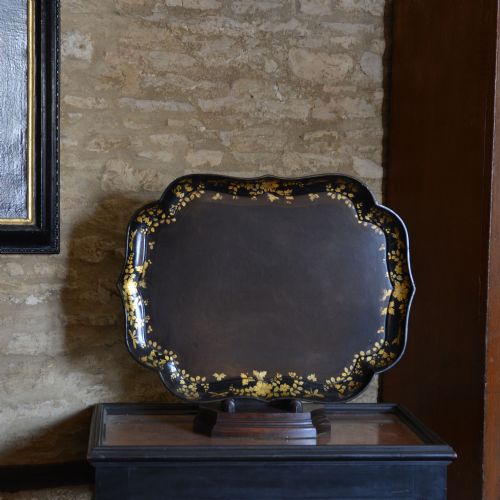
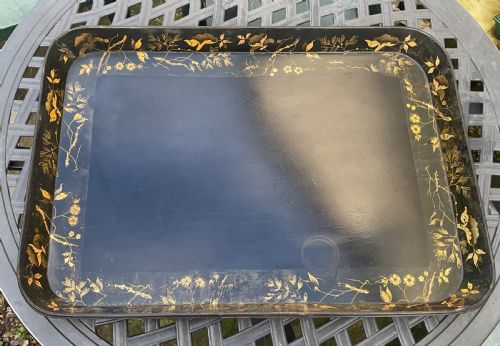
A gilded black lacquer tray brings depth, dark shine and bright metallic detail to a room, ranging from small servers to large tables.
Gilded Black Lacquer Tray
When you search for a gilded black lacquer tray, you encounter serving trays, decorative trays, tray tables, coffee tables, and desk accessories created across several centuries.
The pieces appearing on this page span the eighteenth century, the Regency era, the Victorian period, and into the Edwardian and George V years.
Papier-mâché and wood form the structural bases for these objects, finished in deep black lacquer and enriched with gold leaf or paint.
How they were made
Maker workshops built the sturdy foundations of these pieces using pressed papier-mâché or solid wood, preparing the surfaces to receive successive coats of dark lacquer.
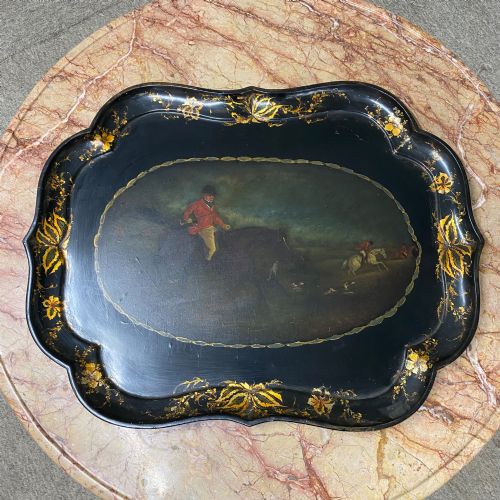
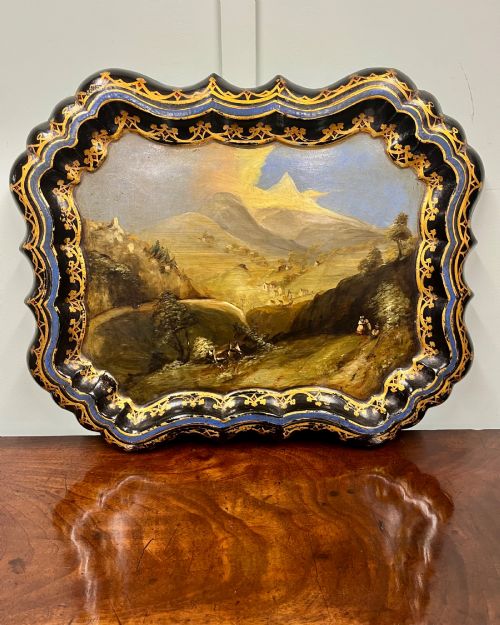
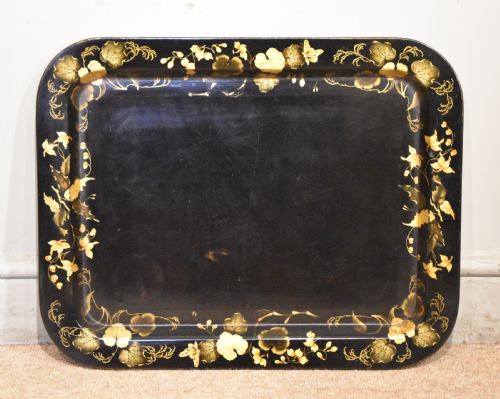
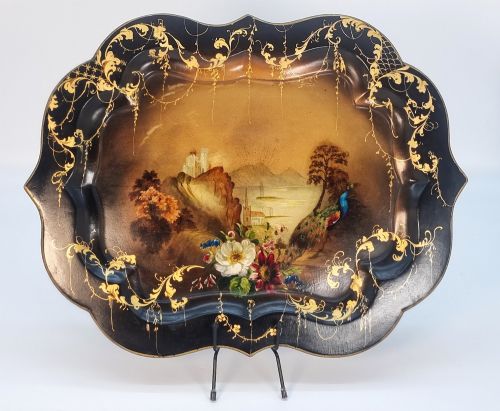
Artisans applied delicate gold leaf, metallic gilding, and hand-painted details, often depicting Chinoiserie motifs, landscapes, or hunting scenes onto the hardened black finish.
Gilded Black Lacquer Tray Retail Price Guide 2026
Typical asking prices for gilded black lacquer tray among the pieces listed under this phrase on Sellingantiques today, from the lower quarter to the upper quarter. They describe what is for sale here now, not the wider market.
Several trays record the pursuits of past owners, depicting detailed hunting scenes frozen in gold across the dark lacquer.
What varies in quality
The refinement of the hand-painted or gilded ornamentation separates standard utility items from masterwork pieces produced by noted makers.
The structural integrity of the papier-mâché or wood base and the preservation of the original black lacquer surface dictate the standing of an individual piece.
Jennens & Bettridge·Henry Clay
The Gilded Black Lacquer Tray Glossary
- Papier-mâché
- A composite material made from paper pulp or layers of paper bound with glue, pressed into moulds, and dried to form a rigid, lightweight base for lacquer. It provided a smooth canvas for intricate painted and gilded decoration during the Georgian and Victorian periods.
- Chinoiserie
- European artistic style reflecting Chinese motifs and decorative techniques, popular on lacquerware and trays. This aesthetic often featured pagodas, exotic figures, and fantastical landscapes in gold upon a dark ground.
- Toleware
- Metalware, usually iron or steel, coated with lacquer or enamel and painted. These pieces served functional roles in homes before being mounted on stands or displayed.
- Gilding
- The application of gold leaf or powder to a surface to create metallic highlights. It accentuates the rims, borders, and painted vignettes of dark lacquer objects.
Gilded Black Lacquer Tray: Frequently Asked Questions
What periods do these trays come from?
The pieces span from the eighteenth century through the Regency and Victorian eras into the Edwardian and George V periods. You find items representing Georgian craftsmanship alongside later nineteenth-century output.
Different decades brought shifts in form and decoration, ranging from classical Regency motifs to Victorian Chinoiserie and Edwardian furniture adaptations.
How were these trays used originally?
They served primarily for carrying beverages or displaying items in formal rooms, often resting on stands to function as side or coffee tables.
Smaller examples served as card baskets or desk organisers, while large serving pieces moved between rooms before finding permanent placement on stands.
Are tray tables original to the period?
Some pieces were constructed specifically as tray tables from the outset, combining a lacquered top with a matching or later stand.
Many antique trays acquired folding or fixed stands later in their lifespan to convert portable serving pieces into permanent items of furniture.
How do I care for black lacquer?
Keep these pieces away from direct sunlight, excessive heat, and moisture to protect the delicate lacquer and gold leaf surface from crazing or lifting.
Dust gently with a dry, soft cloth and avoid modern chemical polishes that can damage the historical finish.