






Scalloped Lacquer Tray
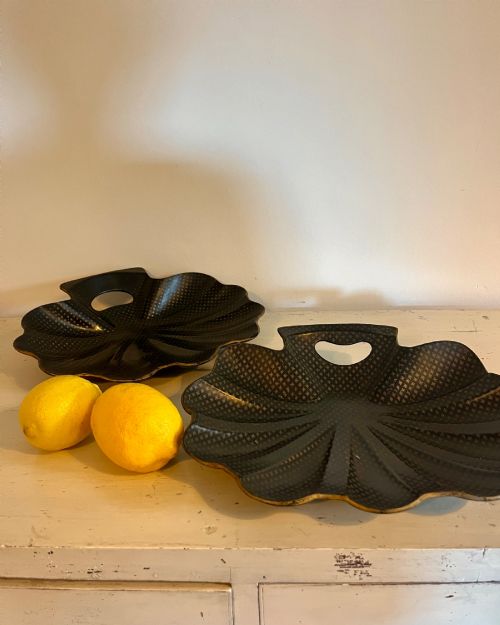
A scalloped lacquer tray brings tactile depth and reflective sheen to a room, offering both decorative presence and practical utility.
Scalloped Lacquer Tray
When you search for a scalloped lacquer tray, you encounter pieces spanning the Regency, Victorian, and later nineteenth-century periods. These items typically take the form of serving trays, decorative table tops, or occasional tables mounted on stands.
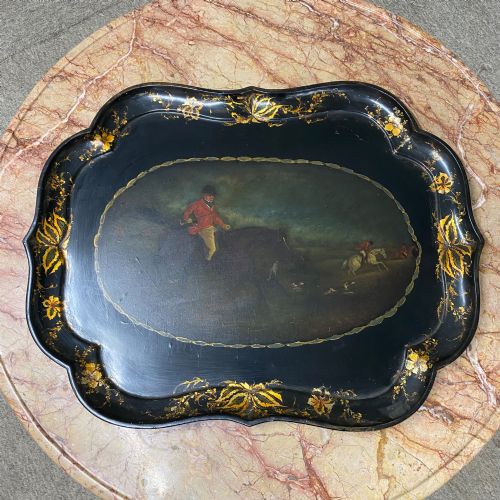
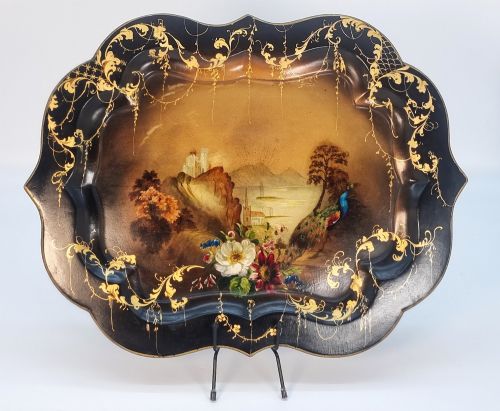
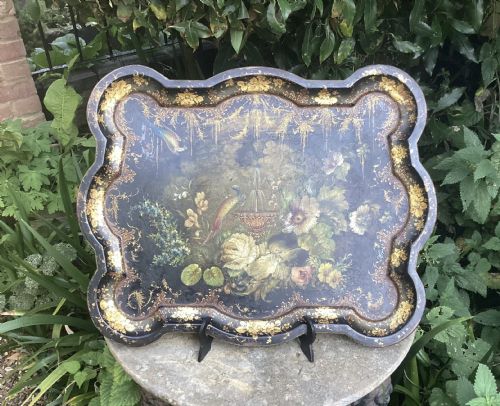
The most common examples on this page are nineteenth-century papier-mâché or toleware trays finished with lacquer, often enriched with gilt embellishments, gold leaf, or hand-painted Chinoiserie and hunting scenes.
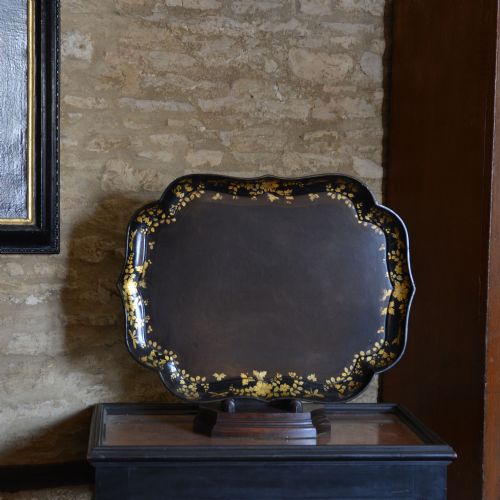
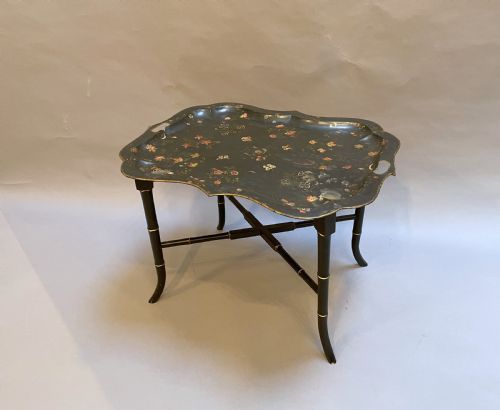
Many of these trays have transitioned from their original serving use into furniture, appearing mounted on later wooden or iron stands to serve as side and tray tables.
How they were made
The construction of these pieces relies heavily on papier-mâché or metal toleware as a base, which is then coated in layers of dark lacquer. Artisans built up these smooth surfaces before applying intricate painted details.
Decoration frequently incorporates gold leaf, gilt embellishments, and silver plate gallery edges to frame the scalloped contours of the tray. Wood is also utilised for underlying structures, particularly in later tables and stands.
Scalloped Lacquer Tray Retail Price Guide 2026
Typical asking prices for scalloped lacquer tray among the pieces listed under this phrase on Sellingantiques today, from the lower quarter to the upper quarter. They describe what is for sale here now, not the wider market.
What varies in quality
Quality rests in the precision of the scalloped edge and the finesse of the surface painting, whether depicting a landscape, a hunting scene, or classic Chinoiserie motifs. Finer examples display meticulous brushwork and enduring depth in the lacquer finish.
The integrity of the underlying papier-mâché or metal foundation dictates how well the piece survives centuries of handling. Integration with stands, whether period or later additions, also influences the coherence of the piece.
Jennens and Bettridge
The Scalloped Lacquer Tray Glossary
- Papier-mâché
- A composite material made from paper pulp or layers of paper bound with glue, pressed and dried to form a rigid base for lacquer. It provides a lightweight yet durable surface for decorative painting.
- Toleware
- Lacquered or enamelled metalware, usually tinplate, popular for decorative trays and household items during the Regency and Victorian eras. This material often receives dark painted finishes and gilt decoration.
- Chinoiserie
- European artistic style reflecting Chinese motifs and decorative techniques, widely applied to nineteenth-century lacquer trays. This aesthetic employs picturesque landscapes and ornate figures in gold and paint.
- Gilding
- The application of gold leaf or powder to a surface to create metallic highlights and ornamentation. It is frequently used to accent the scalloped rims and central designs of lacquer trays.
Scalloped Lacquer Tray: Frequently Asked Questions
What is a scalloped lacquer tray?
A scalloped lacquer tray is a decorative serving or display piece featuring an undulating rim and a smooth lacquered surface. These items often showcase hand-painted designs or gilt embellishments.
Originating primarily in the nineteenth century, they combine practical utility with intricate craftsmanship, frequently doubling as standalone display objects.
How were nineteenth century trays used?
These trays originally served for carrying drinks and food or for general domestic organisation in polite society. Their decorative surfaces meant they were often displayed on sideboards when not in use.
Over time, many have been paired with custom wooden or iron stands to function permanently as occasional tables.
How do I care for lacquer?
Lacquer requires gentle handling to preserve its polished surface and painted details. Keep pieces away from direct sunlight and excessive moisture to prevent warping or cracking of the material.
Dust lightly with a soft, dry cloth and avoid harsh chemical cleaners or abrasive polishes that can damage the delicate finish.
Are these trays water resistant?
While lacquer provides a protective coating, historical pieces are not designed to withstand standing water or heavy moisture. Spills should be wiped away promptly with a dry cloth to protect the wood, papier-mâché, or metal underneath.
Using them for dry display or light service ensures the longevity of the original painted and gilded surfaces.