
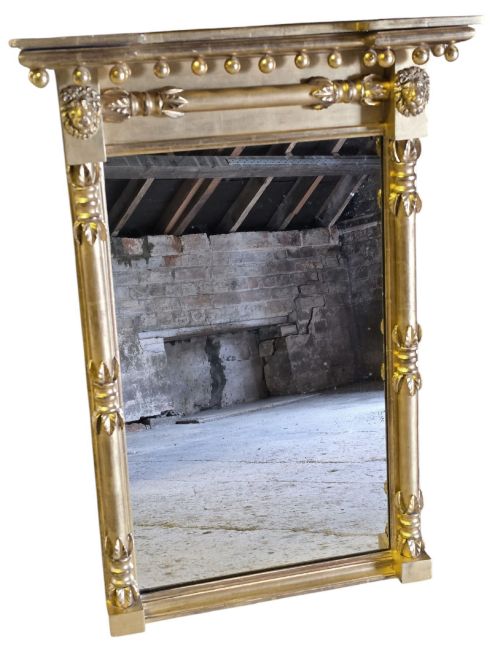

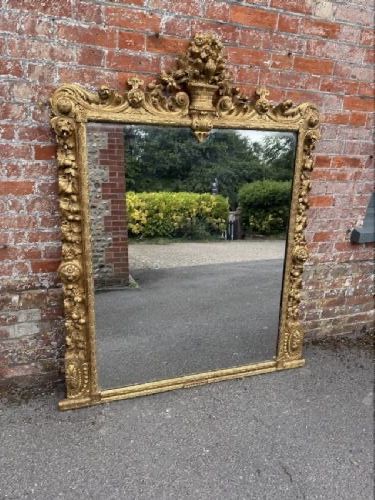


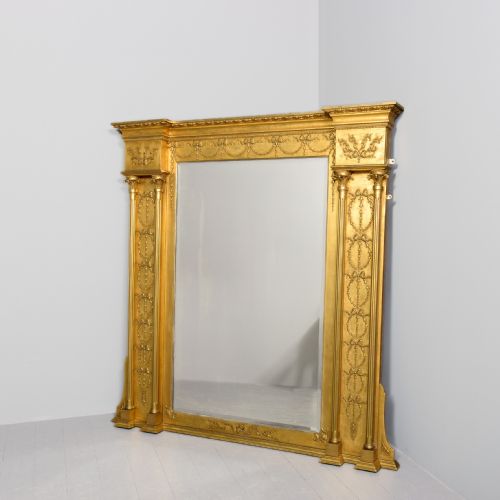


Gilded Architectural Mantel Mirror
These large gilded architectural mantel mirror pieces command a room, reflecting light and adding grandeur above a fireplace.
Gilded Architectural Mantel Mirror
A gilded architectural mantel mirror sits above a fireplace, designed to anchor a room and draw the eye upward with substantial proportions. Buyers seeking this type encounter large formats intended specifically for placement over a mantelpiece.
The pieces appearing here span the nineteenth century, including Victorian and Regency eras. Styles range from neoclassical to rococo revival, reflecting the decorative tastes of those periods.
Forms include overmantel mirrors and pier mirrors, frequently featuring carved wood, gesso, and arched or shaped tops. Many examples demonstrate English or French origins from the eighteen-sixties and eighteen-eighties.
Materials and construction
Carved wood provides the primary structural framework for these large frames, often paired with gesso layers to build up intricate relief details. Artisans applied gold leaf and composition ornament over the wooden base to achieve a brilliant metallic finish.
Mirror glass plates sit within these heavy frames, sometimes surviving as original plates from the early nineteenth century. Secondary treatments include painted elements, silvered surfaces, and ebonised details alongside traditional gilding.
Some nineteenth-century mirrors still harbour tiny traces of workshop chalk inside their carved joints.
Distinctions in quality
The depth and crispness of the carved wood and gesso ornamentation separate standard examples from finer works. Superior pieces display masterly hand-carving that retains sharp architectural details rather than softened composition mouldings.
The preservation of the original plate glass and the integrity of the original gold leaf finish heavily influence the standing of a mirror. Greater skill is evident when the proportions of the frame harmonize perfectly with the architectural details.
The Gilded Architectural Mantel Mirror Glossary
- Giltwood
- Wood that has been covered with a thin layer of gold leaf. This material creates the characteristic rich surface seen on traditional frames.
- Gesso
- A plaster-like mixture applied to wood frames and carved or moulded into relief decorations. It provides a smooth base for subsequent gilding.
- Overmantel mirror
- A large mirror specifically designed to hang or sit upon the mantelpiece above a fireplace. These pieces often feature wide horizontal or arched proportions.
- Pier mirror
- A tall mirror designed to hang on the wall space between two windows, or above a pier table. They share similar decorative vocabularies with mantel mirrors.
- Composition
- A moulded material made from whiting, resin, glue and oil, pressed into shape and applied to wooden frames. It allowed makers to create repetitive ornamental details efficiently.
Gilded Architectural Mantel Mirror: Frequently Asked Questions
Where should a mantel mirror hang?
These mirrors hang securely on the wall directly above a fireplace mantel, where their substantial size balances the hearth below. They also function well on prominent interior walls as standalone statement pieces.
Ensure the wall fixings match the heavy weight of carved wood and glass. Professional installation is essential for supporting large overmantel frames safely.
How do I identify a Victorian mirror?
Victorian examples often display heavier proportions and incorporate styles like neoclassical revival or ornate carved motifs. Dating relies on construction methods, wood types, and the character of the gesso work.
Examine the backboards and fixings for signs of nineteenth-century joinery. Original mirror plates may show subtle ageing or foxing that confirms their age.
How should I clean an antique mirror?
Dust the carved frame gently with a soft, dry brush to prevent accumulation in the intricate gesso recesses. Avoid harsh chemical cleaners that might strip delicate gold leaf or painted surfaces.
Clean the glass plate sparingly using a mild solution on a cloth, ensuring moisture does not seep behind the frame edges. Preserving the original surface requires a light touch.