
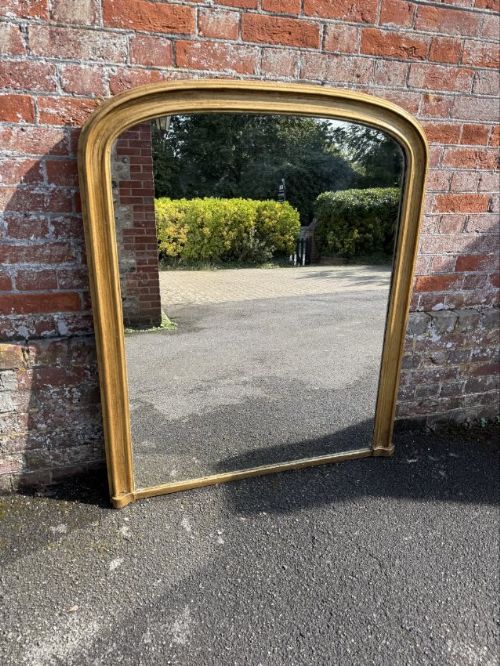
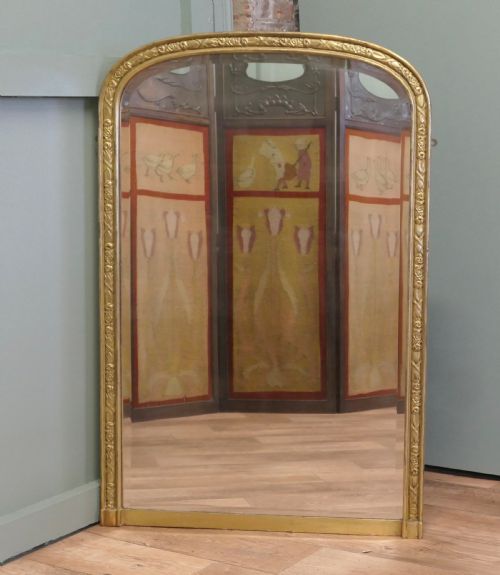


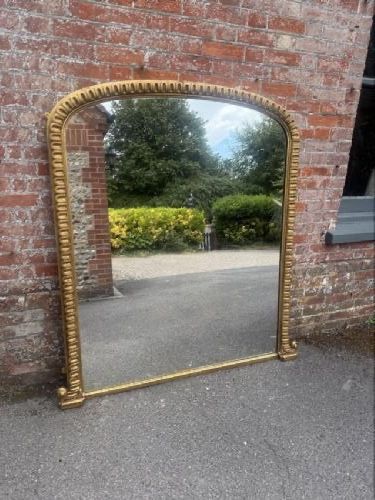
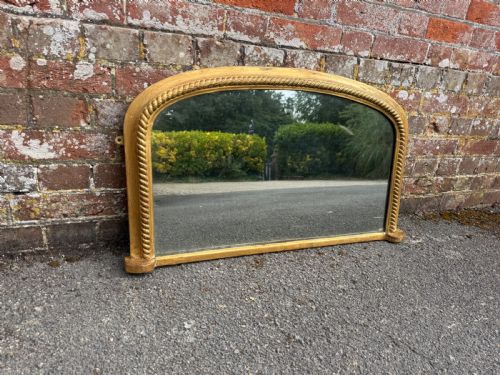
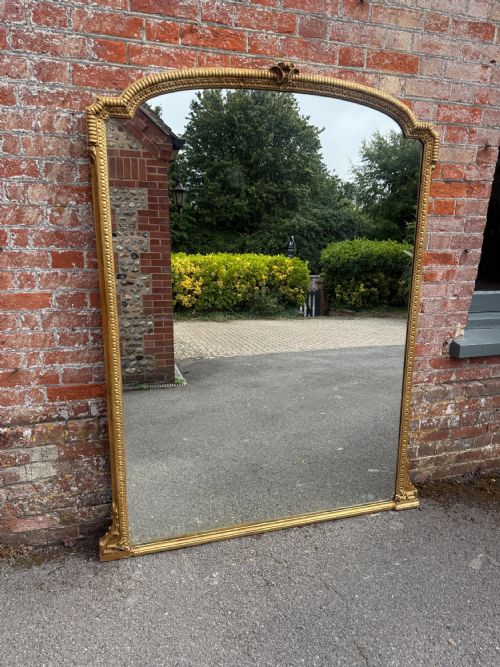
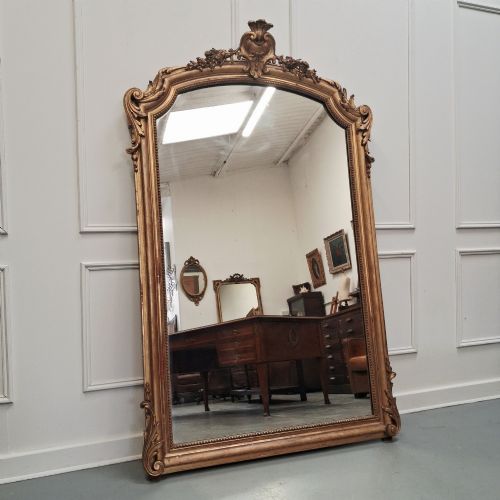
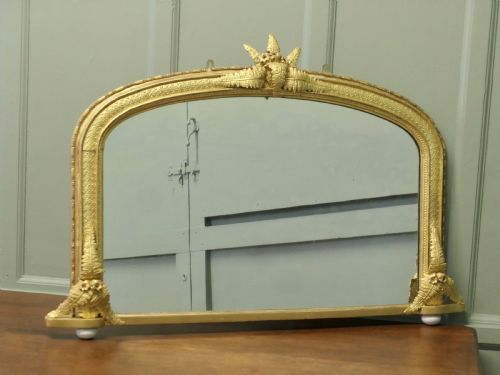
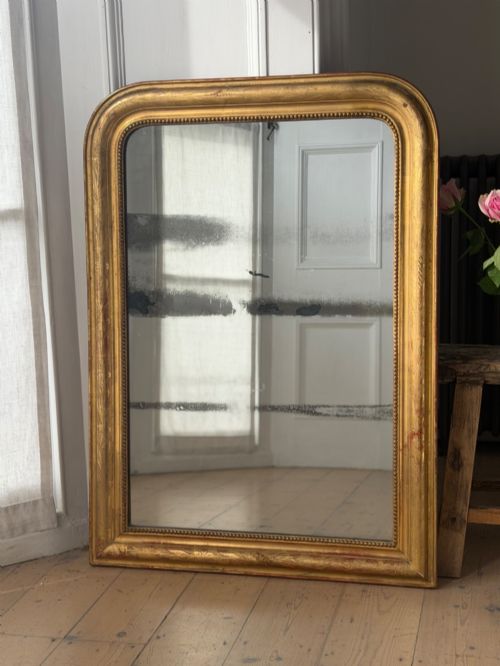
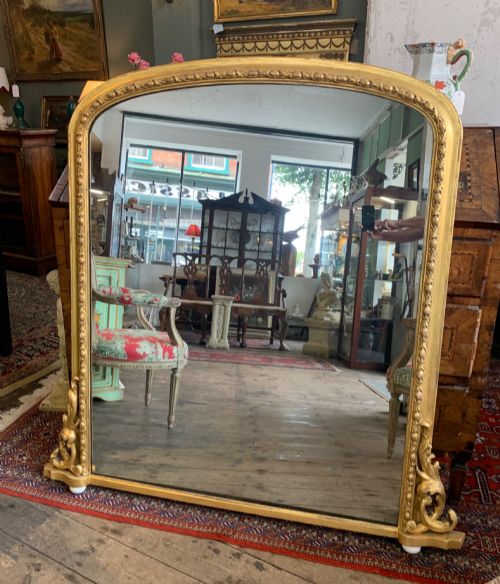
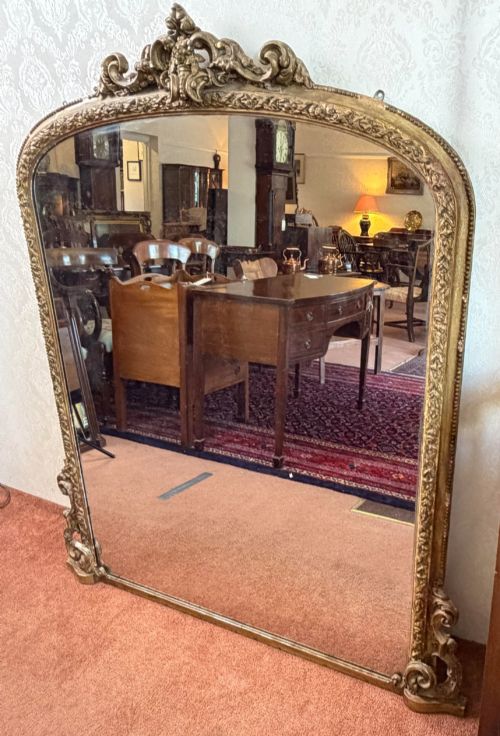
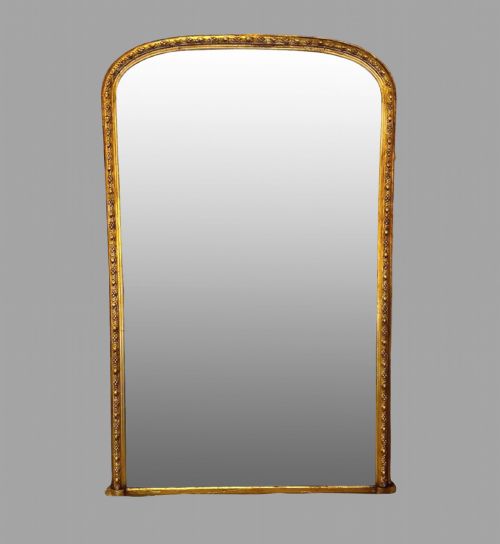
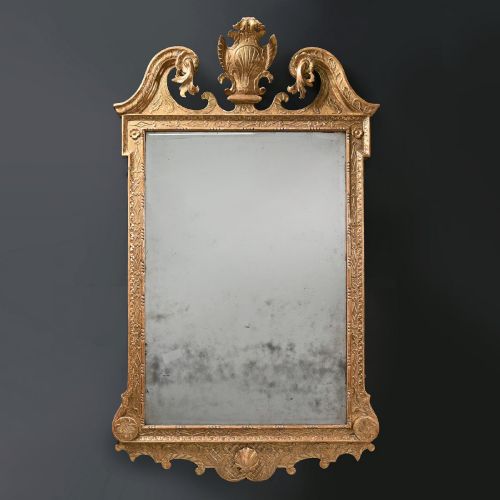
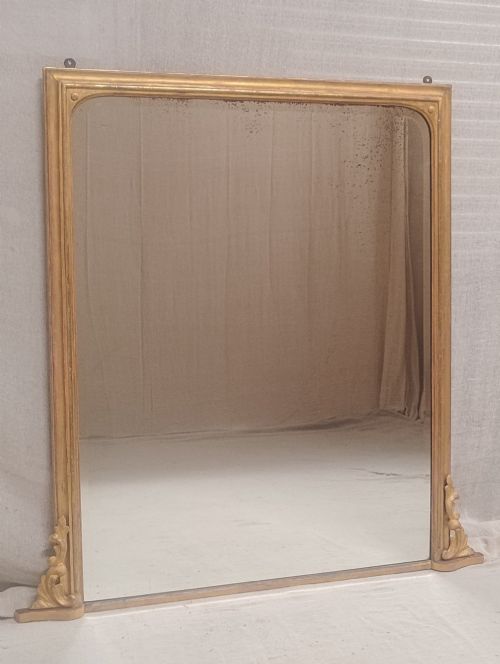
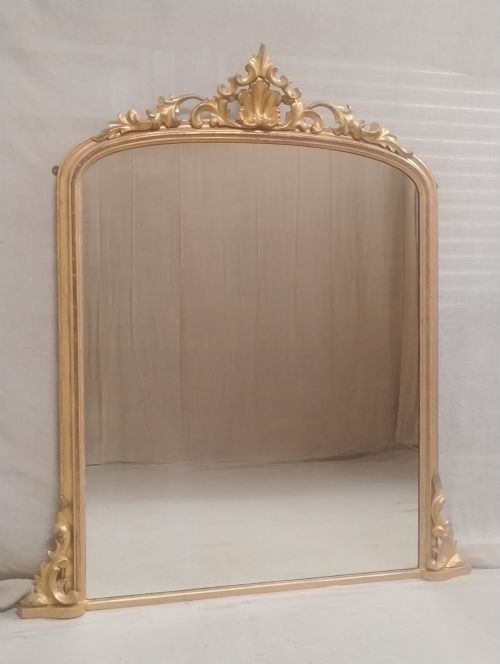
Gilded Arch Wall Mirror
A gilded arch wall mirror brings a combination of light and scale to a room, drawing on centuries of frame-making traditions from the Georgian era to the late Victorian period.
Gilded Arch Wall Mirror
A gilded arch wall mirror is typically found as a large overmantel mirror designed to sit above a fireplace, or as a tall pier mirror meant for display between windows. The pieces seen here span from the 18th century through the Victorian era up to 1900, originating from both English workshops and French sources.
English examples frequently display robust carved wood and gesso frames with arched tops, often incorporating ribbed or rope-twist details. French pieces tend towards the Louis Philippe and Rococo styles, prioritising clean arched silhouettes or ornate scrollwork.
Overmantle mirrors dominate the selection, built with generous proportions to reflect interior light and create a sense of expanded space in a principal reception room.
How they were made
Makers constructed the foundational frames from solid wood, applying multiple layers of gesso to build up smooth surfaces for detailed carving and moulding. Composition ornament was frequently pressed into moulds and applied to wooden carcases for complex decorative motifs.
The finished frames received thin sheets of gold leaf or surface gilding, applied over coloured boles to give the gold a warm undertone. Original glass plates were silvered using mercury techniques, which over time develops a characteristic foxed appearance.
Listings incorporate pieces from the 18th century up to 1900, featuring materials such as gesso, giltwood, plaster and original mercury glass.
What varies in quality
The depth and crispness of the carving distinguish finer mirrors from standard commercial production, particularly where wood and gesso meet. Hand-carved elements retain sharp definition and organic movement that moulded composition cannot fully replicate.
Proportion and scale dictate the visual impact of an arch wall mirror, with superior examples exhibiting balanced framing that complements the arched glass. The preservation of original gilding and the character of the mercury glass plate contribute significantly to the integrity of the piece.
The Gilded Arch Wall Mirror Glossary
- Gesso
- A mixture of gypsum, chalk and binder applied to wooden frame bases to create a smooth surface for gilding. This material allows for intricate low-relief ornamentation.
- Giltwood
- Timber that has been coated in gold leaf or metallic powder. It provides a durable and reflective surface characteristic of formal decorative mirrors.
- Overmantel
- A large mirror specifically proportioned to hang on the wall directly above a mantelpiece. These pieces often feature horizontal or arched formats designed to span the width of a fireplace.
- Mercury glass
- A silvering technique utilising a mixture of mercury and tin applied to the rear of the glass plate. Over decades, this chemical reaction creates distinctive dark spots known as foxing.
- Pier mirror
- A tall mirror designed to fit on the narrow section of wall between two windows. They make maximum vertical use of light in traditional interiors.
Gilded Arch Wall Mirror: Frequently Asked Questions
How do I hang a heavy overmantel mirror safely?
Large mirrors require secure fixing directly into structural wall studs or masonry using heavy-duty brackets. Professional installation is strongly advised due to the combined weight of the timber frame and thick glass.
Weight distribution must be calculated carefully to prevent strain on the top corners of the frame. Wall fixings should match the specific load requirements of the mirror.
What is the difference between an overmantel and a pier mirror?
Overmantel mirrors are traditionally wider and built to sit horizontally or vertically above a fireplace opening. Pier mirrors are narrower and taller, originally intended for the wall space between windows.
Both forms utilise arched tops to draw the eye upward, but their original placement dictates their proportions. Overmantels generally anchor the central hearth of a room.
How should I clean antique gilded frames?
Gilded surfaces require extremely gentle dusting with a soft, dry brush to prevent the removal of delicate gold leaf. Moisture and modern chemical cleaners will damage both the gesso and the historic finish.
Avoid rubbing the surface, as aged gilding is exceptionally thin and sensitive to friction. Professional conservators should handle any significant accumulation of grime.
How can I tell a Victorian mirror from a Georgian one?
Georgian mirrors often feature restrained neoclassical or early rococo carvings with precise gesso work and specific timber construction. Victorian examples frequently scale up the proportions and introduce heavier ornamentation like rope twists and deep rebates.
Examining the backboards, joinery and nail types provides additional clues to the era of manufacture. stylistic cues must be weighed alongside the physical materials used in the frame.