
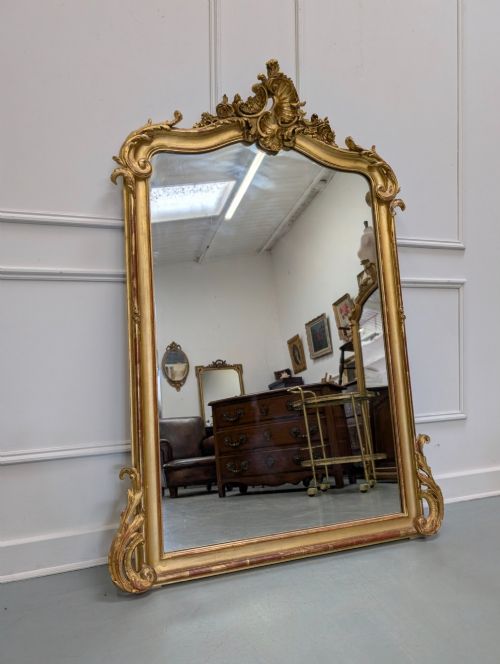
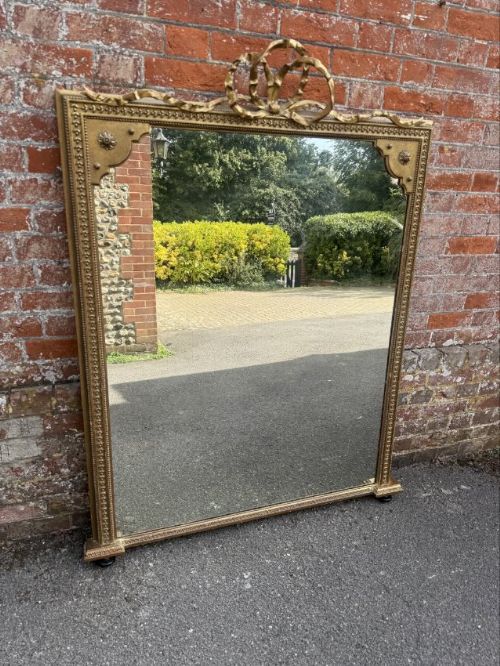
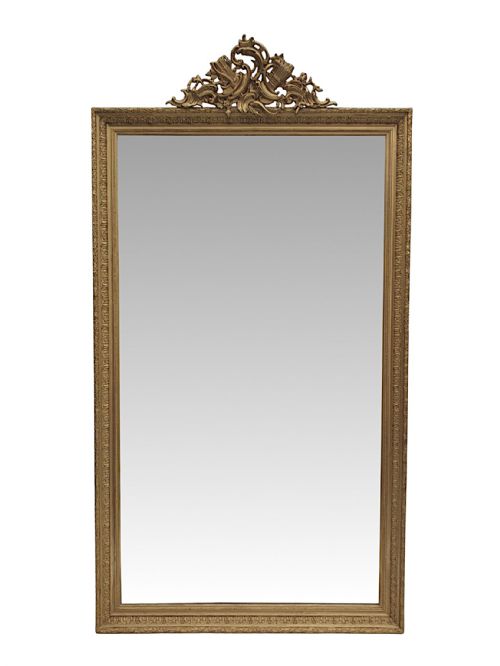
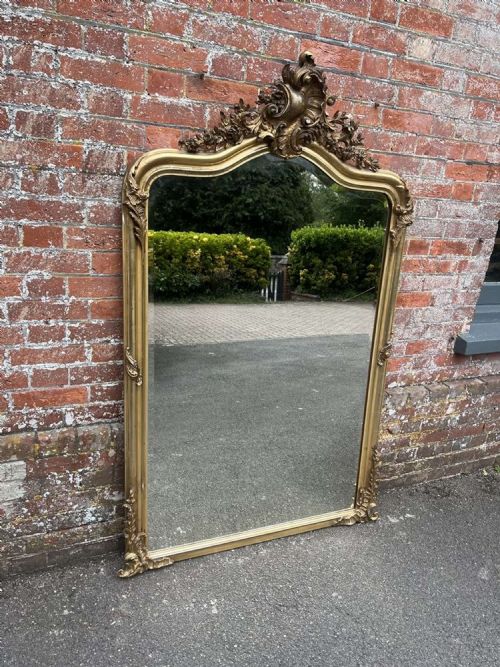
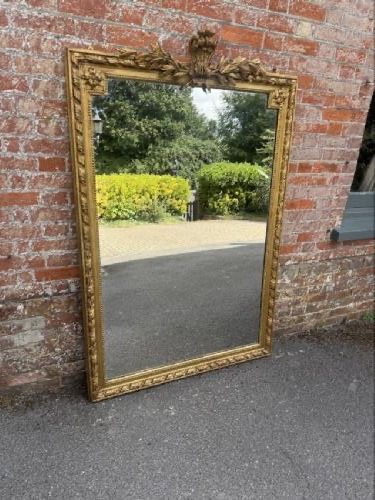
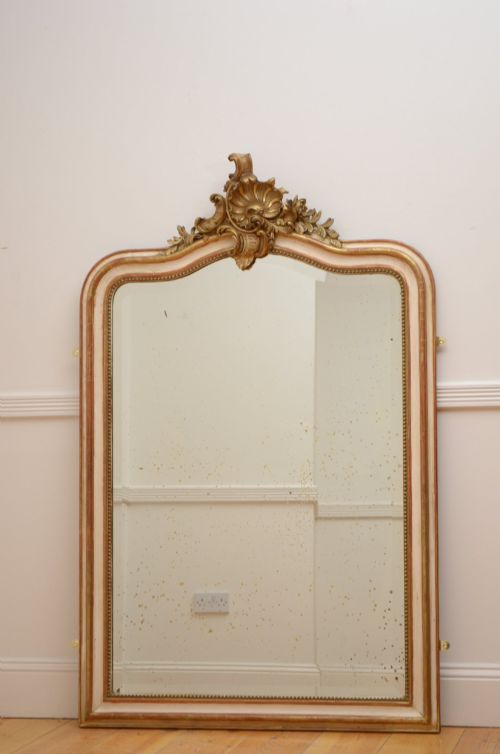
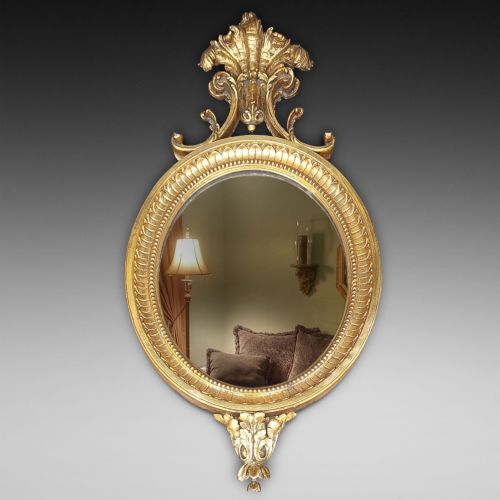
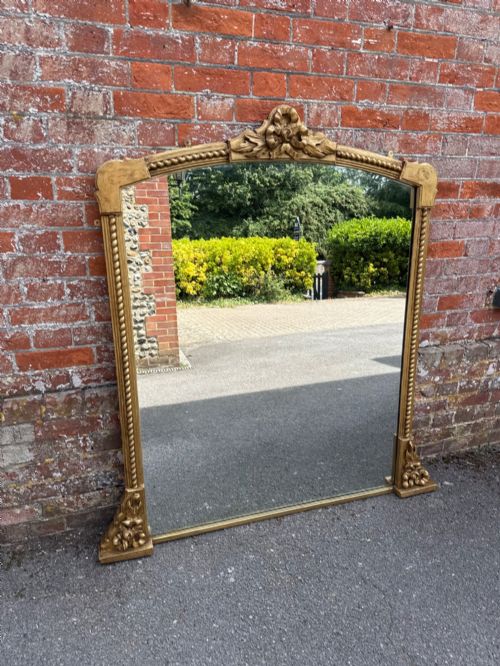
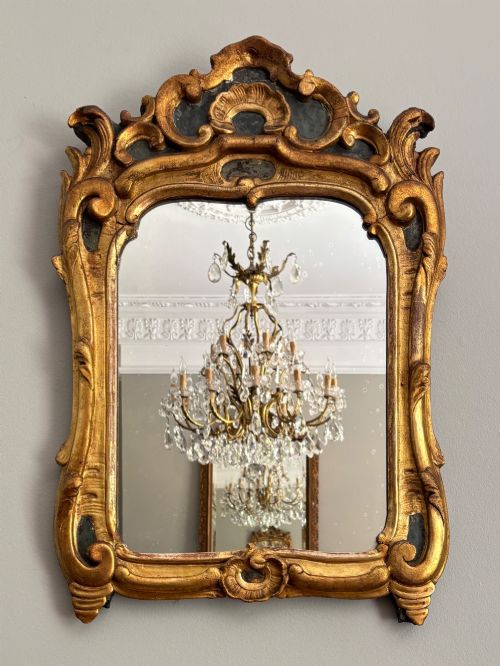
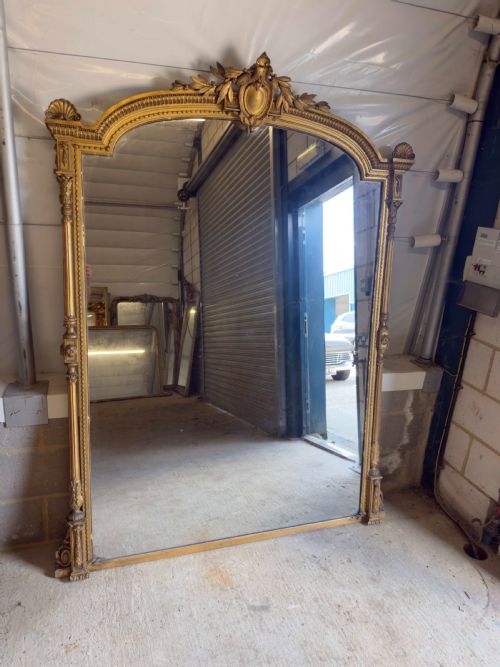
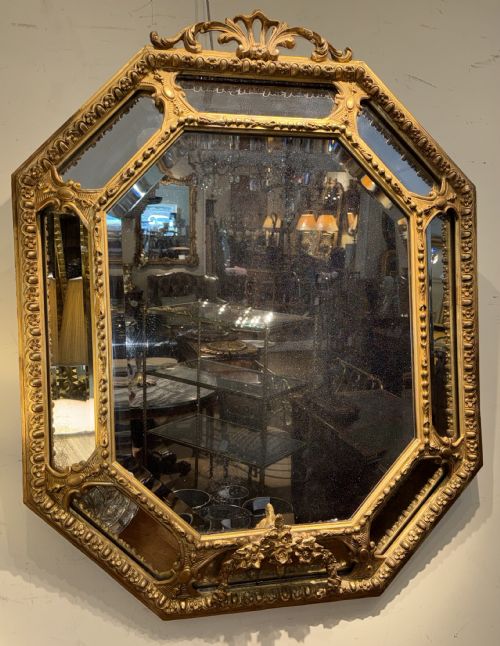
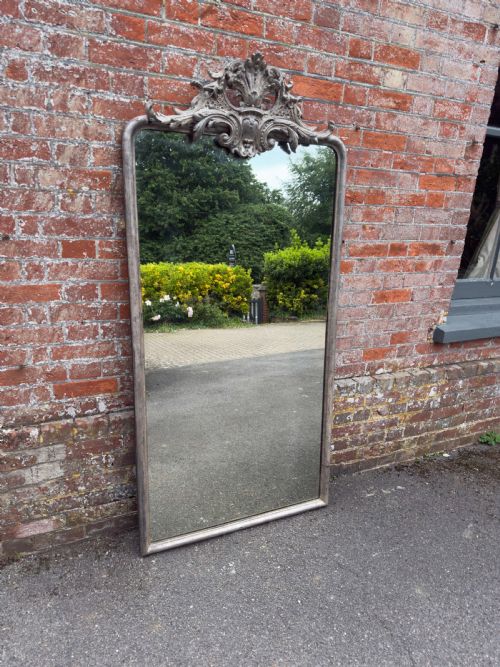
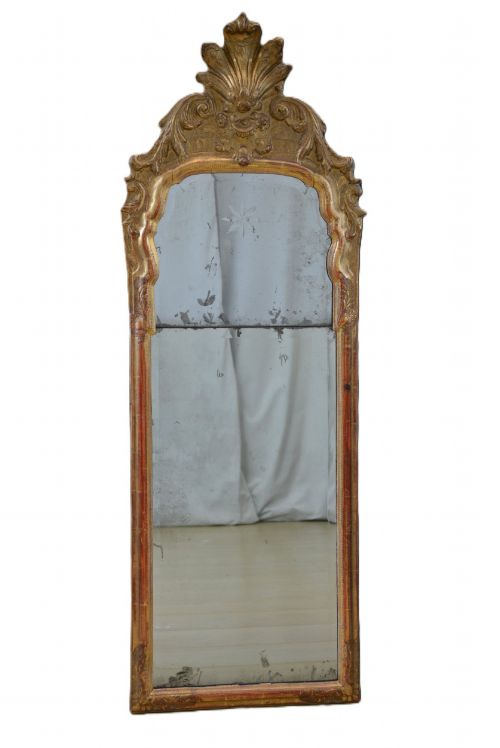
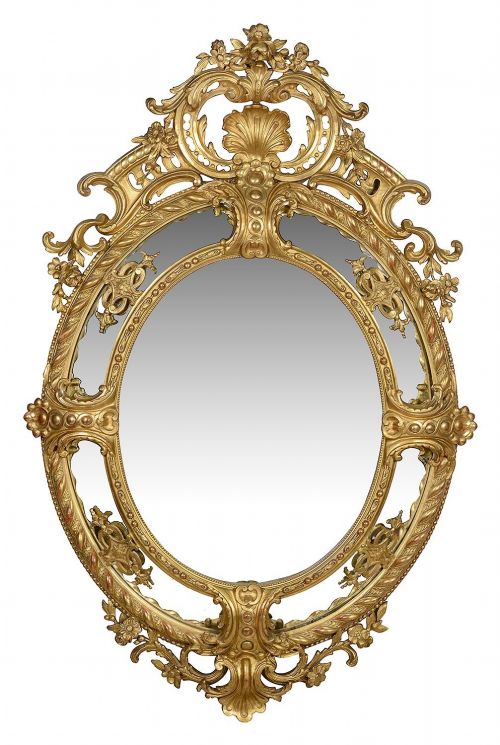


Gesso Cresting Wall Mirror
A gesso cresting wall mirror brings a sculptural, light-reflecting focal point to a room through traditional carved wooden frames and ornate applied ornament.
Gesso Cresting Wall Mirror
A gesso cresting wall mirror is defined by its decorative upper ornament and substantial wooden construction, appearing frequently in nineteenth-century English and French designs. These pieces span periods from the eighteenth century through to the early twentieth century, incorporating styles such as Victorian, Regency, and French Rococo Revival. Overmantel mirrors and smaller wall-hung formats dominate the selection, often featuring shaped, arched, or cushion-moulded tops.
The regional origins of these mirrors divide clearly between English workshop traditions and French chateau aesthetics, with dates clustering around the mid-to-late nineteenth century. Buyers encounter rectangular, oval, and intricate shaped frames that reflect historical revivals, including Adam and Rococo motifs. The ornamentation above the main glass plate defines the cresting, ranging from classical birds to lions' heads and elaborate shell carvings.
Materials and Construction
Makers formed the decorative elements of these mirrors by applying gesso - a mixture of plaster of Paris or chalk with glue - over a carved wood substrate, allowing them to model intricate relief details before guilding. Gold leaf, silvered finishes, and paint were then applied to the gesso surface to catch the light and provide rich surface colour. The underlying timber frames provide structural support for heavy mirror glass, which is secured within rebated wooden mouldings.
Techniques combined carpentry and surface plasterwork, where wooden frames received multiple layers of gesso to build up depth for carving and stamping. The integration of carved wood and gesso allowed artisans to achieve sharp floral, animal, and architectural motifs that would prove prohibitively labour-intensive to carve directly into solid timber alone.
Materials recorded across these mirror listings include carved wood, gesso, gold leaf, and traditional mirror glass.
Indicators of Quality
Quality in these mirrors rests upon the crispness of the gesso modelling and the depth of the underlying wood carving within the cresting. Finer examples display sharp, well-defined relief work in the ornamentation rather than softened or shallow moulding.
The handling of the gilding or paint finish further distinguishes the work, with genuine gold leaf and skilled application offering a warmer, more nuanced surface than flat metallic paints. Original mirror glass and intact structural joinery also contribute to the integrity of a piece.
John Belchier
The Gesso Cresting Wall Mirror Glossary
- Gesso
- A plaster-based mixture applied to wooden frames as a smooth base for gilding or painting. It allows artisans to mould detailed low-relief ornamentation.
- Cresting
- The decorative upper portion or superstructure of a mirror frame. This ornamental feature often incorporates motifs like birds, shells, or scrolls.
- Giltwood
- Timber that has been coated with gold leaf or gold paint. It provides a luminous surface that enhances the reflected light in a room.
- Overmantel Mirror
- A large mirror designed specifically to hang on the wall above a fireplace mantelpiece. These pieces often feature wide proportions to match the hearth below.
- Pier Mirror
- A tall, narrow mirror traditionally hung on the wall space between two windows. They frequently incorporate gesso detailing to match interior woodwork.
- Rococo Revival
- A nineteenth-century design movement inspired by the asymmetrical, fluid curves of the eighteenth-century French Rococo style. It relies heavily on naturalistic scrollwork and floral elements.
Gesso Cresting Wall Mirror: Frequently Asked Questions
How do I hang a heavy gesso cresting mirror?
These mirrors require secure wall fixings distributed across the main wooden frame rather than relying solely on the hanging wire. Professional installers often utilise heavy-duty wall brackets that engage directly with the timber structure.
Because the combination of carved wood, gesso, and thick glass adds substantial weight, locating a wall stud or using appropriate masonry anchors is essential for safe suspension.
Where should I place an overmantel mirror?
An overmantel mirror traditionally hangs centrally above a fireplace, anchoring the vertical space of the chimney breast. This placement maximises the reflection of natural light from windows across the room.
Beyond the hearth, these pieces function effectively above low sideboards or console tables in larger reception rooms to create a sense of expanded depth.
How do I clean a gilt gesso frame?
Dust the frame gently using a dry, soft-bristled brush or a clean feather duster to prevent particles from settling into the intricate recesses of the gesso relief. Avoid using water, household detergents, or chemical solvents, as moisture can soften the plaster base and lift the gilding.
For stubborn dust trapped within carved details, a very dry artist's brush used with a light touch provides a safe method of removal.
What is the difference between Victorian and Regency styles?
Regency mirrors from the early nineteenth century often feature cleaner architectural lines, classical motifs like the Hoho bird, and restrained use of giltwood and gesso ornament. They reflect a more neoclassical aesthetic drawn from ancient Greek and Roman design.
Victorian pieces tend to be heavier and more exuberant, embracing Rococo Revival curves, dense floral carving, and ornate crestings that showcase industrial-era production confidence.