


Giltwood Cushion Frame Mirror
A giltwood cushion frame mirror brings deep projection and brilliant reflection to a wall, drawing the eye with its bold architectural sweep.
Giltwood Cushion Frame Mirror
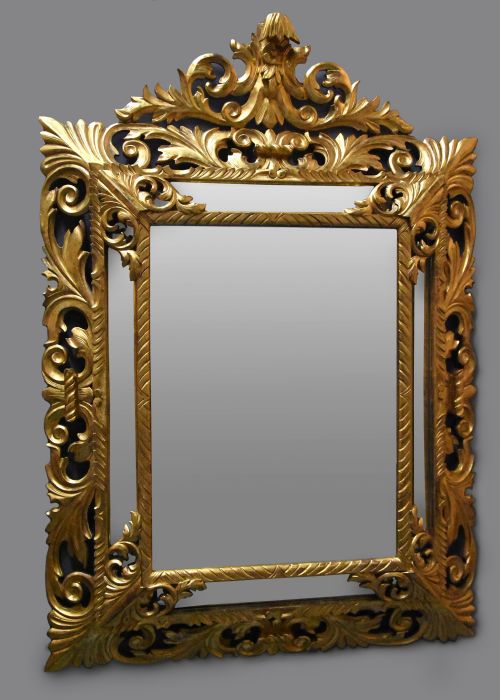
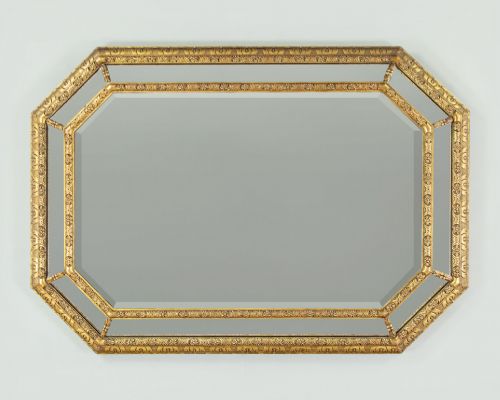
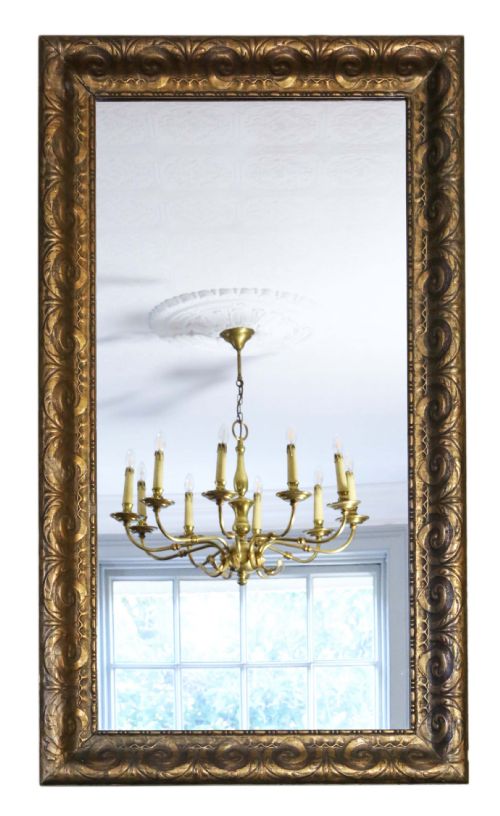
These pieces are substantial wall mirrors defined by their prominent, rounded frames that curve outward toward the edge, creating a distinctively plump profile. When you search for a giltwood cushion frame mirror, you encounter imposing examples hailing from the nineteenth century alongside later twentieth century interpretations.
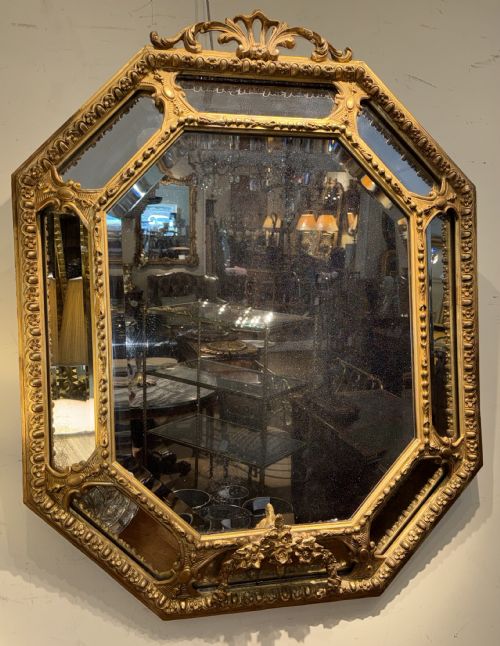
The selections span distinct stylistic revivals including Italian Baroque, French Rococo, and Victorian designs, often manifesting as large wall or overmantle centrepieces. Many incorporate classic elements such as bevelled mercury glass, arched tops, crests, and elaborate carved details.
Originating predominantly from French and Italian workshops, these wall mirrors vary from neat domestic sizes to grand, highly decorative proportions. The typical piece relies on the characteristic convex sweep of the wooden frame to catch and scatter light across a room from multiple angles.
Materials and construction methods
The foundation of each piece is solid wood shaped to form the curved cushion profile, prepared with layers of gesso to receive gilding. Artisans applied gold leaf over the prepared surfaces, burnishing areas to achieve a rich metallic lustre that contrasts with matte sections.
Reflecting plates typically consist of heavy mirrored glass, frequently featuring period characteristics such as bevelled edges or the distinctive mottled appearance of mercury glass. Carved decorative motifs like dragons, crests, and foliate scrolls were applied directly to the wooden structure before finishing.
Listings feature nineteenth century pieces spanning the Victorian, Napoleon III, and Louis Philippe periods, constructed in giltwood, gesso, and mercury glass.
Distinctions in craftsmanship and condition
The depth of carving and the crispness of detail separate standard framing from exceptional sculptural work, particularly visible in Italian Florentine pieces and French Napoleon III examples. Superior execution shows confident, deep relief carving in the wood and gesso rather than shallow moulding.
The integrity of the original gold leaf surface and the preservation of the early glass plate dictate the visual weight of the object. Subtleties in the proportion of the cushion sweep relative to the mirror plate determine the overall harmony and balance of the design.
The Giltwood Cushion Frame Mirror Glossary
- Giltwood
- Wood that has been coated with gold leaf or powder using a traditional sizing method. This finish provides the characteristic metallic brilliance seen on nineteenth century frames.
- Gesso
- A plaster mixture applied to a wooden base to create a smooth surface for gilding and intricate carving. It allows artisans to model fine decorative details before applying gold leaf.
- Mercury glass
- A type of double-walled glass blown in the nineteenth century with a silvering mixture inserted between the layers. It produces a characteristic mottled reflection that distinguishes older plates.
- Overmantle mirror
- A large wall mirror specifically proportioned to hang above a fireplace mantel. These pieces often feature extended horizontal or vertical dimensions to fill the wall space above a hearth.
Giltwood Cushion Frame Mirror: Frequently Asked Questions
What is a cushion frame mirror?
A cushion frame mirror is a wall-hanging glass plate set within a deeply rounded, outward-sloping wooden frame. This profile creates a padded or convex appearance that projects forward from the wall.
The design maximises the play of light across the room by angling the gilded surfaces outward. Most surviving examples date from the nineteenth century and reflect French or Italian stylistic influences.
How do I date a giltwood mirror?
Dating relies on examining the construction of the wooden frame, the preparation layers beneath the gilding, and the characteristics of the glass plate. Nineteenth century pieces often show hand-bevelled edges or mercury backing.
Stylistic cues such as Napoleon III proportions, Victorian dimensions, or specific revival motifs like Italian Baroque scrolls also help narrow down the period of manufacture.
Where should I hang an overmantle mirror?
An overmantle mirror is traditionally positioned directly above a fireplace mantel to anchor the room's primary focal point. Its substantial size reflects light from opposing windows and visually expands the interior space.
Because these pieces are heavy, secure wall fixings into masonry or properly supported studs are essential for safe installation.
How do I care for antique giltwood?
Antique giltwood requires gentle maintenance using a dry, soft microfibre cloth to remove dust without disturbing the delicate gold leaf surface. Moisture and chemical cleaners should be strictly avoided.
Keeping the mirror away from direct sunlight and damp environments preserves both the wooden substrate and the original gilded finish.