



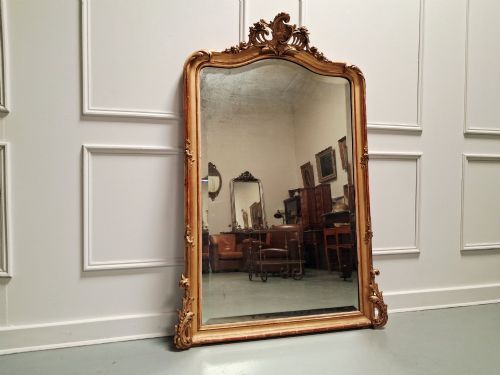
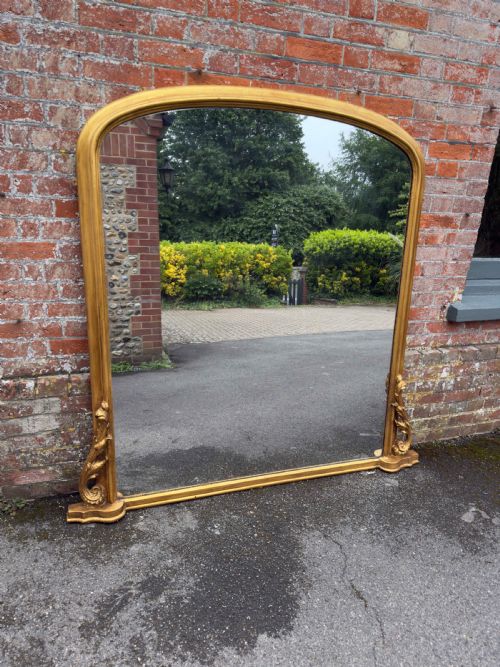
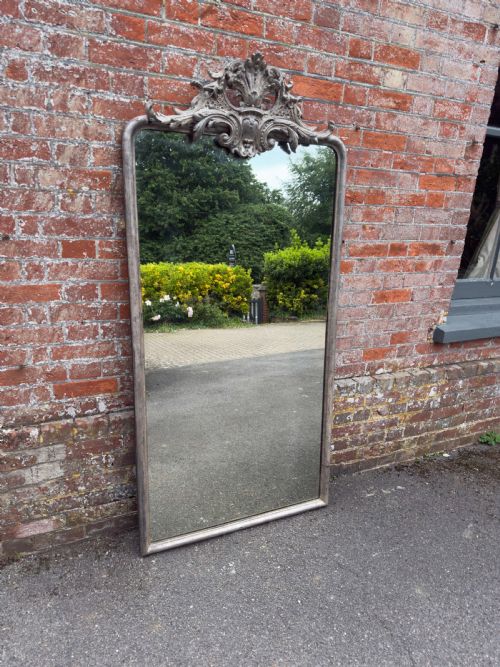

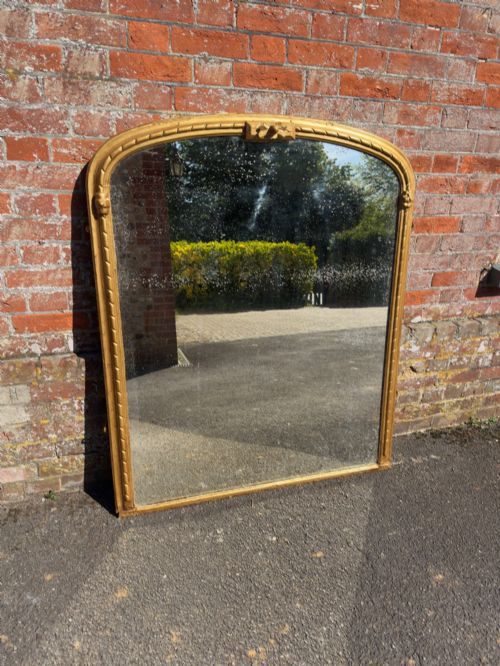
Gesso Arched Overmantel Mirror
When you search for a gesso arched overmantel mirror, you find substantial nineteenth-century and eighteenth-century wall glass designed to sit above a fireplace.
Gesso Arched Overmantel Mirror
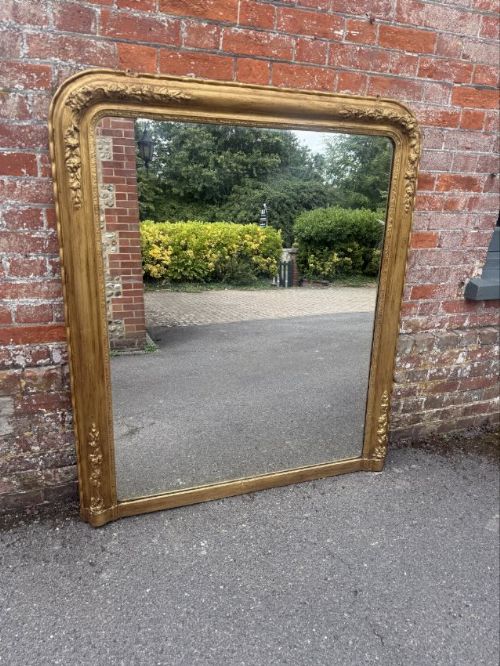
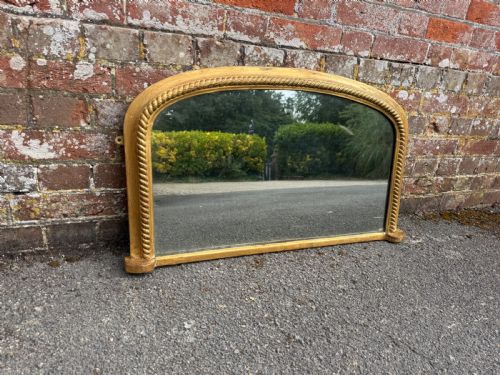
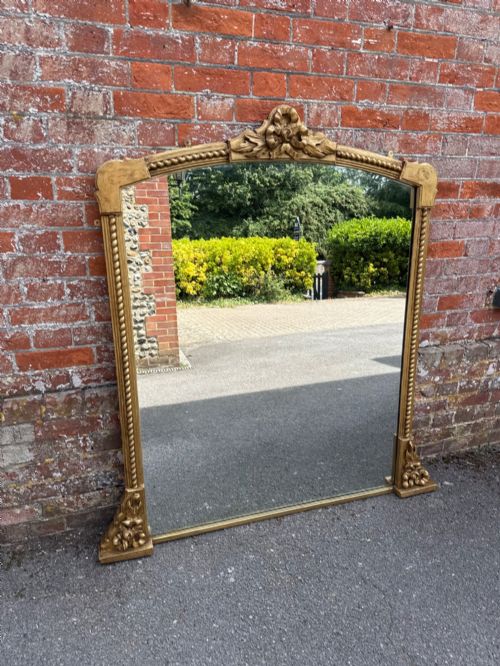
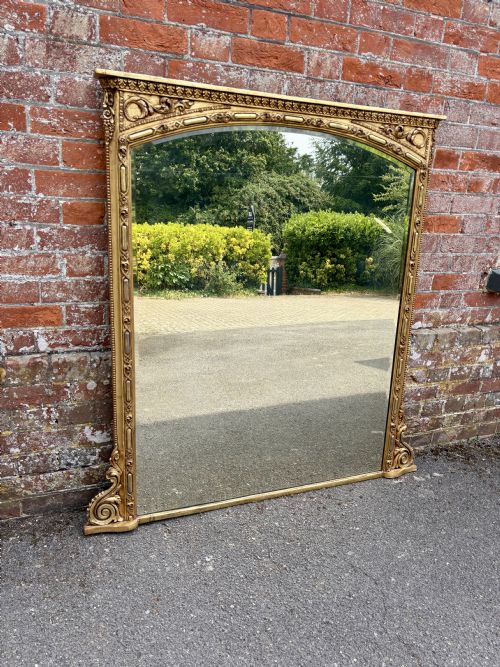
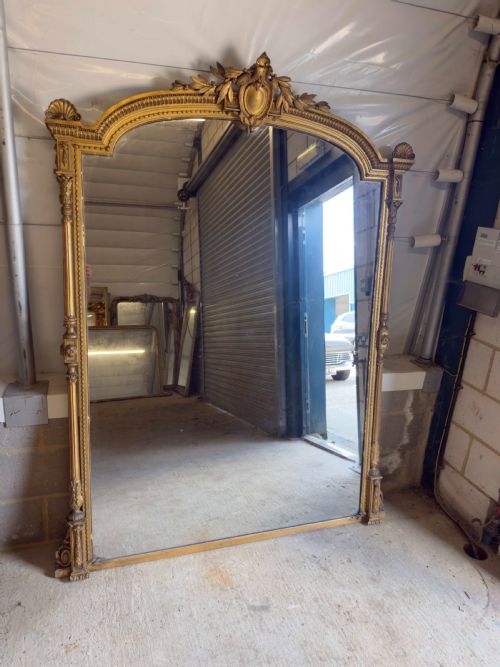
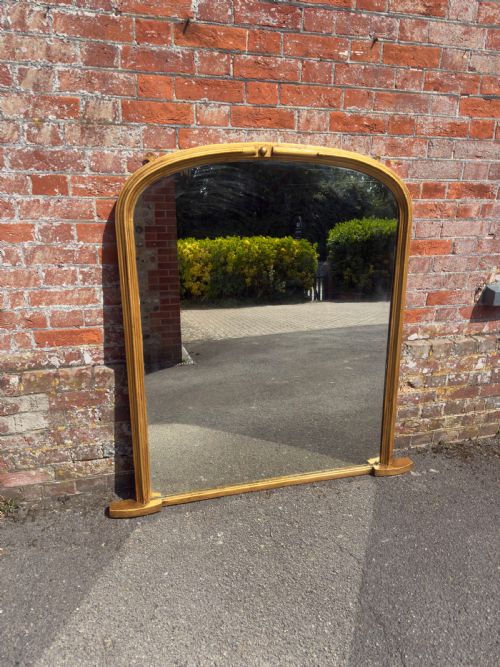
A gesso arched overmantel mirror brings heavy architectural presence to a chimney breast, shaped with a rounded top designed to draw the eye upward in a Victorian or Georgian interior.
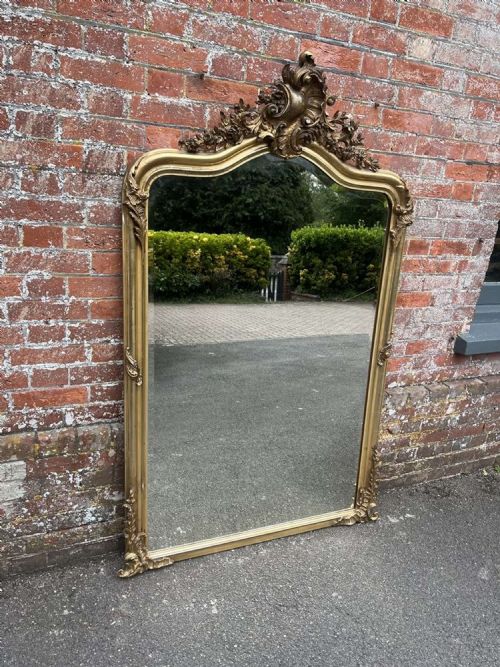
The pieces on this page are predominantly large nineteenth-century English and French examples, framed in carved wood and finished with moulded ornament.
Makers and artisans built these mirrors specifically in wide formats to reflect light across a principal room, often incorporating decorative motifs such as ribbons, columns or laurel leaves into the outer borders.
What varies in quality
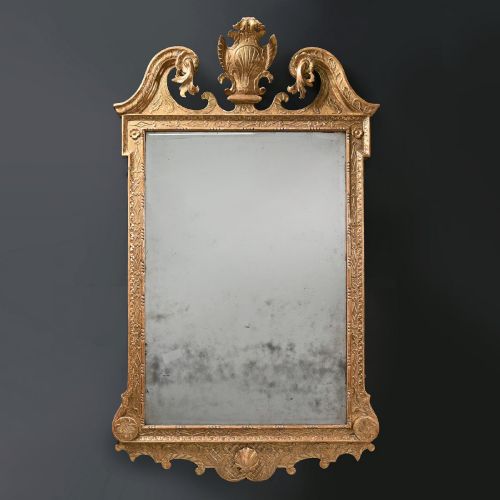
Quality rests in the depth of the carved wooden framing and the precision of the applied gesso ornament, where sharper botanical motifs and cleaner ribbed columns distinguish finer workshop output.
The presence of original gilding or original painted surfaces separates pieces that retain their authentic historic skin from those altered by later interventions.
The listings span the eighteenth and nineteenth centuries, featuring both English and French regional variations in carved wood and gesso.
The Gesso Arched Overmantel Mirror Glossary
- Gesso
- A dense plaster mixture applied over a wooden base to create smooth or moulded surfaces ready for gilding or painting.
- Overmantel mirror
- A large wall glass specifically proportioned to hang on the wall directly above a mantelpiece.
- Giltwood
- Timber carved and subsequently covered with thin sheets of gold leaf to create a brilliant metallic finish.
- Rococo
- An ornate, fluid design style popular during the eighteenth and nineteenth centuries, characterised by asymmetrical scrolls and naturalistic curves.
- Arched top
- A structural framing shape featuring a curved upper edge rather than a standard rectangle.
Gesso Arched Overmantel Mirror: Frequently Asked Questions
Where should an overmantel mirror hang?
These large glasses belong directly above a fireplace mantelpiece, where their proportions balance the hearth below and reflect light back into the space.
Historically, they anchored the decorative scheme of a nineteenth-century drawing room or parlour.
How do I identify a nineteenth-century mirror?
Examine the construction methods visible on the reverse, including the type of timber framing and the consistency of the gesso application.
Nineteenth-century examples frequently combine moulded plaster details with heavy pine or hardwood carcases.
What is the difference between giltwood and painted frames?
Giltwood finishes utilise gold leaf applied over a prepared gesso layer to produce a reflective metallic brilliance.
Painted variants employ flat or decorative pigments over the wood and plaster surface for a softer visual tone.
Are these mirrors suitable for modern walls?
Their substantial weight requires secure wall fixings anchored directly into masonry or heavy studs to support the dense combination of wood, gesso and glass.
They function effectively as focal points in high-ceilinged contemporary interiors as well as period properties.