





German Porcelain Group
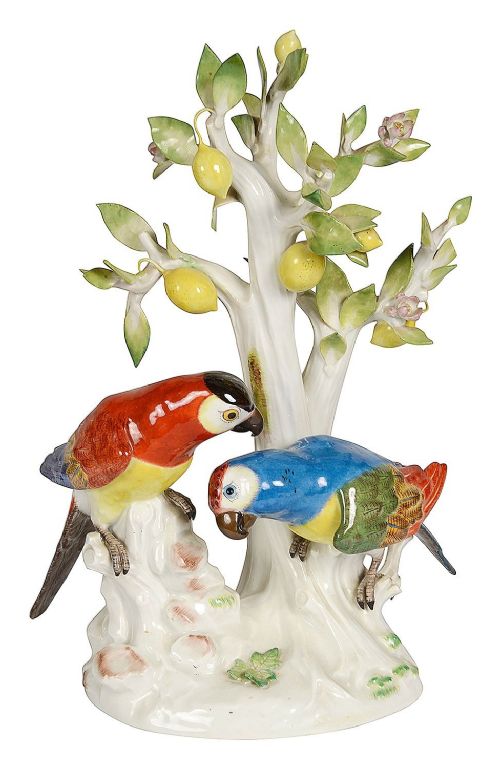
A german porcelain group brings pastoral romances, allegories and lively animal scenes from European kilns straight to the mantelpiece.
German Porcelain Group
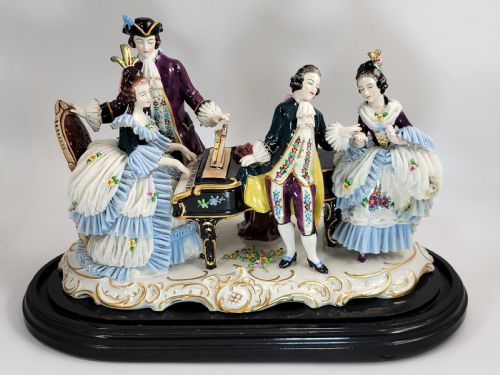
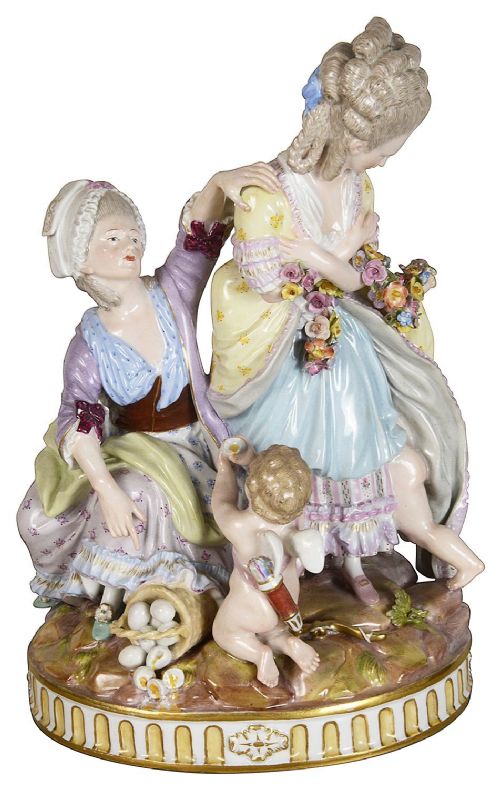
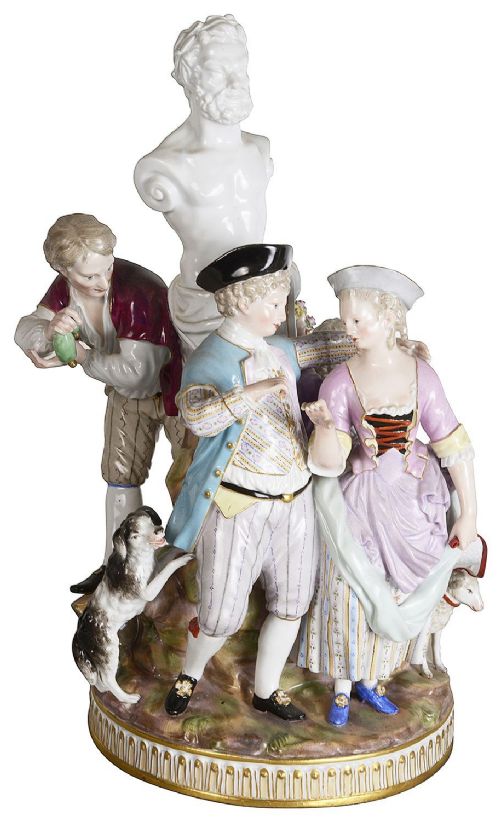
A german porcelain group consists of multiple modelled figures engaged in a narrative scene, whether portraying courting couples, allegorical representations of the seasons, or musicians at play. These pieces range from eighteenth-century classical subjects to nineteenth-century romantic pastorals and later twentieth-century interpretations.
Most examples encountered here originate from major manufacturing centres such as Meissen, alongside pieces produced by Volkstedt, Carl Thieme, and Rudolstadt. Collectors typically encounter table ornaments and salon sculptures depicting domestic life, mythology, or children in gardens.
The subjects draw heavily on Rococo theatricality, Neoclassical dignity, and later Victorian sentimentality. Figures interact dynamically within a shared architectural or natural base, often surrounded by foliage, musical instruments, or domestic animals.
Distinctions in standard and execution
Quality rests primarily on the crispness of the modelling and the sensitivity of the hand-painting. Superior examples retain sharp facial expressions, clean definition in fingers and drapery, and precise alignment in multi-figure compositions.
The complexity of the form and the ambition of the firing dictate the upper tier of production. Pieces featuring intricate applied elements, extensive gilding, and sophisticated kiln work demonstrate the highest degree of technical mastery.
Current listings feature pieces spanning the eighteenth, nineteenth, and twentieth centuries, executed in hard-paste porcelain, bisque, and enamel.
Meissen·Carl Thieme·Ernst Bohne Söhne·Volkstedt·Triebner Ens And Co·Karl Tutter·Ludwigsburg·Rudolstadt
The German Porcelain Group Glossary
- Hard-paste porcelain
- A durable ceramic composition of kaolin and petuntse fired at extremely high temperatures. This material forms the sturdy structural base for the majority of these historic figures.
- Bisque porcelain
- Unglazed porcelain with a matte, porous finish resembling marble. It allows modellers to showcase fine sculptural detail without surface reflection.
- Enamel
- Coloured metallic oxide decoration fused to the porcelain surface during a secondary low-temperature kiln firing. It provides the vibrant hues found on garments and natural settings.
- Gilt
- A thin layer of gold applied to highlights, borders, and bases. This decorative touch elevates the visual richness of the object.
- Marcolini Period
- The tenure of Count Marcolini as director of the Meissen factory between roughly 1774 and 1814. Pieces from this era often display specific factory mark variations.
German Porcelain Group: Frequently Asked Questions
How should I clean porcelain groups?
Dust these delicate figures gently with a soft, dry brush to prevent the accumulation of dirt in intricate crevices.
Avoid using water, chemical sprays, or immersion, as moisture can damage fragile applied elements like lace or weaken historic enamel decorations.
Where were these figures displayed?
Historic households typically placed these sculptures on dining tables as decorative centrepieces during formal meals. Later, they moved to mantelpieces, sideboards, and glass-fronted cabinets in drawing rooms.
Their primary purpose was to signal the refinement, education, and social standing of the host.
Are all white figures bisque?
Not necessarily, though unglazed white pieces are commonly referred to as bisque or biscuit porcelain. Some eighteenth and nineteenth-century factories also produced white glazed figures that retained a glossy surface shine.
Examining the texture under magnification helps distinguish the matte, porous nature of bisque from a bright, glassy glaze.
How do I identify factory marks?
Manufacturers usually stamped, painted, or incised specific symbols into the paste underneath the base before the final glaze firing. Common indicators include crossed swords, monograms, and regional crests that correspond to specific production eras.
Reference guides dedicated to European porcelain marks provide chronological matching for these symbols.