


German Porcelain Candlesticks
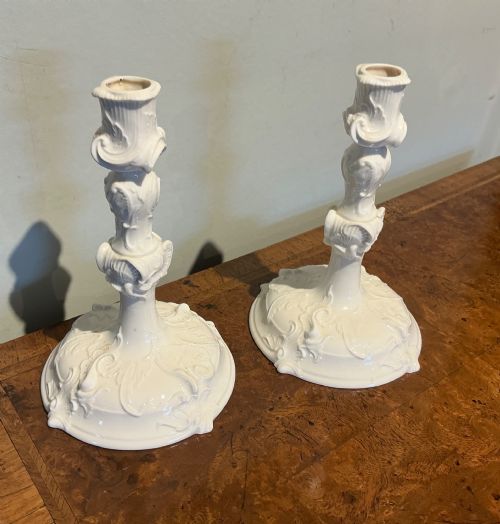
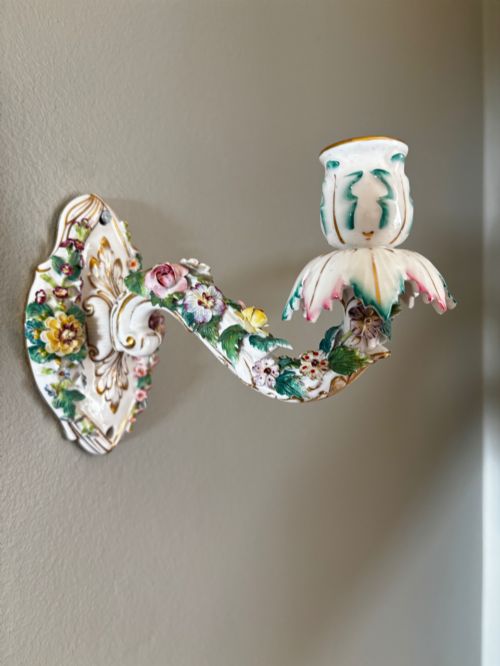
German porcelain candlesticks bring sculptural drama and intricate floral detail to a dining table or mantelpiece.
German Porcelain Candlesticks
German porcelain candlesticks unite functional lighting with elaborate figural modelling, ranging from single stems to multi-arm candelabra. Collectors seek these pieces for their intricate craftsmanship and the vitality of their painted surfaces.
The pieces appearing here span the nineteenth and early twentieth centuries, capturing shifts from ornate revivalism to Edwardian novelty. Pairs dominate the selection, often featuring pastoral figures, allegorical subjects, or naturalistic floral encrustations.
Forms include traditional candlesticks, wall sconces, and branching candelabra. Makers such as Sitzendorf, Meissen, and Nymphenburg define the visual language of these works.
Materials and Manufacture
Manufacture relies on hard-paste porcelain, fired at high temperatures to achieve a dense, durable body that supports delicate applied modelling. Artisans shape petals, leaves, and figures by hand before attaching them to the main body with liquid porcelain slip.
Glaze seals the fired clay, creating a smooth, reflective surface that enhances hand-painted enamel colours. Accents in gold leaf and burnished gilt highlight relief details, foliage, and structural edges.
Moulds provide the basic structure for figures and bases, but individual hand-modelling ensures that floral appliques and facial expressions vary across pieces.
German Porcelain Candlesticks Retail Price Guide 2026
Typical asking prices for german porcelain candlesticks among the pieces listed under this phrase on Sellingantiques today, from the lower quarter to the upper quarter. They describe what is for sale here now, not the wider market.
Listings feature hard-paste porcelain and glazed finishes across nineteenth-century and early twentieth-century periods.
Standards of Quality
The precision of the hand-painting distinguishes finer items, showing clean enamel work and careful application of gold leaf rather than rushed, heavy-handed decoration.
Intact applied elements dictate condition standing, as delicate porcelain flowers and figurative extremities are vulnerable to loss over time. The structural integrity of multi-arm candelabra and figural bases marks the difference between average production and masterworks.
Nymphenburg·Meissen·Volkstedt·Sitzendorf·Triebner ENS and Eckert·Royal Bayreuth
The German Porcelain Candlesticks Glossary
- Hard-paste porcelain
- A durable ceramic composition fired at high temperatures, composed of kaolin and petuntse. It provides the strong, white body typical of traditional German manufactories.
- Blanc de chine
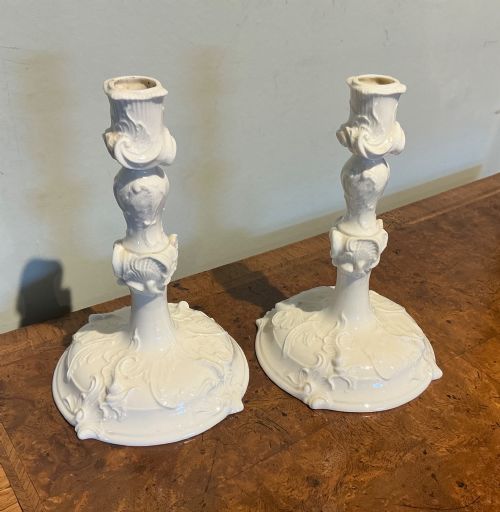
- A descriptive term for porcelain featuring a clear, glossy white glaze over a white body. It allows sculptural details to emerge purely through light and shadow.
- Rococo Revival
- A nineteenth-century design movement mimicking the asymmetrical scrolls, C-curves, and natural motifs of the eighteenth-century French style. It forms the primary aesthetic for many figural candlesticks.
- Candelabra
- A branched candlestick designed to hold multiple candles simultaneously. These larger pieces often feature central figural columns supporting several arms.
German Porcelain Candlesticks: Frequently Asked Questions
How do I date German porcelain candlesticks?
Dating relies on identifying factory marks stamped or painted on the underside, alongside stylistic clues such as the boldness of the Rococo Revival modelling. Comparing the intricacy of the hand-painted enamels and the type of glaze helps narrow the period.
Changes in factory ownership and registration numbers provide further chronological markers. Pieces from the nineteenth century often exhibit heavier figural relief than later twentieth-century iterations.
Were these candlesticks used for dining?
Many pairs served as centrepiece illumination on formal dining tables, while smaller single sticks functioned in parlours and bedrooms. Candelabra provided significant light for evening entertaining before the widespread adoption of gas and electric lighting.
Their decorative presence meant they spent as much time unlit on mantelpieces as they did holding candles. Figural subjects often reflected contemporary tastes in pastoral romance and allegory.
How should I clean antique porcelain candlesticks?
Cleaning requires a soft, dry brush to gently remove dust from recessed areas and delicate floral appliqués. Avoid harsh chemical cleaners or abrasive cloths that might damage fragile enamel paints and gold leaf.
If washing is necessary, use lukewarm water with a mild soap, ensuring the piece dries completely. Take extra care around hand-modelled petals and leaves, which catch easily on cleaning materials.
What is the difference between candlesticks and candelabra?
Candlesticks consist of a single vertical shaft supporting one candle nozzle and a base. They offer a simpler, more upright silhouette suited to smaller spaces.
Candelabra feature a central stem branching into multiple arms to hold two or more candles. This multi-light structure creates a wider, more imposing decorative statement on large surfaces.
Are small chips on porcelain flowers normal?
Minor losses to the tips of hand-modelled leaves and petals occur frequently due to the extreme fragility of applied porcelain. Buyers often accept slight petal nibbling provided the overall sculptural form remains strong.
Significant losses or replacement parts affect the visual harmony and collector interest. Inspecting the piece closely under good light reveals the extent of any historical restoration.