





German Bracket Clock
A german bracket clock brings the precision of nineteenth-century horology and rich cabinetwork to any room.

German Bracket Clock
The pieces listed here span the Victorian and Edwardian eras, showcasing forms ranging from traditional bell-top designs to French Rococo and Gothic Revival styles. Makers such as Lenzkirch and Winterhalder & Hofmeier dominate the selection, offering both simple timepieces and complex three-train musical movements.
Materials and Construction
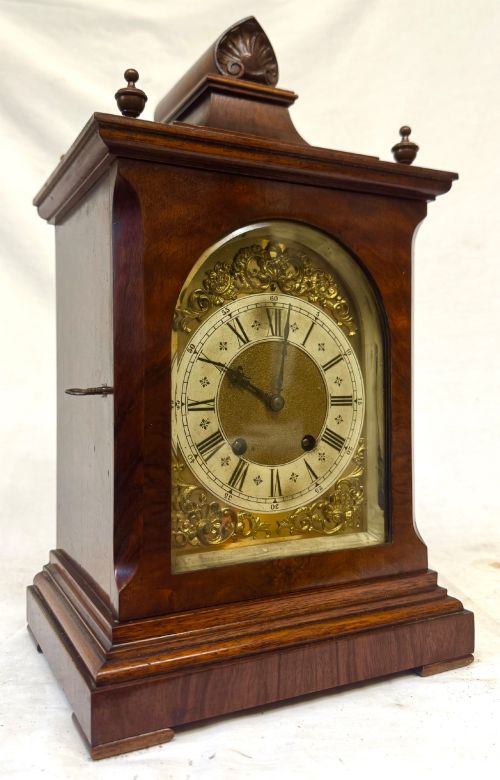
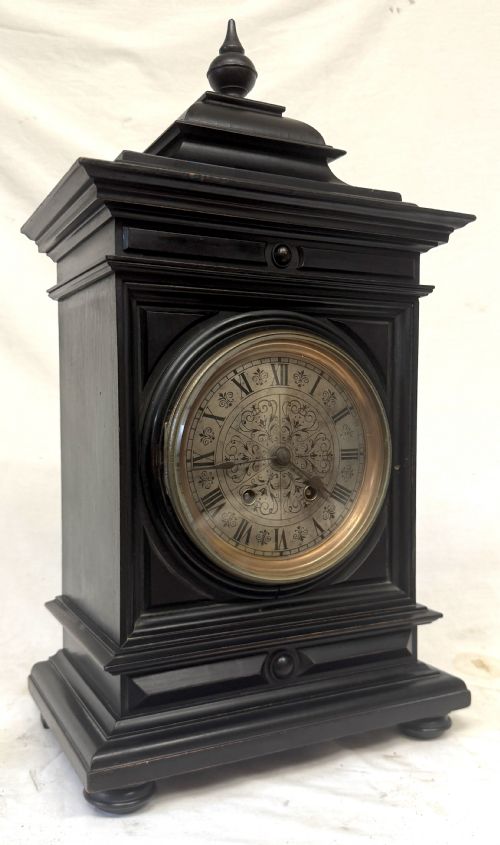
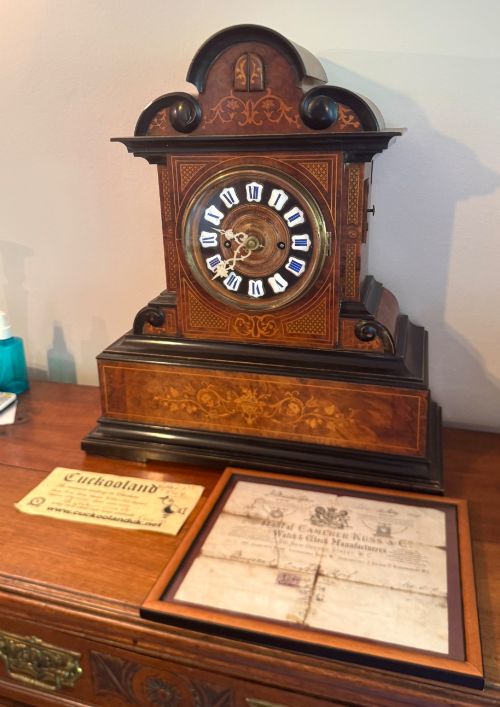
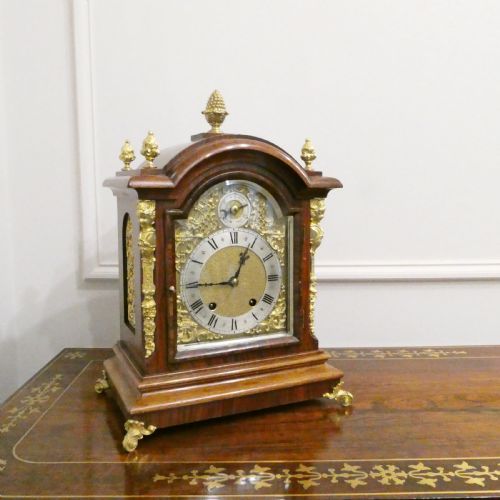
Clockmakers utilised dense hardwoods including walnut, mahogany, oak, and ebonised wood to build sturdy cases that protected the delicate movements within. Marquetry, intricate carving, and ormolu mounts frequently decorated the exterior surfaces of finer examples.
Dial construction typically involved brushed brass, silvered chapter rings, or enamelled numerals, paired with protective glass bezels. Movements relied on brass gears and steel springs, often configured for ting-tang strikes or Westminster chimes.
German Bracket Clock Retail Price Guide 2026
Typical asking prices for german bracket clock among the pieces listed under this phrase on Sellingantiques today, from the lower quarter to the upper quarter. They describe what is for sale here now, not the wider market.
Some models feature cuckoo mechanisms hiding quietly within stately walnut bracket cases.
Judging Quality
The distinction between standard production and top-tier pieces lies in the sophistication of the movement and the crispness of the case carving. A master-built clock by firms like Lenzkirch exhibits refined proportions, superior acoustic chime quality, and meticulous attention to internal gear finishing.
Cabinetwork separates the ordinary from the exceptional through the selection of figured burr walnut veneers, seamless mitre joints, and cast ormolu ornamentation that remains firmly attached and finely detailed.
Lenzkirch·Winterhalder & Hofmeier·Schneckenburger·Junghans·Baden Clock Co
The German Bracket Clock Glossary
- Ting-tang
- A striking mechanism utilising two bells or gongs to sound the quarters and hours in a distinctive two-tone sequence.
- Three-train
- A movement configuration driving three separate gear trains for timekeeping, striking, and chiming melodies such as Westminster.
- Chapter ring
- The circular metal ring on a clock dial bearing the hour numerals.
- Bell-top
- A distinctive case silhouette featuring a curved, domed top resembling the shape of a handbell.
- Ebonised wood
- Timber treated with chemical finishes or stains to imitate expensive ebony.
German Bracket Clock: Frequently Asked Questions
What is a ting-tang movement?
A ting-tang movement sounds two different notes to mark the passage of the quarters before striking the full hour. This pleasant acoustic arrangement was popular in nineteenth-century German timepieces.
It differs from standard chiming clocks by keeping the melody short and crisp rather than playing a full tune on four or eight gongs.
How do I wind a bracket clock?
Most mechanical bracket clocks require a specific winding key inserted into the dial holes to tension the internal springs. Care must be taken not to overwind the movement.
Consulting the specific train configuration helps determine whether the clock requires weekly or daily winding to maintain accurate time.
Where should I place my clock?
These clocks are designed for stable, level surfaces such as mantelpieces, heavy sideboards, or dedicated wall brackets. Avoiding direct sunlight and draughts preserves the wooden case and internal oils.
Placing the clock securely ensures the pendulum or balance wheel maintains an even beat.
How do I identify a Winterhalder & Hofmeier clock?
Winterhalder & Hofmeier clocks often feature high-grade movements marked with the firm's initials or name, housed in robust oak or walnut cases. Their output ranges from simple timepieces to complex three-train musical examples.
The exceptional build quality and distinct architectural case designs help set them apart from standard regional production.