


Georgian Writing Table Bureau
A georgian writing table bureau offers a dedicated surface for correspondence, combining cabinetwork with functional drawers from the eighteenth century onward.
Georgian Writing Table Bureau
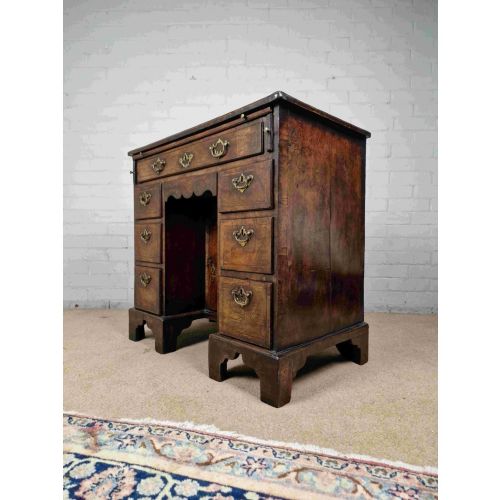
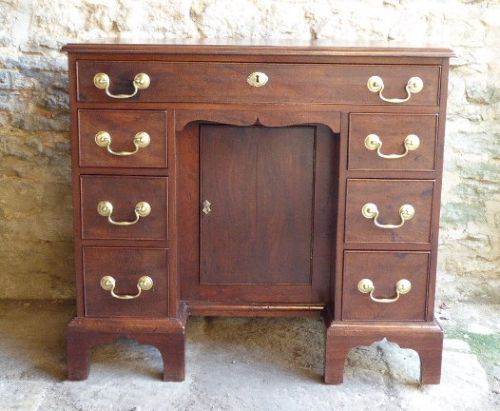
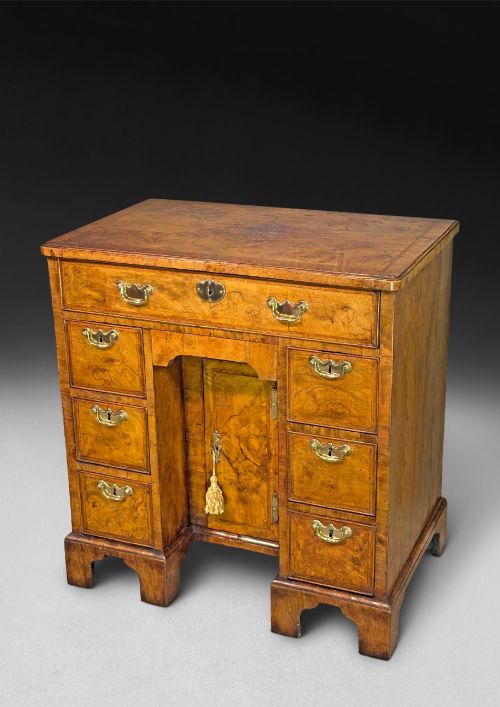
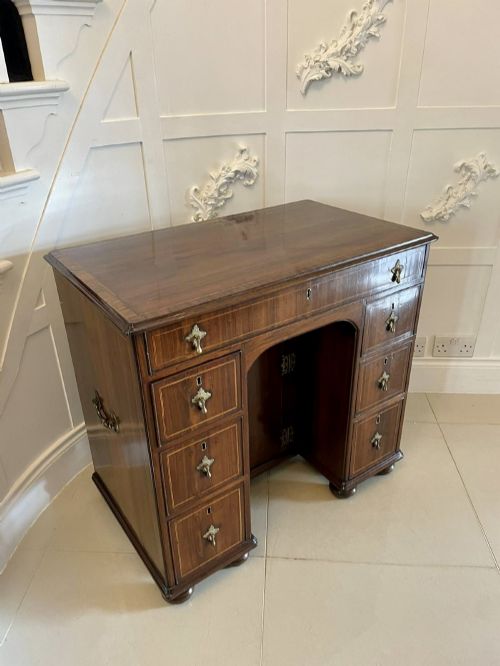
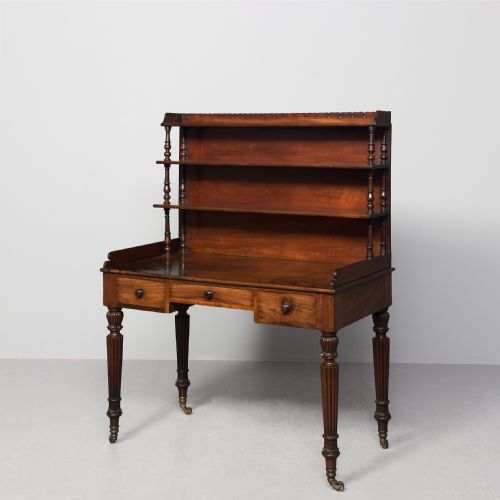
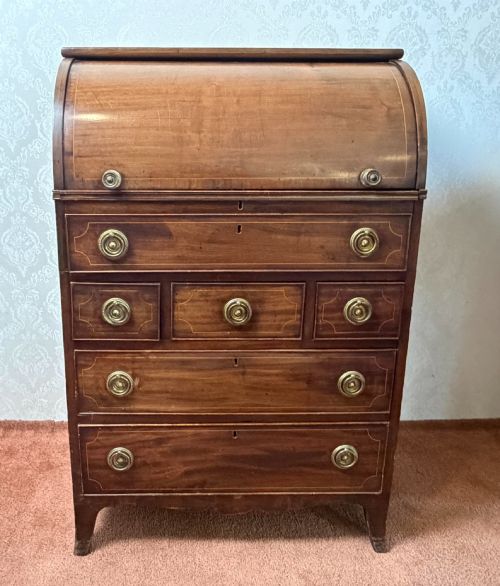
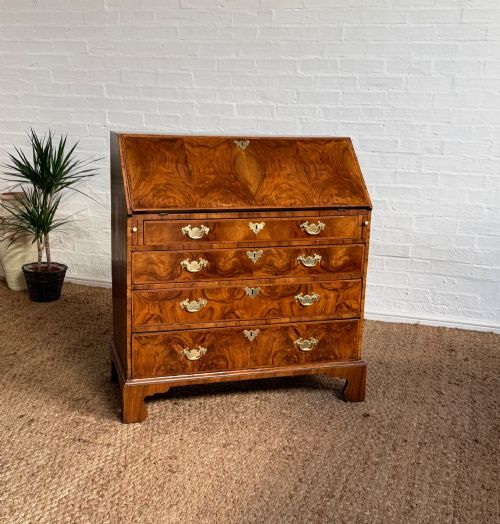
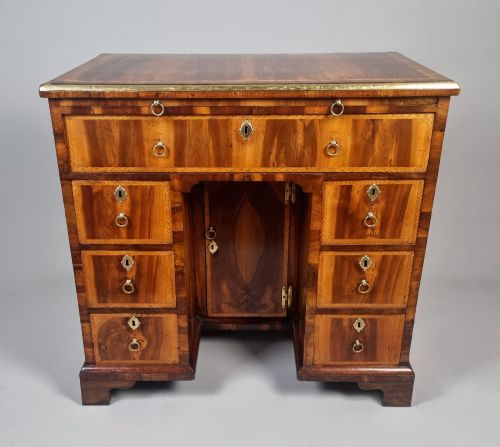
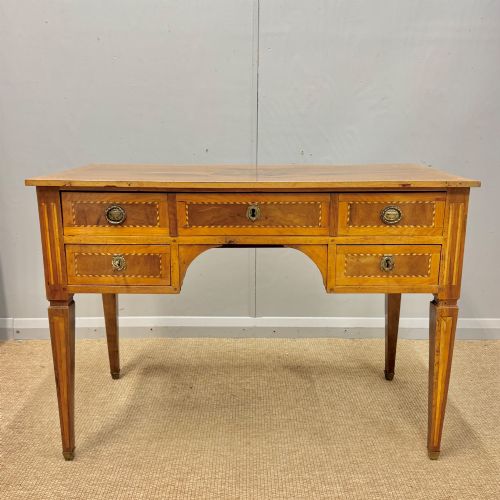
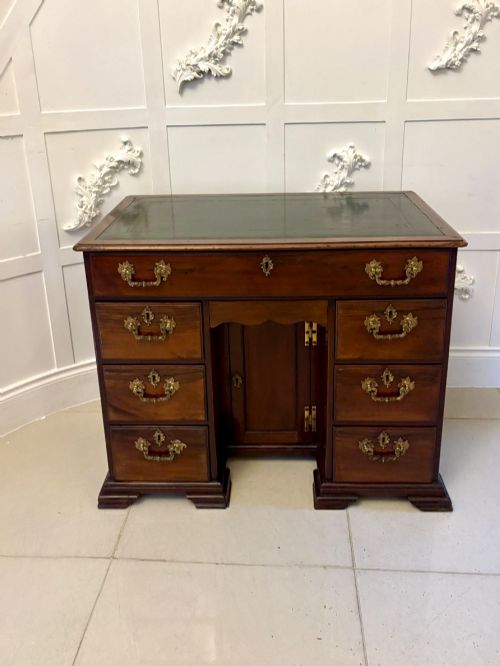
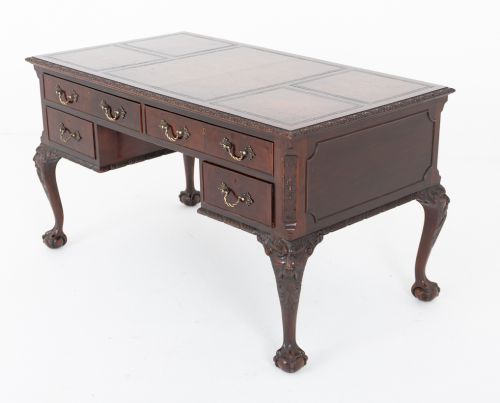
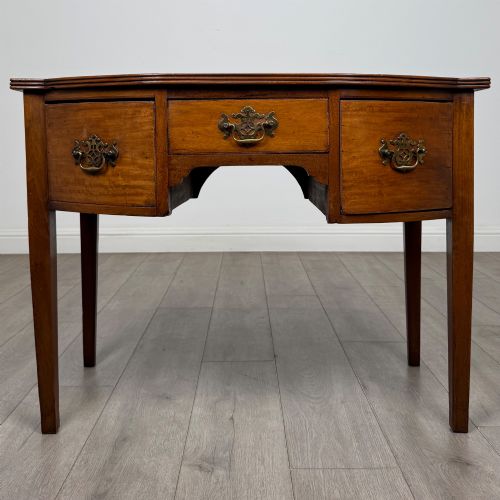
A georgian writing table bureau brings together specific forms intended for written correspondence and document storage, originating from the eighteenth and nineteenth centuries with later revivals. Buyers encounter kneehole desks, pedestal desks, tambour desks, and fall-front bureaux across these listings.
The materials span mahogany, walnut, burr walnut, oak, and satinwood, frequently paired with fitted leather writing surfaces. Pieces range from compact table-top boxes to large library tables and Carlton House desks.
Periods represented stretch from the Queen Anne and George II eras through George III, Sheraton, and Regency styles, alongside twentieth-century revival pieces made in walnut and mahogany.
How they were made
Cabinetmakers utilised solid timbers and figured veneers, including burr walnut, yew wood, and partridgewood, applied to secondary woods like oak and mahogany. Surfaces often feature crossbanding and marquetry inlay.
Hardware consists of brass handles, escutcheons, and hinges, whilst writing surfaces are frequently lined with red or green tooled leather. Internal compartments incorporate small drawers, pigeonholes, and sliding writing surfaces.
Some miniature table-top bureaux allowed eighteenth-century writers to carry their entire stationery setup from room to room.
What varies in quality
Quality rests upon the choice of timber and the execution of cabinetmaking details such as dovetailing, drawer linings, and figuration in walnut or mahogany veneers. Finer examples retain original brasses and well-figured grain across large flat surfaces.
Construction methods distinguish regional pieces from metropolitan workshop output, where cabinetmakers employed more complex internal fittings like tambour cylinders and drop-side flaps.
James Mein of Kelso·maples of London
The Georgian Writing Table Bureau Glossary
- Kneehole desk
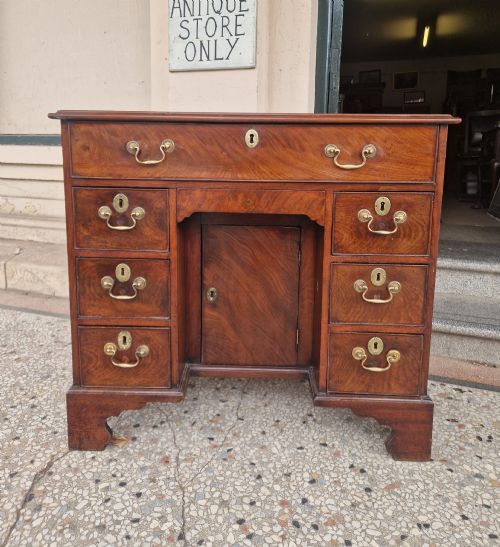
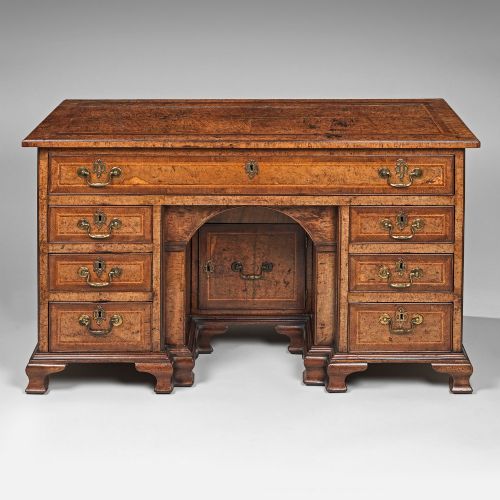
- A compact desk featuring a central recessed kneehole flanked by pedestals of small drawers. This form became popular during the walnut and mahogany periods.
- Tambour
- A sliding shutter formed of narrow strips of wood glued to canvas backing, allowing cylinders and desk tops to open smoothly. It conceals internal pigeonholes and small drawers.
- Crossbanding
- A border of veneer laid around the edge of a tabletop or drawer front with the grain running perpendicular to the central panel. It frames the primary wood figure.
- Carlton House desk
- A horseshoe-shaped writing desk fitted with a raised tiered superstructure of small drawers and compartments. This form emerged in the late eighteenth century in satinwood and mahogany.
- Secretaire
- A piece of furniture containing a pull-out or drop-front drawer fitted for writing. It often combines the storage of a chest of drawers with a desk surface.
Georgian Writing Table Bureau: Frequently Asked Questions
How do I identify a Georgian bureau?
Look for construction traits typical of the eighteenth century, including hand-cut dovetails on drawer sides and secondary woods like oak or pine behind mahogany or walnut veneers. The proportions and hardware configuration often point toward periods like the George II or George III eras.
Examine the fall-front or writing surface to see how internal compartments are arranged, as Georgian versions typically feature simple pigeonholes and small drawers rather than machine-made components.
What is a tambour desk?
A tambour desk uses a sliding shutter made from narrow strips of wood attached to fabric, allowing the cylinder top to curve around a track and conceal the writing area. This mechanism appeared on various desks around the turn of the nineteenth century.
The sliding top protects the interior fittings without requiring the space needed by a traditional hinged lid.
Where should I place a kneehole desk?
A kneehole desk fits well against a wall or in the centre of a room if the back is finished for freestanding display. Their compact dimensions suit studies, bedrooms, and drawing rooms.
Ensure the space allows the chair to slide comfortably into the central recess beneath the drawer pedestals.
What woods were used for these desks?
Cabinetmakers primarily used mahogany and walnut, alongside oak, yew wood, burr elm, partridgewood, and satinwood. Figured veneers such as burr walnut were selected for drawer fronts and top surfaces to create decorative grain patterns.
Secondary timbers inside drawers and carcases commonly consist of oak or pine.