




Compact Mahogany Writing Bureau
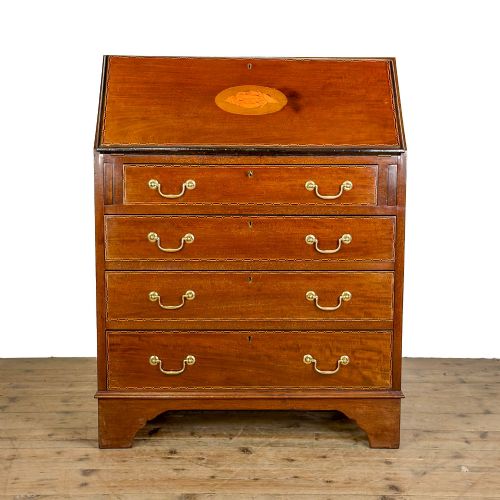
A compact mahogany writing bureau is a practical workspace combining a drop-front writing surface with concealed drawers, designed for smaller rooms without sacrificing period character.
Compact Mahogany Writing Bureau
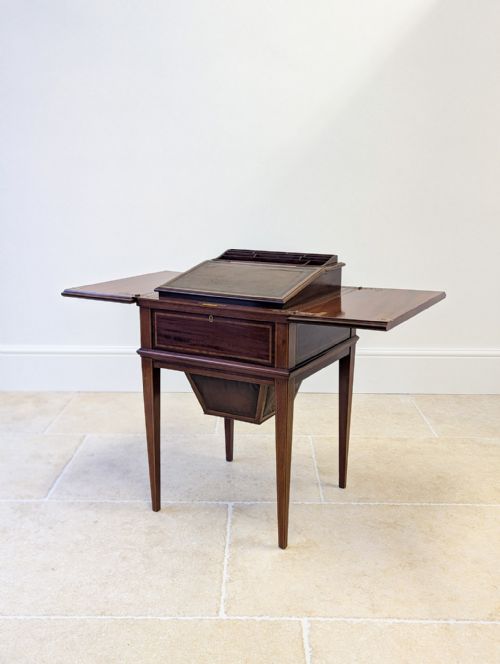
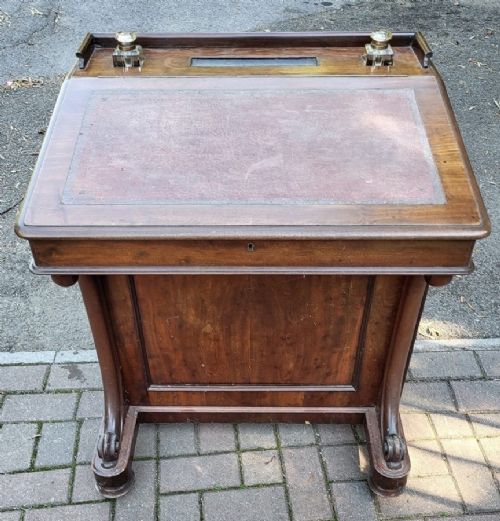
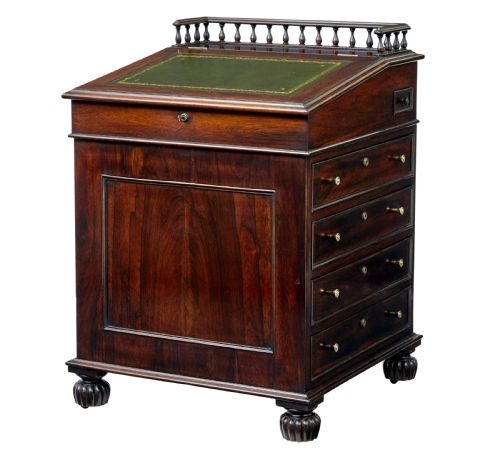
When you search for a compact mahogany writing bureau, you encounter a selection of smaller writing furniture dating from the eighteenth century through to the Edwardian period. The versions most frequently met on this page include Georgian and Regency bureaux, alongside nineteenth-century Davenport desks and Edwardian inlaid pieces.
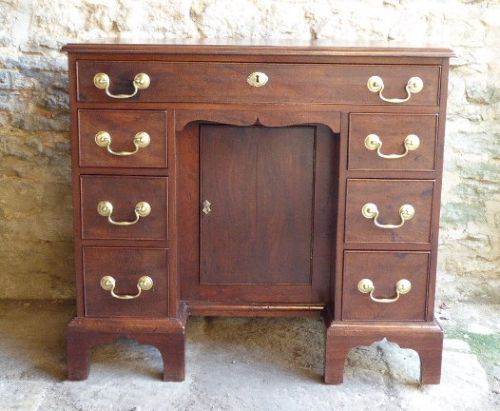
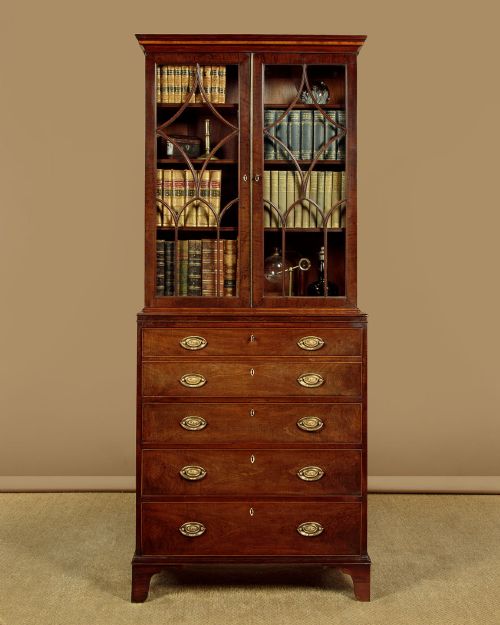
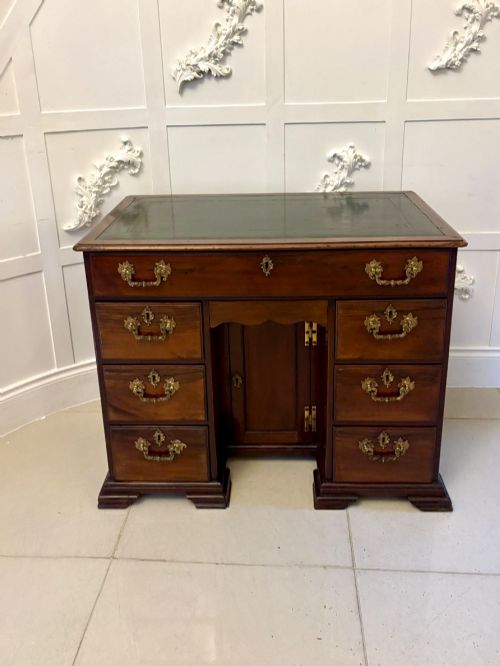
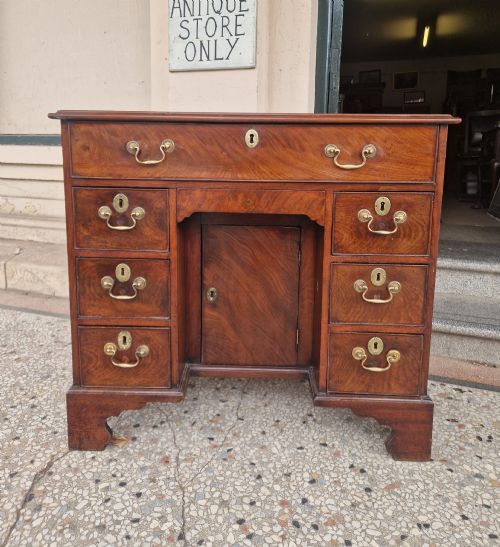
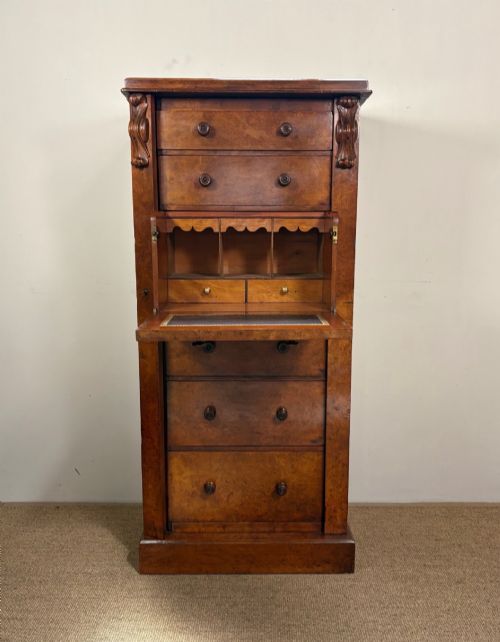
These items span several distinct forms, including kneehole desks, secretaire bookcases, and traditional slant-front bureaux designed for modest spaces. The periods represented range from early eighteenth-century examples to later Victorian and Edwardian interpretations.
Makers and workshops of different eras utilised timber dimensions to suit domestic interiors, yielding proportions that remain smaller than standard partners' desks or large secretaires. The survival of these varied formats demonstrates a continuous demand for efficient writing furniture across multiple design movements.
What varies in quality
The degree of refinement in timber selection dictates much of the distinction between standard and superior examples, particularly where figured or flame mahogany veneers display rich grain movement. Attention to internal detailing, such as secret compartments, finely turned small drawers, and harmonious secondary woods, elevates the status of an individual piece.
Proportion and execution of inlay work also separate ordinary production from master cabinet work, with precise boxwood stringing and balanced brass fittings indicating higher workshop standards. The integrity of the original construction, including undisturbed carcases and matching hardware, preserves the character established during periods such as the Georgian and Regency eras.
Listings feature mahogany writing furniture spanning the eighteenth, nineteenth, and early twentieth centuries, including Georgian, Regency, Victorian, and Edwardian periods.
Gillows of Lancaster·Howard and Sons·Liberty
The Compact Mahogany Writing Bureau Glossary
- Bureau
- A desk featuring a sloping hinged lid that drops down to form a writing surface, enclosing a fitted interior of small drawers and pigeonholes.
- Davenport
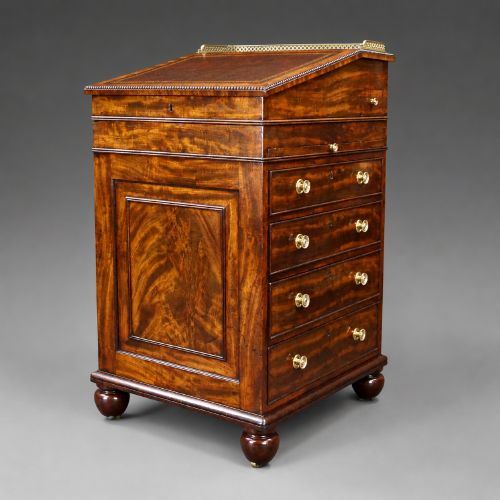
- A compact pedestal desk with a sloping writing top, fitted with drawers opening to the side and often topped by a stationery gallery.
- Kneehole desk
- A flat-topped writing table with a recessed central cupboard flanked by pedestals of small drawers.
- Secretaire bookcase
- A tall piece of furniture combining a upper bookcase section with a middle drawer or compartment that pulls out or drops down for writing.
- Flame mahogany
- A veneer cut from timber where the branch junctions meet the main trunk, producing a distinctive flickering, flame-like grain pattern.
Compact Mahogany Writing Bureau: Frequently Asked Questions
What is a Davenport desk?
A Davenport is a small pedestal desk featuring a sloping, often leather-lined writing surface that lifts or slides. The body incorporates drawers opening to the side.
First popularised in the Regency period, this form offered a space-saving writing station for ladies' boudoirs or smaller private studies.
How do I date a mahogany bureau?
Dating relies on examining construction methods, timber choice, handle styles, and secondary woods like oak or pine inside the drawers. Earlier pieces often show hand-cut dovetails and solid timber carcases.
Later Victorian and Edwardian examples may incorporate machine-sawn elements, lighter mahogany veneers, and decorative satinwood or boxwood inlay reflecting revival styles.
Where were compact bureaux used?
These pieces served primarily in private bedchambers, drawing rooms, or small studies where a full-sized partner's desk would prove too large. Their modest footprint accommodated letter writing and household accounts.
Their versatility ensured continued production through the Georgian, Victorian, and Edwardian eras for domestic settings with limited floor space.
What is flame mahogany?
Flame mahogany is a decorative veneer harvested from the fork of the tree where the branches join the main trunk. This cut yields a swirling, three-dimensional grain pattern resembling flickering flames.
Cabinet makers reserved this striking timber for prominent surfaces such as fall fronts, desk lids, and drawer faces on finer pieces.